
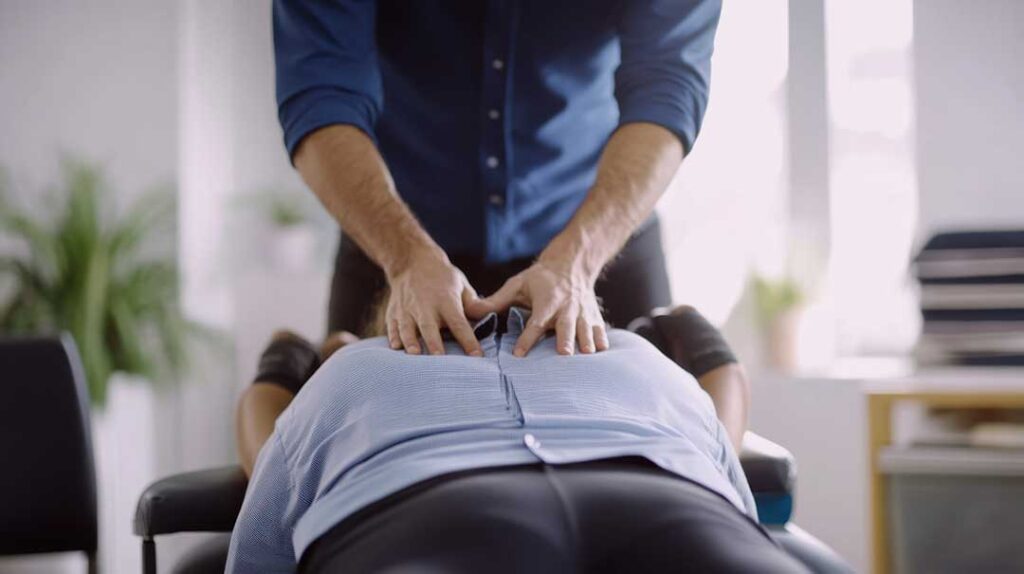
Chiropractic care may help some people manage back, neck, and joint pain, particularly when it is combined with movement, exercise, and practical changes in daily activities. It is not a universal solution, and its value depends on the cause of pain, the person’s health history, and whether treatment improves function over time.
What does chiropractic care involve?
Chiropractic care commonly includes hands-on treatment directed at the spine and other joints. Spinal manipulation, sometimes called an adjustment, uses a controlled force to improve joint movement. Other approaches may include gentler mobilization, soft-tissue techniques, stretching, exercise instruction, and guidance on posture or movement.
Treatment should begin with a health history and physical assessment. The goal is not simply to identify a painful area, but to understand how symptoms began, what activities worsen them, whether nerves are involved, and whether another medical condition may be responsible.
For local residents, common triggers may include long periods of driving or desk work, lifting during a household move, repetitive home maintenance, winter shoveling, or slipping on wet or icy surfaces. These situations can strain muscles and joints without necessarily causing serious structural damage.
Which types of pain may respond?
Chiropractic treatment has the strongest practical role in some forms of mechanical musculoskeletal pain, especially uncomplicated low-back pain. It may also be considered for certain types of neck pain, stiffness, and pain related to restricted joint movement.
Potential goals include:
- Reducing pain intensity
- Improving range of motion
- Making walking, sitting, sleeping, or working easier
- Supporting a gradual return to normal activity
- Reducing reliance on passive care alone
Research generally suggests that spinal manipulation can produce modest improvements for some people with acute, subacute, or chronic low-back pain. The benefit is often comparable to other conservative approaches rather than dramatically superior to them. Improvement may come from several parts of care, including movement advice, reassurance, exercise, and the natural recovery process.
Chiropractic care is less appropriate as a stand-alone response to unexplained pain, rapidly worsening symptoms, serious injury, or symptoms suggesting disease outside the muscles and joints.
Can chiropractic care replace medication or medical treatment?
Usually, no. Pain management is often most effective when it combines appropriate strategies rather than relying on a single treatment.
Depending on the diagnosis, a broader plan may include physical activity, strengthening, flexibility work, sleep improvement, ergonomic changes, nonprescription medication, physical therapy, behavioral pain-management techniques, or medical evaluation. For persistent pain, the aim is often to improve daily function even when complete elimination of pain is unrealistic.
Chiropractic care may fit within that plan, but it should not delay evaluation for conditions that require medication, imaging, surgery, or urgent treatment. It also should not be presented as a way to “realign” every problem or correct unrelated illnesses.
What happens during an evaluation?
A careful evaluation usually considers:
- The location, duration, and pattern of pain
- Whether pain travels into an arm or leg
- Numbness, tingling, weakness, or changes in coordination
- Recent falls, collisions, lifting injuries, or sports injuries
- Prior surgery, osteoporosis, arthritis, cancer, infection, or inflammatory disease
- Current medications and other health conditions
- Work, sleep, exercise, and household demands
Imaging is not automatically necessary for ordinary low-back pain. It may be considered when symptoms are severe, persistent, unusual, associated with neurological changes, or linked to trauma. Routine imaging can sometimes reveal age-related changes that are not the actual cause of pain, which may create unnecessary concern.
A useful treatment plan should include a way to judge progress. Examples might be improved ability to sit through a commute, walk around the block, climb stairs, sleep, or complete household tasks. If symptoms are not improving or are getting worse, the diagnosis and treatment plan should be reconsidered.
Is spinal manipulation safe?
For many adults, spinal manipulation performed by a properly trained and licensed practitioner is associated mainly with temporary soreness, stiffness, or a short-lived increase in discomfort. Serious complications are uncommon, but no treatment is risk-free.
Extra caution is needed for people with conditions such as severe osteoporosis, certain fractures, unstable joints, bleeding disorders, active infection, or suspected cancer affecting the spine. Recent trauma, use of blood-thinning medication, and some neurological conditions may also change whether manipulation is appropriate.
Neck manipulation deserves particular discussion. Rare but serious blood-vessel complications have been reported after rapid neck movements, although the exact relationship between treatment and these events can be difficult to determine. People should understand the potential risks and alternatives before undergoing forceful neck techniques. Gentle mobilization or exercise-based care may be considered instead when clinically appropriate.
Which warning signs require medical attention first?
Pain should not automatically be treated as a routine joint or muscle problem. Prompt medical evaluation is warranted for:

- New loss of bowel or bladder control
- Numbness around the groin or inner thighs
- Progressive weakness in an arm or leg
- Severe pain after a significant fall or collision
- Fever, unexplained weight loss, or a history of cancer
- Severe night pain that is unusual for the person
- Chest pain, shortness of breath, fainting, or abdominal symptoms
- A limb that becomes unusually cold, pale, swollen, or weak
These symptoms can indicate an emergency or a condition requiring a different type of care.
How can residents support recovery at home?
Remaining completely still for long periods often slows recovery from ordinary back or neck strain. Gentle activity, short walks, changing positions, and gradually resuming normal tasks are commonly more useful than extended bed rest.
Helpful habits may include:
- Breaking up sitting every 30 to 60 minutes
- Keeping frequently used household items at waist level
- Using leg and hip movement when lifting rather than twisting through the back
- Wearing stable footwear during wet or icy conditions
- Dividing snow or yard work into shorter sessions
- Using a comfortable sleep position and supportive pillow
- Building strength gradually instead of exercising only during pain-free periods
Pain does not always mean that movement is causing damage. At the same time, sharp, escalating, or radiating pain should not be ignored simply to maintain an activity schedule.
What should a person expect from a reasonable plan?
A reasonable plan should explain the likely diagnosis, expected benefits, possible risks, alternatives, and signs that require reassessment. It should also avoid indefinite passive treatment without measurable improvement.
For many people, the most durable results come from combining short-term symptom relief with self-management skills. Hands-on care may make movement easier, while exercises and activity changes help preserve that improvement. The appropriate role of chiropractic care is therefore not to promise a cure, but to serve as one possible component of individualized, evidence-informed pain management.
