
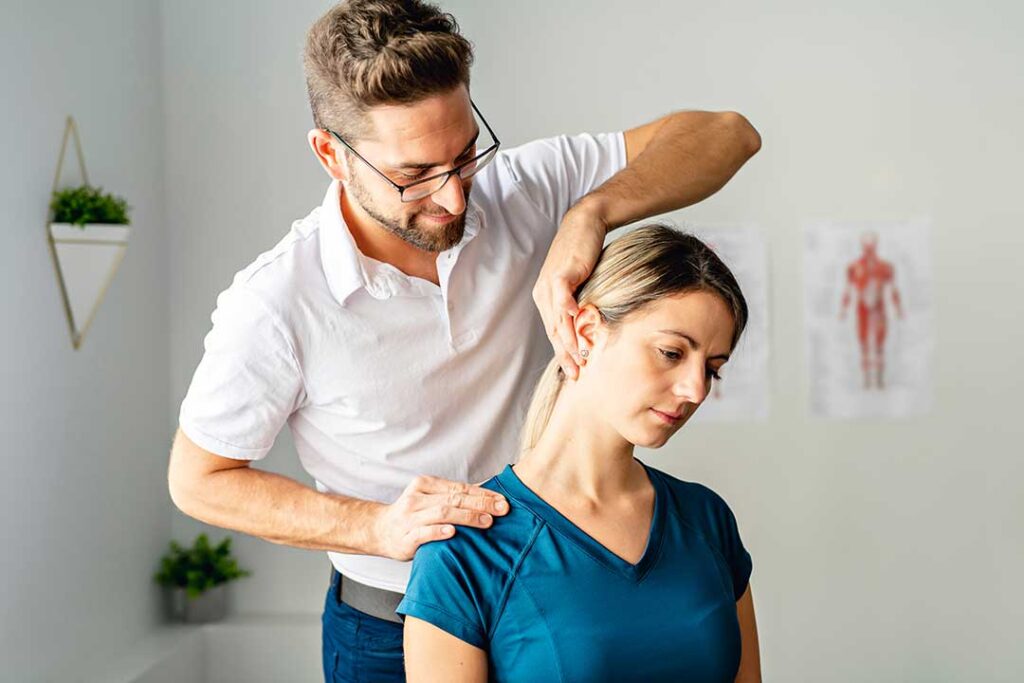
Neck pain can develop from ordinary daily habits, including prolonged screen use, awkward sleeping positions, repetitive work, stress, or lifting. Most short-term discomfort is related to irritated muscles, joints, or soft tissues, but symptoms that persist, spread into an arm, or follow an injury deserve closer attention.
What commonly causes neck pain?
The neck supports the head while allowing a wide range of movement. Pain may begin when muscles remain tense, joints become irritated, or nerves are compressed.
Common causes include:
- Prolonged screen use: Looking down at a phone, tablet, or laptop for long periods can keep the head tilted forward. This places extra demand on the muscles along the neck and upper back.
- Poor workstation positioning: A monitor that is too high, too low, or off to one side can cause repeated bending or rotation. A chair without adequate back support may add strain.
- Sleeping awkwardly: A pillow that is too high or too flat can leave the neck angled for several hours. Sleeping facedown may also require the head to remain turned.
- Muscle tension and stress: Stress can lead to unconscious tightening of the shoulders and jaw. That tension may spread into the neck and cause headaches or stiffness.
- Repetitive work: Activities involving lifting, reaching, driving, carrying, or holding the head in one position can gradually fatigue the neck and shoulder muscles.
- Sudden movement or overexertion: A quick twist, poorly controlled lift, or unfamiliar exercise may strain muscles and ligaments.
- Whiplash or other injury: A collision, fall, or blow can affect muscles, joints, discs, nerves, or bones.
- Age-related changes: Wear affecting the discs and joints of the cervical spine may produce stiffness, aching, or reduced range of motion. These changes do not always cause symptoms, but they can contribute to discomfort in some adults.
- Medical conditions: Less common causes include inflammatory conditions, infections, nerve disorders, and problems involving the spinal cord.
Cold weather does not usually create a neck injury by itself, but seasonal conditions can influence habits. During colder months, people may spend more time indoors, sit for longer periods, layer bulky clothing, or tense their shoulders against the cold. Snow and ice can also increase the risk of slips, falls, and sudden injuries.
How does posture contribute to neck discomfort?
Posture is less about holding one “perfect” position and more about avoiding the same position for too long. Even a generally good sitting position can become uncomfortable when maintained without movement.
At a desk, aim to keep:
- The top portion of the screen near eye level
- The head balanced over the shoulders rather than projected forward
- The elbows supported and close to the body
- The lower back supported
- Both feet resting comfortably on the floor or a stable support
Avoid cradling a phone between the ear and shoulder. During reading or phone use, raise the device closer to eye level rather than repeatedly bending the neck downward.
For people working from home or using temporary work areas, small adjustments can help. A separate keyboard and mouse may allow a laptop screen to be raised without forcing the arms into an awkward position. A rolled towel behind the lower back can provide temporary support when a chair lacks it.
What daily habits can help prevent neck pain?
The most useful prevention strategy is regular variation. Change positions before stiffness builds rather than waiting until pain becomes noticeable.
Try these habits:
- Stand, walk, or gently move the shoulders every 30 to 60 minutes.
- Perform slow neck movements within a comfortable range, without forcing or bouncing.
- Strengthen the upper back, shoulders, and trunk with exercises that can be performed safely and consistently.
- Use both hands when carrying heavier items, and keep loads close to the body.
- Bend at the hips and knees when lifting rather than twisting while holding weight.
- Adjust car head restraints so the back of the head is supported during travel.
- Keep frequently used household items within easy reach to reduce repeated overhead reaching.
- Stay physically active through walking, stretching, or other suitable activities.

Exercise should not cause sharp pain, increasing numbness, or weakness. If those symptoms occur, stop the activity and seek medical guidance.
How should a pillow and sleeping position be chosen?
A supportive pillow should keep the neck reasonably aligned with the rest of the spine. The ideal height depends on sleeping position, body shape, and mattress firmness.
Side sleepers often need enough support to fill the space between the head and shoulder. Back sleepers may prefer a lower pillow that supports the natural curve of the neck. Stomach sleeping commonly places the head in prolonged rotation and may aggravate symptoms.
A pillow that feels comfortable for a few minutes may still cause problems after several hours. Morning stiffness that improves after moving around can be a sign that sleep position or pillow height needs adjustment.
Can stress cause real neck pain?
Yes. Stress-related neck pain is physical, not imaginary. Muscle tension can remain elevated for long periods, especially around the shoulders, upper back, and base of the skull. Stress may also reduce sleep quality and increase sensitivity to discomfort.
Helpful measures include slow breathing, regular movement breaks, gentle shoulder relaxation, adequate sleep, and reducing long periods of uninterrupted screen time. These steps may not eliminate every cause of neck pain, but they can reduce the muscle tension that maintains it.
When is neck pain a warning sign?
Many mild episodes improve with relative rest, gentle movement, and attention to daily habits. Medical evaluation is more appropriate when pain is severe, persistent, or associated with neurological or systemic symptoms.
Seek urgent care after a significant fall, collision, or blow, particularly if there is loss of feeling, weakness, difficulty moving an arm or hand, or severe pain. Emergency attention is also needed for neck pain accompanied by trouble breathing, chest discomfort, sudden balance problems, confusion, or loss of bladder or bowel control.
Prompt medical assessment is warranted for:
- Numbness, tingling, or weakness extending into an arm or hand
- Pain that repeatedly wakes a person at night
- Fever with severe neck stiffness or headache
- Difficulty swallowing or breathing
- Unexplained weight loss or a lump in the neck
- Pain that continues despite reasonable self-care
- Symptoms that steadily worsen rather than gradually improve
A neck brace should not be used for long periods unless specifically advised, because prolonged immobilization can weaken supporting muscles. Treatment should match the cause, which may require an examination rather than relying only on home remedies.
What is a practical prevention plan for households?
A simple routine can reduce avoidable strain:
1. Set up screens so the head stays mostly upright.
2. Change sitting or standing positions throughout the day.
3. Keep phones and reading materials closer to eye level.
4. Use controlled lifting techniques and avoid twisting with a load.
5. Review pillow height if morning stiffness is frequent.
6. Include comfortable movement and upper-body strengthening in the week.
7. Take extra care on wet, icy, or uneven walking surfaces during seasonal weather.
8. Pay attention to symptoms that travel beyond the neck or fail to improve.
Prevention is not about maintaining rigid posture or avoiding all activity. It is about giving the neck regular movement, reasonable support, and enough recovery between demanding tasks.
