
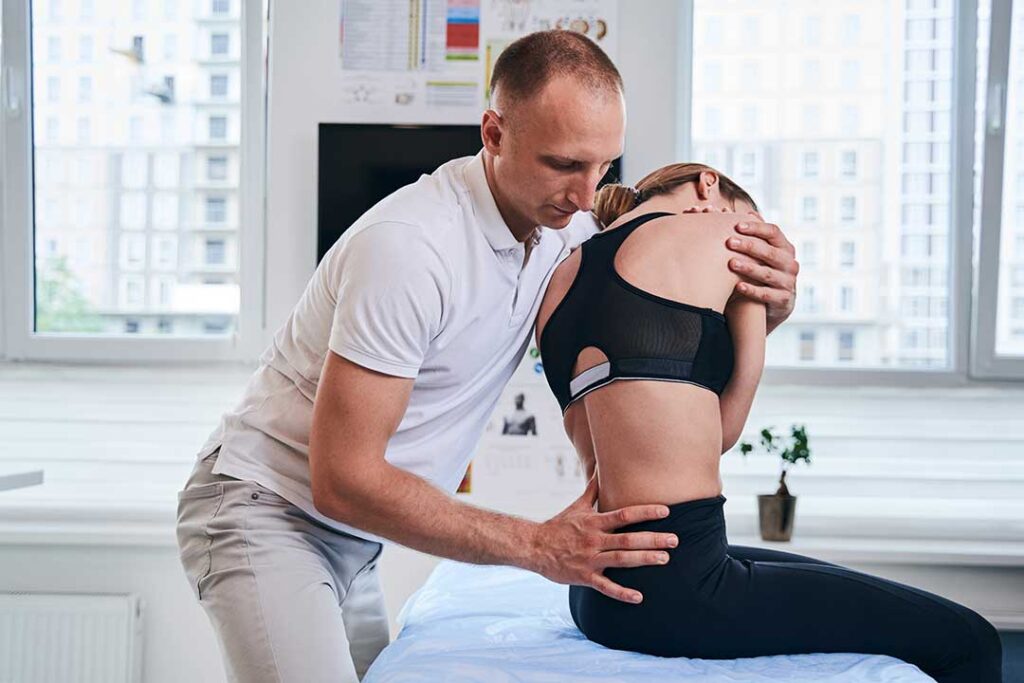
Chiropractic care is commonly used for back pain, neck pain, joint stiffness, and certain headaches. For most healthy adults, appropriately selected manual techniques are considered relatively safe, but no hands-on treatment is risk-free. Safety depends on the person’s health, the body area treated, the technique used, and whether warning signs are recognized before care begins.
What does chiropractic treatment involve?
Chiropractic care may include spinal manipulation, mobilization, stretching, soft-tissue techniques, exercise guidance, and advice about movement or posture.
Spinal manipulation uses a controlled force to move a joint beyond its usual self-directed range. Mobilization is generally gentler and stays within a joint’s normal range of motion. These approaches are not identical, and a person can ask which technique is being considered before treatment begins.
For common mechanical low-back pain, spinal manipulation may provide modest improvements in pain and physical function. It is one option among several, including exercise, physical therapy, heat, medication when appropriate, and self-management strategies. It should not be presented as a universal treatment for every medical condition.
Is chiropractic care generally safe?
For properly screened adults, the most common effects are temporary soreness, stiffness, tiredness, or a short-lived increase in discomfort. These effects often improve within a day.
Serious complications are rare, but they have been reported. Potential problems may include worsening of a disc injury, nerve compression, fracture in a vulnerable bone, or other neurological complications. Neck manipulation has also been discussed in connection with rare injuries to arteries in the neck that can lead to stroke. Research has not established a simple cause-and-effect relationship in every case, and similar artery injuries can occur after sudden neck movement, trauma, severe coughing, or vomiting. Even so, the potential risk should be discussed openly.
A careful evaluation matters more than assuming that a technique is safe for everyone.
Who should use extra caution?
Certain conditions can increase the chance of harm or make manipulation inappropriate. A person should disclose relevant medical history, recent injuries, medications, and symptoms before treatment, particularly if any of the following apply:
- Severe or advanced osteoporosis
- A recent fracture, fall, collision, or other significant trauma
- Known cancer involving the spine
- Infection, fever, or unexplained illness
- A bleeding disorder or use of blood-thinning medication
- Inflammatory arthritis or significant joint instability
- A history of stroke or increased risk of vascular disease
- Numbness, weakness, loss of coordination, or worsening pain
- Recent surgery involving the spine or joints
- Pregnancy or a high-risk pregnancy
Pregnancy does not automatically rule out all forms of manual care, but techniques may need to be modified. The person’s prenatal health history and symptoms should guide decisions.
Children and teenagers also require particular caution because safety research is more limited for some forms of spinal manipulation. A child with significant pain, weakness, fever, injury, or unexplained symptoms needs medical assessment rather than routine manipulation.
What symptoms should be checked before treatment?
Some back or neck symptoms may indicate a condition requiring urgent medical evaluation rather than routine manual care. Warning signs include:
- New loss of bladder or bowel control
- Numbness around the inner thighs or groin
- Progressive weakness in an arm or leg
- Difficulty walking or maintaining balance
- Severe pain after a fall or collision
- Fever combined with back pain
- Unexplained weight loss or a history of cancer
- Sudden, severe neck pain or headache unlike previous headaches
- Trouble speaking, facial drooping, vision changes, dizziness, or one-sided weakness
These symptoms can signal nerve compression, infection, fracture, stroke, or another serious condition. Delaying evaluation to try repeated adjustments may allow a dangerous problem to worsen.
Does a cracking or popping sound mean something was fixed?
No. The sound sometimes heard during an adjustment is usually related to changes in pressure within a joint and the movement of gas in joint fluid. It does not prove that a bone was “put back in place,” that inflammation was removed, or that a long-term problem has been corrected.
Some people feel temporary relief after a joint is moved, while others notice little change. The sound itself is not a measure of treatment quality. Improvement in pain, movement, strength, sleep, and daily function is more meaningful.
Are neck adjustments more concerning than low-back techniques?

Neck manipulation deserves a particularly careful discussion because the neck contains important arteries, nerves, and the spinal cord. Serious complications appear to be very uncommon, but the possible consequences can be severe.
A person with sudden neck pain, an unusual headache, dizziness, visual symptoms, numbness, or weakness should not assume the problem is ordinary muscle tension. Such symptoms warrant prompt medical evaluation. Gentle movement, exercise, or non-thrust techniques may be considered differently from a rapid, forceful neck thrust, so asking about alternatives is reasonable.
What should a safe first visit include?
A responsible assessment should include more than locating a painful area. It should consider:
- The onset, location, and pattern of symptoms
- Recent accidents, falls, sports injuries, or workplace strain
- Prior diagnoses, surgeries, and imaging
- Current medications and health conditions
- Numbness, weakness, balance changes, or other neurological symptoms
- Goals, expected benefits, possible risks, and alternatives
Imaging is not automatically needed for ordinary back pain. It may be considered when there is a history of significant trauma, neurological deterioration, suspected fracture, infection, cancer, or another concerning feature. Routine imaging without a clinical reason can reveal age-related findings that may not be causing the pain.
A person should also be able to pause, decline a technique, or ask for a less forceful option. Consent is an ongoing process, not a one-time form.
How can local residents reduce everyday strain?
In Lynbrook, seasonal weather, icy walking conditions, commuting, household stairs, and prolonged sitting can all contribute to back or neck discomfort. Practical prevention may include wearing stable footwear in winter, using handrails on slippery steps, varying positions during desk or driving time, and lifting household items close to the body.
After a minor strain, gentle activity is usually preferable to prolonged bed rest. Short walks, gradual return to normal tasks, and carefully paced strengthening may help. Sudden increases in shoveling, yard work, moving boxes, or recreational activity are common triggers for flare-ups.
If symptoms are steadily worsening, repeatedly returning, or interfering with walking, sleep, work, or basic household activities, the next step should be guided by the symptom pattern rather than by a fixed treatment schedule.
What questions can a person ask before an adjustment?
Useful questions include:
- What condition is this technique intended to address?
- Are there gentler alternatives, such as mobilization or exercise?
- What risks apply to my health history and medications?
- What symptoms would mean I should stop treatment or seek urgent care?
- How will progress be measured?
- What is the plan if symptoms do not improve?
Clear answers should include limits as well as potential benefits. Chiropractic care may be reasonable for some musculoskeletal complaints, but it is not a substitute for emergency care, cancer evaluation, treatment of infection, or assessment of progressive neurological symptoms. Informed consent means understanding both what a treatment may help and what it cannot safely address.
