
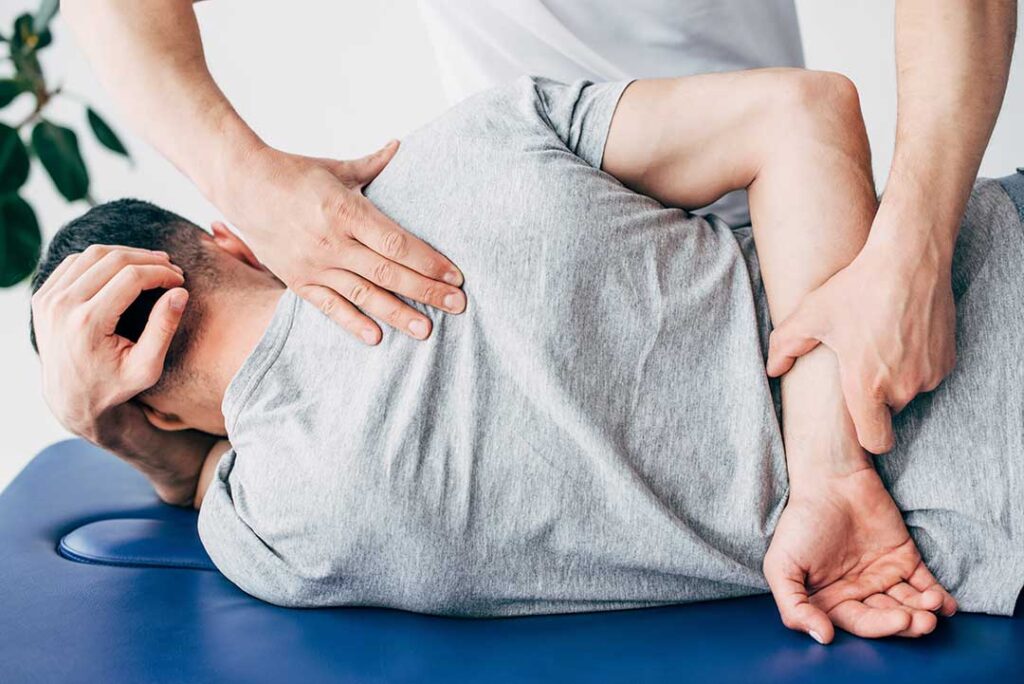
Neck clicking is often caused by normal movement in the joints, tendons, or surrounding tissues. A painless pop or crack that occurs occasionally is usually not a sign of serious damage. However, clicking that begins suddenly, becomes frequent, or occurs with pain, weakness, numbness, or injury deserves closer attention.
What does clicking in the neck mean?
“Clicking,” “popping,” “cracking,” and “grinding” are everyday descriptions of sounds known medically as crepitus. The sound may come from several structures rather than from the bones alone.
Small joints in the neck move whenever the head turns, tilts, or bends. Changes in pressure inside these joints can produce a popping sound. A tendon or ligament may also move across a nearby structure and create a brief snap. In other cases, mild stiffness can make joint surfaces move less smoothly, producing a faint crackling sensation.
The sound itself is less informative than the symptoms that accompany it. Painless clicking with normal neck movement is commonly less concerning than clicking combined with persistent pain or neurological symptoms.
Why does the neck click when turning the head?
The most common causes are ordinary joint movement, muscle tightness, posture, and age-related changes.
Normal joint pressure changes
When a neck joint moves or is gently stretched, pressure within the joint can change. This may create a pop without injury. Similar sounds can occur in the fingers, shoulders, knees, and other joints.
Tendons and ligaments shifting
Muscles and connective tissues guide the neck and stabilize the head. If a tendon or ligament moves over a bony area during rotation, it can produce a snapping or clicking sensation. This is more noticeable when the neck is stiff or when movement is repeated frequently.
Muscle tension and posture
Holding the head forward for extended periods can increase the workload on the neck and upper-back muscles. Common examples include:
- Looking down at a phone
- Working at a computer
- Reading in bed
- Driving for long periods
- Carrying a child or bag on one side
- Performing household tasks with the head tilted
These habits can make the neck feel tight and may cause clicking when movement resumes. For residents with desk-based work, long commutes, or seasonal indoor routines, the combination of prolonged sitting and limited movement can contribute to stiffness.
Joint wear and osteoarthritis
The joints and discs of the neck can gradually change over time. Cartilage may thin, discs may lose height, and small bony growths may develop. These changes can make movement feel rougher and may cause grinding or crackling.
Age-related changes do not automatically mean that the neck is seriously damaged. Many people have visible or audible changes without significant pain. The relevance depends on the complete picture, including mobility, strength, sensation, and daily function.
Previous strain or injury
A sports injury, fall, sudden braking incident, or other strain can alter how the neck moves. Even when the original pain improves, residual muscle guarding or reduced mobility may make clicking more noticeable.
Clicking after a significant injury should not be dismissed, especially if the neck is painful, movement is restricted, or symptoms extend into the shoulder or arm.
Is neck clicking dangerous?
Occasional clicking without pain is usually not dangerous. It does not automatically indicate that bones are rubbing together or that the spine is “out of place.”
Repeatedly forcing the neck to crack is different from simply hearing an incidental sound during normal movement. Forceful self-manipulation can strain muscles and connective tissues, aggravate a joint, or irritate a nerve. Very rarely, sudden vigorous neck movement has been associated with injury to a blood vessel in the neck.
A useful rule is to avoid chasing the sound. If the neck clicks during comfortable movement, there is generally no need to make it click more often. If a person feels compelled to crack the neck repeatedly to obtain temporary relief, the underlying stiffness, posture, muscle tension, or joint irritation may need to be assessed.
When should clicking be medically evaluated?
Clicking is more concerning when it occurs with other symptoms. Arrange a medical evaluation when clicking is accompanied by:
- Persistent or worsening neck pain
- Reduced ability to turn or tilt the head
- Pain spreading into the shoulder, arm, or hand
- Numbness, tingling, or weakness
- Headaches that are new or unusually severe
- Swelling, warmth, or tenderness
- Repeated locking or catching
- Symptoms that began after a fall, collision, or other injury

Seek urgent medical care for severe neck pain after trauma, new weakness, problems with balance or coordination, loss of bladder or bowel control, fainting, or a sudden severe headache. Neck stiffness with fever or signs of serious illness also requires prompt attention.
These warning signs do not identify one specific diagnosis. They indicate that a routine explanation should not be assumed without an examination.
What can help a mildly stiff, clicking neck?
For mild symptoms without warning signs, gentle changes often help reduce irritation:
- Change position regularly instead of holding the head still for hours.
- Raise screens closer to eye level to reduce prolonged downward bending.
- Keep both feet supported when seated and allow the shoulders to relax.
- Use slow, comfortable neck movements rather than forceful stretching.
- Apply warmth for muscle tightness if it feels soothing.
- Maintain regular walking or other low-impact movement.
- Avoid repeatedly twisting or thrusting the neck to produce a crack.
- Pay attention to sleep position and whether a pillow leaves the head sharply tilted.
Movement should remain within a comfortable range. Stretching or exercise that causes sharp pain, radiating symptoms, dizziness, or increasing numbness should be stopped.
Could the sound come from somewhere other than the neck?
Sometimes a clicking sensation near the jaw, collarbone, shoulder, or upper back is mistaken for a cervical spine problem. Jaw-joint movement can create sounds near the ear and side of the face. Shoulder-blade or collarbone movement may also be felt near the base of the neck.
Noting the exact location helps: Is the sound in the middle of the spine, on one side, near the jaw, or at the shoulder? Does it happen with turning the head, opening the mouth, raising an arm, or swallowing? These details can help a clinician distinguish between joint, muscle, tendon, jaw, and nerve-related causes.
What should residents keep in mind?
For most people, an occasional painless neck click is a normal mechanical sound rather than an emergency. The more meaningful questions are whether the sound is new, whether it is becoming more frequent, and whether it is linked with pain, loss of motion, injury, or changes in sensation or strength.
A clicking neck that remains comfortable can often be observed while posture and movement habits are improved. Persistent symptoms or any warning sign should be evaluated by an appropriate healthcare professional rather than treated through repeated forceful neck cracking.
