
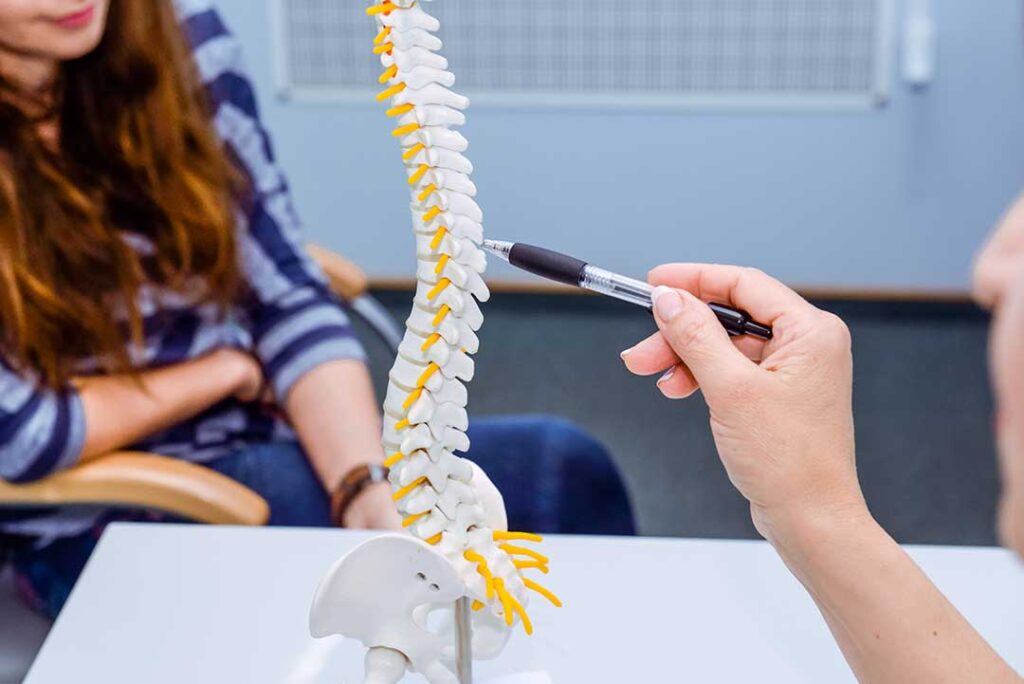
Scoliosis is a three-dimensional change in the spine that includes sideways curvature and rotation of the vertebrae. For people in Lynbrook, NY, a common question is whether chiropractic care can correct the curve, reduce discomfort, or prevent the condition from worsening.
The short answer is that chiropractic care may help some people manage pain, stiffness, movement limitations, and related muscle tension. However, current evidence does not show that spinal adjustments can reliably straighten a structural scoliosis curve or stop it from progressing. Scoliosis management is usually based on age, curve size, symptoms, growth status, and whether the curve is changing over time.
What is scoliosis?
Scoliosis is more than poor posture. A person may appear to lean to one side, have uneven shoulders or hips, or show a rib prominence when bending forward. Some curves are discovered during adolescence, while others become noticeable in adulthood because of arthritis, disc degeneration, prior injury, or progression of a curve that began earlier in life.
Many mild cases cause few or no symptoms. Adults are more likely than children to report back pain, stiffness, muscle fatigue, or discomfort after standing, walking, or sitting for extended periods.
A visible shoulder difference does not prove that scoliosis is present. Leg-length differences, muscle imbalance, hip problems, and habitual posture can create a similar appearance. A clinical examination and, when appropriate, standing spinal X-rays are used to confirm the diagnosis and measure the curve.
Can chiropractic care correct scoliosis?
Chiropractic treatment has not been shown to consistently correct a structural spinal curve. Adjustments may temporarily change joint motion, reduce muscle guarding, or make certain movements more comfortable, but those effects are different from permanently changing the shape of the spine.
This distinction matters because advertisements and online discussions sometimes use the word “correction” to describe a change in posture or symptoms. A person may stand more comfortably after treatment without the underlying curve becoming smaller.
For children and teenagers who are still growing, the main concern is whether the curve may progress. Chiropractic care should not replace appropriate monitoring, bracing when recommended, or evaluation by a clinician experienced with spinal deformity.
What symptoms might chiropractic care help?
For some adults, carefully selected manual therapy may be one part of a broader plan for symptom relief. Possible goals include:
- Reducing short-term back or neck discomfort
- Improving mobility in stiff areas near the spine
- Easing muscle tightness and protective guarding
- Supporting more comfortable walking, sitting, or standing
- Identifying movements that increase symptoms
- Pairing hands-on care with strengthening and mobility exercises
The benefit is more likely to relate to pain and function than to changing the curve itself. Results vary, and long-term, frequent treatment should be reconsidered if it is not producing measurable improvement in daily activities.
A cautious approach is especially reasonable for older adults with osteoporosis, a history of spinal surgery, inflammatory arthritis, significant disc degeneration, or symptoms that travel into an arm or leg.
What treatments are commonly used for scoliosis?
Management depends on the individual rather than the label alone.
For a mild curve without significant symptoms, observation and periodic reassessment may be all that is needed. Children who are still growing may need more frequent follow-up because curves can change during periods of rapid growth. Bracing may be recommended for selected adolescents to reduce the risk of progression. Severe or worsening curves may require evaluation by a spine specialist, and surgery is considered only in particular circumstances.
For adults, treatment often focuses on pain control, strength, balance, mobility, and maintaining normal activity. Physical therapy may include:
- Core and trunk strengthening
- Hip and leg conditioning
- Postural awareness
- Balance training
- Breathing and rib-mobility exercises
- Activity modification without unnecessary rest
General exercise is usually encouraged unless a specific movement causes worsening symptoms. Walking, swimming, cycling, and appropriately scaled strengthening may be useful. During icy winter conditions, residents may also need to adjust walking routes, footwear, and outdoor activity to reduce fall risk, since a fall can aggravate an already sensitive back.
How should chiropractic care fit into a treatment plan?
Chiropractic care is best viewed as complementary symptom management rather than a stand-alone cure. Before treatment, a careful evaluation should consider whether the problem is actually scoliosis, whether the curve is stable, and whether another condition may be causing the pain.
Useful questions include:
- Has the scoliosis been confirmed or measured?
- Is the curve new, changing, or longstanding?
- Are there neurological symptoms such as numbness, weakness, or balance changes?
- What specific functional goal is being treated?
- How will improvement be measured?
- Is the treatment appropriate for bone health, age, medications, and prior surgery?
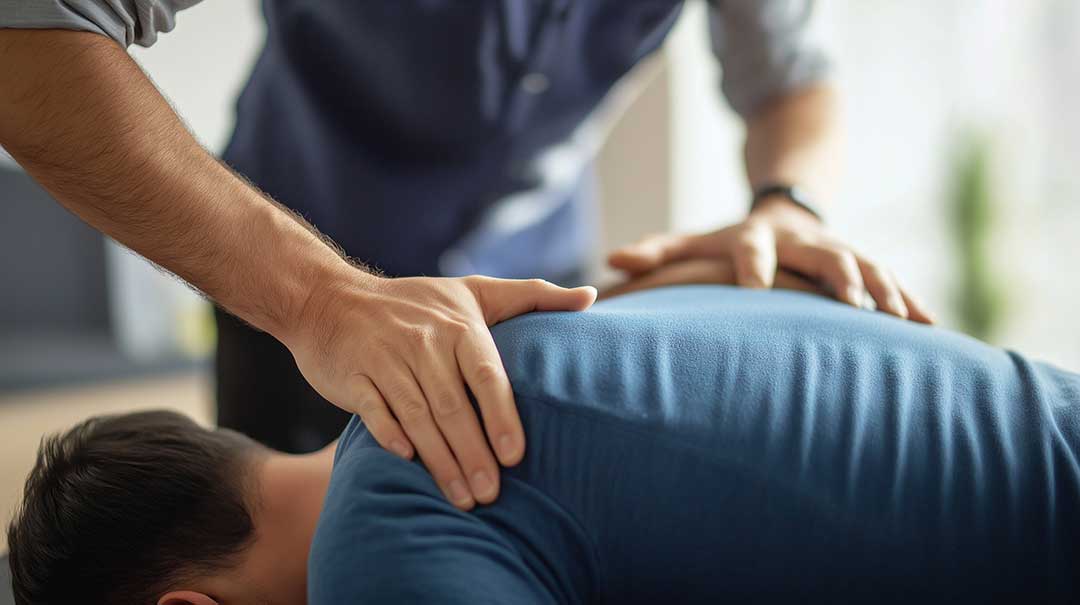
A sound plan should not discourage necessary medical evaluation or promise that adjustments will straighten the spine. It should also include clear limits: if symptoms are not improving, if pain is increasing, or if the curve appears to be changing, the plan needs reassessment.
When should someone seek medical evaluation promptly?
New or rapidly worsening scoliosis in an adult deserves medical assessment because adult-onset curvature can sometimes be related to degeneration, fracture, infection, tumor, or another underlying problem.
Prompt evaluation is also appropriate for:
- New weakness, numbness, or tingling
- Trouble walking or repeated falls
- Loss of bladder or bowel control
- Severe night pain or unexplained weight loss
- Fever accompanied by back pain
- Pain after a significant fall or accident
- Shortness of breath associated with a large or worsening curve
- Severe pain that does not settle with ordinary activity changes
Children and teenagers with a noticeable curve, uneven shoulders, a prominent rib, or persistent back pain should also be assessed rather than treated solely based on appearance.
What is a realistic expectation?
For most people, the realistic goal is improved comfort, movement, strength, and confidence with daily activities—not a guaranteed reduction in the spinal curve.
Chiropractic care may be reasonable for selected symptoms when it is gentle, individualized, and coordinated with appropriate evaluation. It should not be presented as a proven method for reversing scoliosis or preventing progression. The most useful approach combines accurate diagnosis, age-appropriate monitoring, exercise or physical therapy when indicated, and timely referral when warning signs appear.
