
What is a sports concussion?
A concussion is a type of traumatic brain injury that can occur after a bump, blow, or jolt to the head or body. The force can cause the brain to move rapidly inside the skull, temporarily affecting balance, memory, thinking, vision, mood, or coordination.
A concussion does not always involve loss of consciousness. An athlete may remain awake, walk off the field, and still have a significant injury. Symptoms can appear immediately or develop over the following hours.
Sports with frequent body contact or falls carry greater risk, but concussions can happen in nearly any activity, including soccer, basketball, lacrosse, gymnastics, wrestling, baseball, softball, cycling, skateboarding, and recreational play.
How can athletes lower the risk of concussion?
The most effective prevention approach combines proper technique, well-maintained equipment, rule enforcement, conditioning, and a team culture that values reporting symptoms.
Athletes, coaches, and families can reduce avoidable head impacts by:
- Learning and using sport-specific techniques that do not involve leading with the head.
- Following rules designed to prevent dangerous contact, late hits, and intentional head impacts.
- Practicing controlled body positioning, safe falling, and proper tackling or checking techniques where applicable.
- Limiting unnecessary contact during practices, particularly in youth sports.
- Taking fatigue seriously, since tired athletes may react more slowly or use poor technique.
- Reporting unsafe drills, overly aggressive play, or equipment problems before someone is injured.
- Supporting teammates who leave play after a suspected concussion rather than pressuring them to return.
A safe sports culture matters as much as individual skill. Athletes should hear consistently that reporting symptoms is responsible, not a sign of weakness.
Do helmets prevent concussions?
Helmets can reduce the risk of serious head injuries and skull fractures, but no helmet can prevent every concussion. A helmet should match the activity, be properly fitted, and be replaced after a significant impact or when it is damaged.
For cycling, skating, scootering, skiing, snowboarding, and similar activities, the helmet should sit level on the head, cover the appropriate areas, and remain secure during movement. Loose straps, cracked shells, worn padding, or an incorrect size can reduce protection.
Families should be cautious about products that claim to eliminate concussion risk. Protective equipment is one part of prevention, not a guarantee against injury.
In a community with busy streets, sidewalks, driveways, schoolyards, and recreational fields, helmet use should extend beyond organized practices. Children and adults are also at risk during informal play and transportation-related activities.
What should coaches and sports programs do?
Sports programs can lower concussion risk through consistent policies rather than relying only on individual judgment.
Useful program-level measures include:
- Providing preseason concussion education for athletes, families, coaches, and officials.
- Using drills that teach safe movement and reduce unnecessary head contact.
- Enforcing rules consistently during both practices and games.
- Maintaining playing surfaces, goals, mats, protective padding, and other equipment.
- Having a written plan for recognizing symptoms, removing an athlete from play, and communicating with families.
- Ensuring staff know who will evaluate an injured athlete and how emergency care will be arranged.
- Tracking previous concussions and following appropriate return-to-play procedures.

In New York State school athletics, coaches and other designated school personnel have concussion-management training responsibilities. School programs also follow written procedures for removing students from participation and managing their return to sports.
Parents can ask whether a youth program has a concussion policy, who is present during practices, and how suspected injuries are handled. These questions are relevant for school teams, recreational leagues, camps, and informal competitive programs.
What symptoms should athletes and families watch for?
Possible concussion symptoms include headache, dizziness, nausea, blurred vision, sensitivity to light or noise, confusion, slowed thinking, unusual irritability, difficulty concentrating, memory problems, poor balance, sleep changes, and unusual tiredness.
Children and teenagers may not describe symptoms clearly. A parent may notice that an athlete is unusually quiet, forgetful, emotional, clumsy, or unable to follow ordinary instructions.
An athlete should be removed from participation immediately if a concussion is suspected. The athlete should not return to the same day’s activity, even if symptoms improve. Coaches, parents, teammates, and sports officials should not attempt to decide that the injury is minor enough to ignore.
Emergency evaluation is needed for danger signs such as worsening headache, repeated vomiting, increasing confusion, seizure, weakness or numbness, slurred speech, unusual drowsiness, loss of consciousness, or difficulty recognizing people or places.
Can chiropractic care diagnose or clear an athlete after a concussion?
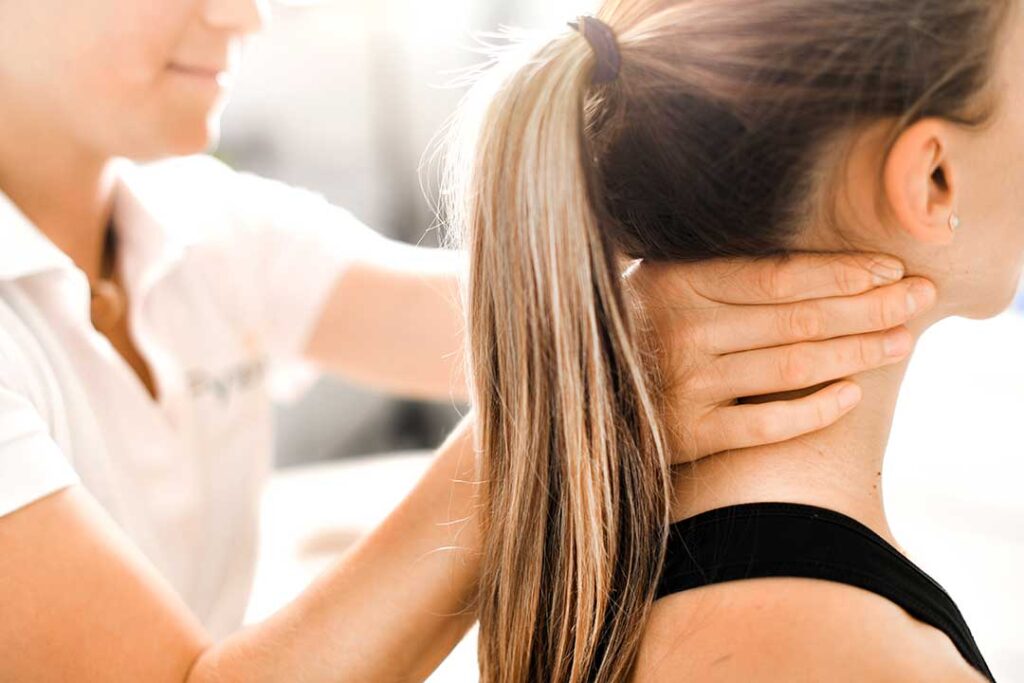
A concussion requires medical evaluation by a healthcare provider qualified to assess brain injuries. Chiropractic assessment may be relevant to musculoskeletal problems that occur alongside a sports injury, such as neck discomfort, restricted movement, or muscle strain, but it should not replace concussion evaluation or emergency care.
A chiropractor should not be the sole source of clearance when an athlete has possible concussion symptoms. Return-to-play decisions require appropriate clinical assessment and a gradual progression overseen by a qualified healthcare provider. The athlete must stop if symptoms return or worsen.
This distinction is especially important because neck pain, headache, dizziness, and balance problems can arise from more than one type of injury. Treating a neck or back complaint does not automatically establish that the brain has recovered.
How should an athlete return to sports after a concussion?
Returning to sports should be gradual and medically guided. An athlete generally progresses from regular daily activities to light aerobic exercise, sport-specific activity, non-contact practice, controlled contact practice, and finally competition.
Each stage should be completed without the return of symptoms before moving forward. The process may take a week or longer, and it can take more time when symptoms persist.
An athlete should first be able to manage ordinary school, work, and household activities without significant symptoms. Early return to full-contact activity increases the risk of another concussion while the brain is still healing.
Families should also remember that recovery is not a competition. Rest may be needed, but prolonged total inactivity is not always appropriate. Sleep, hydration, reasonable daily routines, and carefully adjusted activity should follow the treating provider’s guidance.
What can local families do before the season starts?
Before participation begins, families can prepare by reviewing emergency contacts, medical history, prior concussions, medications, and the program’s injury policy. Equipment should be checked before the first practice, not after an accident.
For children playing outdoors during humid summers, rainy periods, or colder months, hydration, appropriate clothing, visibility, and field conditions also affect safe movement. Slippery surfaces, poor lighting, worn turf, icy areas, and crowded sidelines can increase fall and collision risks.
The practical standard is straightforward: reduce avoidable head impacts, make symptom reporting routine, and remove athletes from play whenever a concussion is possible.
