

Sports can strengthen the muscles that support the spine, but sudden twisting, poor lifting technique, fatigue, and returning too quickly after time off can increase the risk of back injury. For residents of Lynbrook, NY, prevention often depends less on avoiding activity and more on preparing the body, managing training demands, and recognizing warning signs early.
What causes most sports-related back injuries?
Most sports-related back problems develop from repeated stress rather than one dramatic event. The lower back is especially vulnerable during activities that involve jumping, sprinting, rotation, contact, or lifting.
Common contributors include:
- Starting intense training without conditioning
- Repeating the same movement without adequate recovery
- Weakness in the hips, legs, abdomen, or back
- Limited mobility in the hips or upper back
- Poor landing, bending, or lifting mechanics
- Playing through pain that changes movement
- Sudden increases in practice time, distance, weight, or intensity
Contact sports can also cause acute injuries from falls or collisions. In younger athletes, persistent pain with activity may occasionally reflect a bone stress injury rather than ordinary muscle soreness.
How should athletes warm up before practice or competition?
A useful warm-up gradually raises body temperature and prepares the movements required by the sport. Five to fifteen minutes of easy activity, such as jogging, brisk walking, or gentle cycling, can be followed by dynamic movements.
Examples include:
- Walking lunges
- Controlled leg swings
- Bodyweight squats
- Arm circles
- Short, easy accelerations
- Sport-specific drills performed at reduced speed
Long periods of aggressive static stretching immediately before explosive activity are not necessary for everyone and may not prepare the body as effectively as active movement. Static stretching can be included after activity or during separate flexibility sessions, especially for areas known to be tight.
During colder months, athletes may need more gradual preparation before outdoor practices. Cold muscles can feel less flexible, and slippery surfaces may alter footing and landing mechanics. A longer indoor warm-up or extra time in a sheltered area can help before full-speed activity.
Which muscles should athletes strengthen?
Back protection depends on coordinated strength throughout the trunk and lower body, not just isolated back exercises. Strong hips and legs help absorb force, while the abdominal and back muscles help control the spine during movement.
Useful training patterns may include:
- Glute bridges
- Side-lying leg raises
- Split squats
- Step-ups
- Bird-dog exercises
- Dead-bug exercises
- Planks performed with proper form
- Light hip-hinge practice
The goal is controlled movement rather than lifting the heaviest possible weight. An athlete should be able to keep the spine in a comfortable, stable position while breathing normally. If an exercise produces sharp pain, radiating symptoms, or loss of control, it should be stopped.
Young athletes should not be pushed into advanced lifting programs without instruction. Technique, supervision, and gradual progression matter more than the amount of weight.
How can athletes avoid overtraining?
Training loads should increase gradually. A common mistake is trying to make up for missed practices, winter inactivity, or a long school break by immediately returning to the previous level.
A safer progression may involve increasing only one factor at a time:
- Duration
- Distance
- Number of practices
- Resistance or weight
- Speed
- Contact or competition intensity
Rest days are part of training, not a sign of poor commitment. Sleep, adequate food, and regular hydration also affect coordination and recovery. On hot or humid days, athletes may tire sooner and lose movement quality, particularly during outdoor practices. Water should be available before, during, and after activity, with additional guidance for prolonged or intense exercise.
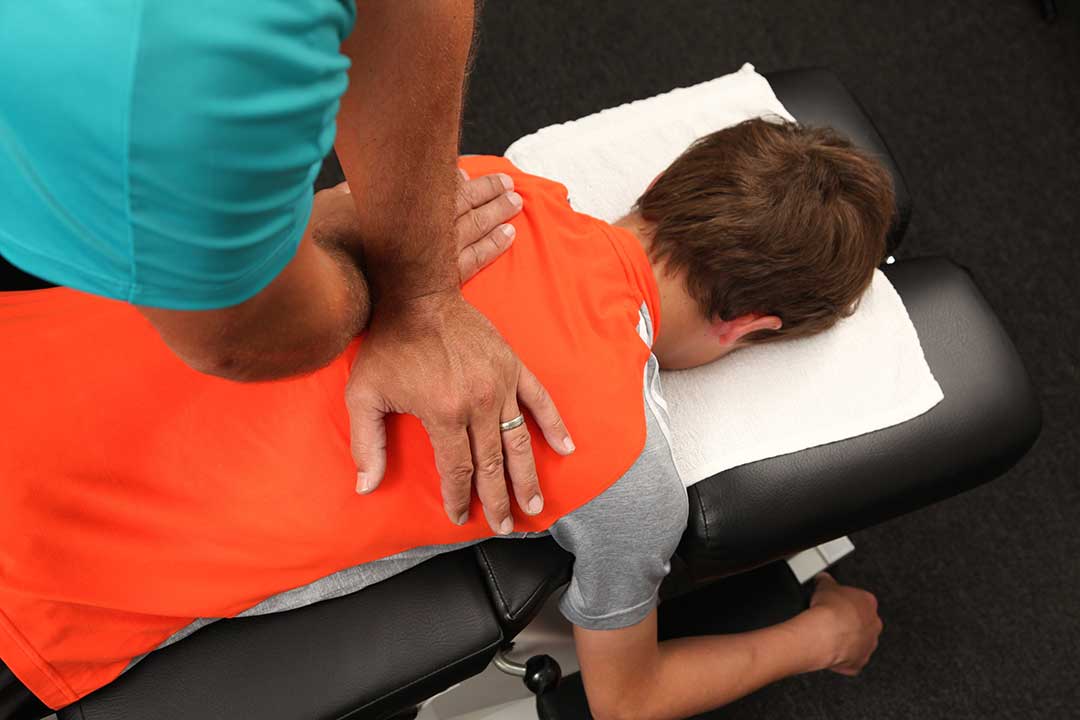
Coaches, parents, and athletes should watch for declining form. Slower reactions, excessive bending, altered running mechanics, or repeated complaints of soreness may indicate that the workload is exceeding current capacity.
What is the safest way to bend, lift, and land?
Sports-related back strain often occurs when the spine is bent and rotated while handling force. Athletes can reduce risk by keeping the movement controlled and allowing the hips and legs to share the workload.
For lifting:
1. Move close to the object.
2. Set the feet in a stable position.
3. Bend through the hips and knees.
4. Keep the object close to the body.
5. Avoid twisting while lifting.
6. Turn with the feet instead of rotating sharply through the lower back.
For landing, aim to land quietly with the knees and hips slightly bent. The knees should generally track in the same direction as the feet. In jumping sports, repeatedly landing stiff-legged or with the trunk collapsing forward can increase stress through the lower back and legs.
Should an athlete play through back pain?
Mild muscle soreness after unfamiliar activity often improves with rest and normal movement. Pain that is sharp, worsening, persistent, or associated with weakness should not be ignored.
An athlete should stop the activity and report symptoms when pain:
- Changes running, jumping, lifting, or throwing technique
- Travels into the buttock or leg
- Causes numbness, tingling, or weakness
- Returns each time the athlete resumes play
- Continues at rest or disrupts sleep
- Follows a collision, fall, or forceful twist
“Playing through it” can turn a manageable problem into a longer recovery, especially when the athlete begins compensating with other parts of the body.
How should someone return after a back injury?
Return should be gradual and symptom-guided. The athlete should first tolerate ordinary activities, then light exercise, before progressing to sport-specific drills, practice, and competition.
A practical sequence may look like this:
- Comfortable walking and daily movement
- Easy aerobic activity
- Basic strengthening and mobility work
- Non-contact sport drills
- Faster or more demanding drills
- Controlled practice
- Full practice and competition
The athlete should not move forward if symptoms increase during the activity or later that day. A return-to-play plan may need to be adjusted based on the type of injury, age, sport, and examination findings.
When does back pain require prompt medical attention?
Immediate evaluation is warranted after a serious collision, fall, or impact if there is severe pain, inability to move normally, or suspected fracture. Urgent care is also needed for new loss of bladder or bowel control, numbness around the groin, progressive leg weakness, or significant difficulty walking.
Back pain accompanied by fever, unexplained weight loss, or persistent night pain also deserves medical assessment. Children and teenagers with repeated pain during extension-based sports, such as gymnastics, baseball, or football, should not continue intense activity without evaluation.
Prevention is strongest when athletes treat recovery, technique, conditioning, and early symptom reporting as parts of the sport itself. That approach allows local residents to stay active through changing seasons while reducing avoidable strain on the back.
