
What does a cracking or popping joint actually mean?
A cracking sound usually comes from normal movement inside or around a joint. It does not automatically mean that the joint is damaged, “out of place,” or developing arthritis.
Joints contain synovial fluid, which helps reduce friction between the bones. When a joint is stretched or moved, pressure can change inside the joint space. Dissolved gases may rapidly shift, creating the familiar pop or crack. Other sounds come from tendons or ligaments moving across nearby structures, or from uneven cartilage surfaces.
The sound itself is usually less important than what accompanies it. A painless pop that occurs during ordinary movement is generally less concerning than a new sound combined with swelling, weakness, instability, or loss of motion.
Does cracking your knuckles cause arthritis?
Available evidence does not show that routinely cracking knuckles causes arthritis. The long-standing belief that knuckle cracking wears out the joint has not been supported by research.
Some people may notice temporary changes after cracking, such as a feeling of looseness or increased movement. That sensation does not necessarily mean the joint has been “realigned.” It may simply reflect a short-term change in joint pressure, soft-tissue tension, or how the nervous system perceives movement.
Frequent or forceful cracking can still be irritating if it causes soreness. Pulling, twisting, or pressing a joint beyond its comfortable range may strain surrounding tissues, especially in people with joint hypermobility or a history of injury.
Why do knees, shoulders, and backs make different sounds?
Not all joint noises have the same cause.
- Knuckles and fingers: Often produce a quick pop related to pressure changes in the joint fluid.
- Knees: May click or grind because of tendons, ligaments, the kneecap, or changes in cartilage.
- Shoulders: Can make snapping sounds when tendons move around the shoulder blade or upper arm.
- Hips: May produce a snapping sensation when a tendon moves over a bony area.
- Spine: May pop from small spinal joints, surrounding ligaments, or movement between adjoining tissues.
A grinding or rough sensation is different from a single clean pop. Grinding may occur with cartilage wear or inflammation, although the sound alone cannot diagnose arthritis. A proper assessment considers pain, movement, strength, swelling, injury history, age, and daily activities.
Is joint cracking a sign of arthritis?
Joint noise by itself is not a reliable sign of arthritis. Arthritis becomes more likely when noise appears with persistent pain, stiffness, swelling, reduced movement, or difficulty using the joint.
For example, knee arthritis may cause aching after activity, stiffness after sitting, swelling, or discomfort on stairs. A painless clicking knee in someone who can walk, squat, and use the leg normally may not indicate a serious problem.
Weather changes can also affect how joints feel. During colder or damp periods, including winter conditions that local residents may notice around the Northeast, some people report more stiffness or aching. This does not mean that cold weather is directly damaging the joint. Reduced activity, muscle tension, changes in routine, and sensitivity around already-irritated tissues may contribute.
Is it safe to crack your own neck or back?
Gentle, natural movement is usually different from forcefully twisting the neck or back to create a sound. The neck contains important nerves and blood vessels, so repeated or aggressive self-manipulation is not advisable.
A person should not force a joint to crack if doing so causes pain, dizziness, tingling, numbness, weakness, headache, or a feeling of instability. It is also unwise to keep manipulating the same area repeatedly because it feels temporarily better. That pattern may signal muscle tension, poor movement habits, or an underlying joint problem that needs evaluation.
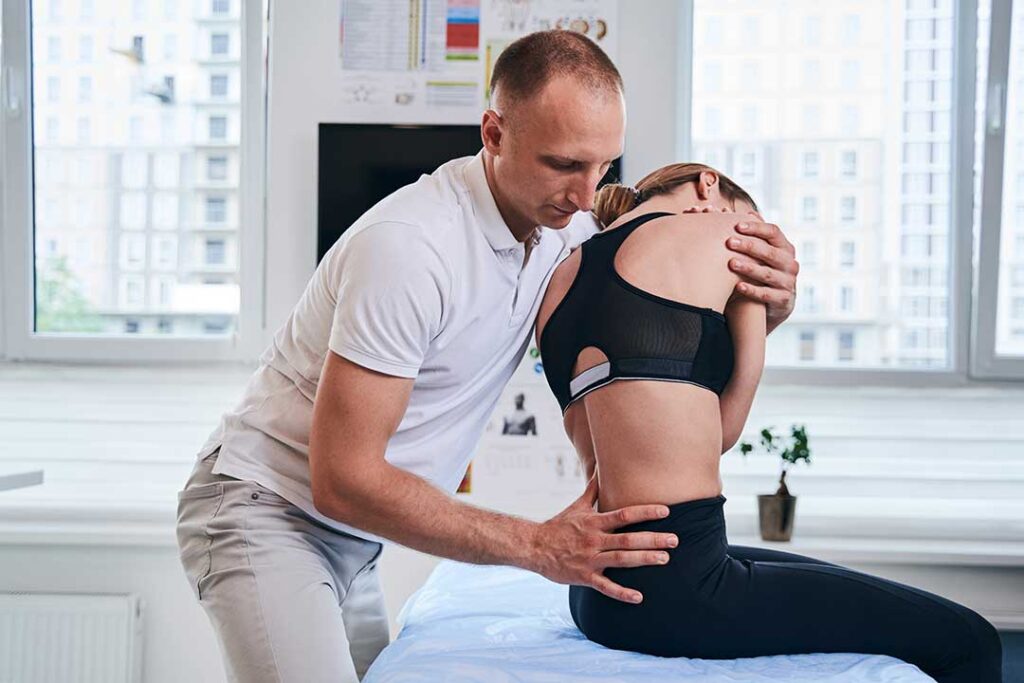
Spinal manipulation is a specific clinical technique involving controlled movement, not simply “making bones crack.” A sound may occur during some techniques, but the sound is not the treatment goal and does not prove that a joint was put back into place.
What is the difference between joint cracking and a chiropractic adjustment?
A chiropractic adjustment may involve a controlled force applied to a joint after a health history and physical assessment. The purpose may include reducing pain, improving movement, or addressing a mechanical restriction. A popping sound can occur when gas shifts within joint fluid, but the sound itself is not evidence that a vertebra was misaligned or that the body has been “reset.”
For some types of back or neck pain, spinal manipulation or mobilization may provide short-term improvement when used as part of a broader plan that can include exercise, education, and activity modification. Results vary, and not every person or condition is appropriate for manipulation.
Before any neck or spinal technique, relevant information includes:
- Recent falls, collisions, or other injuries
- Osteoporosis or a history of fracture
- Blood-clotting problems or blood-thinning medication
- Neurological symptoms
- Inflammatory arthritis
- Recent surgery
- Unexplained or severe pain
- New headaches, vision changes, or balance problems
Mild temporary soreness or stiffness can occur after manipulation. Severe or unusual symptoms require prompt medical attention.

When should a cracking joint be checked?
Joint noise deserves evaluation when it is new, worsening, or associated with other symptoms. Warning signs include:
- Significant pain during or after the crack
- Swelling, warmth, redness, or bruising
- Locking or inability to fully bend or straighten the joint
- Repeated giving way or a feeling that the joint is unstable
- Numbness, tingling, or weakness
- Symptoms beginning after a fall, collision, or lifting injury
- Fever or unexplained illness
- A painful neck crack followed by severe headache, dizziness, vision changes, speech difficulty, or weakness
A sudden neurological symptom should be treated as urgent rather than as an ordinary joint problem.
What can residents do at home?
For painless joint noise, the most useful approach is usually to keep moving without forcing the sound. Walking, gentle range-of-motion exercises, and gradual strengthening can help maintain comfortable function. During colder months, warm clothing, brief movement breaks, and a gradual warm-up may make stiff joints feel more comfortable.
Avoid trying to “fix” every pop. Pay attention to patterns instead:
- Does the sound happen only after sitting?
- Is there pain during stairs, lifting, or reaching?
- Does the joint swell afterward?
- Is movement becoming more limited?
- Does cracking provide only brief relief before tightness returns?
Those details are more informative than the volume of the sound. A quiet joint can still be injured, and a loud joint can be healthy. The combination of symptoms, function, and history provides the better guide.
The practical takeaway
Most painless joint cracking is a normal mechanical sound and does not mean arthritis or damage. Cracking should be taken more seriously when it is painful, persistent, associated with swelling or instability, or accompanied by neurological symptoms.
The safest habit is to move joints within a comfortable range, avoid forceful self-twisting, and seek timely medical evaluation when warning signs appear. For people considering spinal manipulation, an individualized assessment and clear discussion of risks, benefits, and alternatives are more meaningful than whether a treatment produces a pop.
