
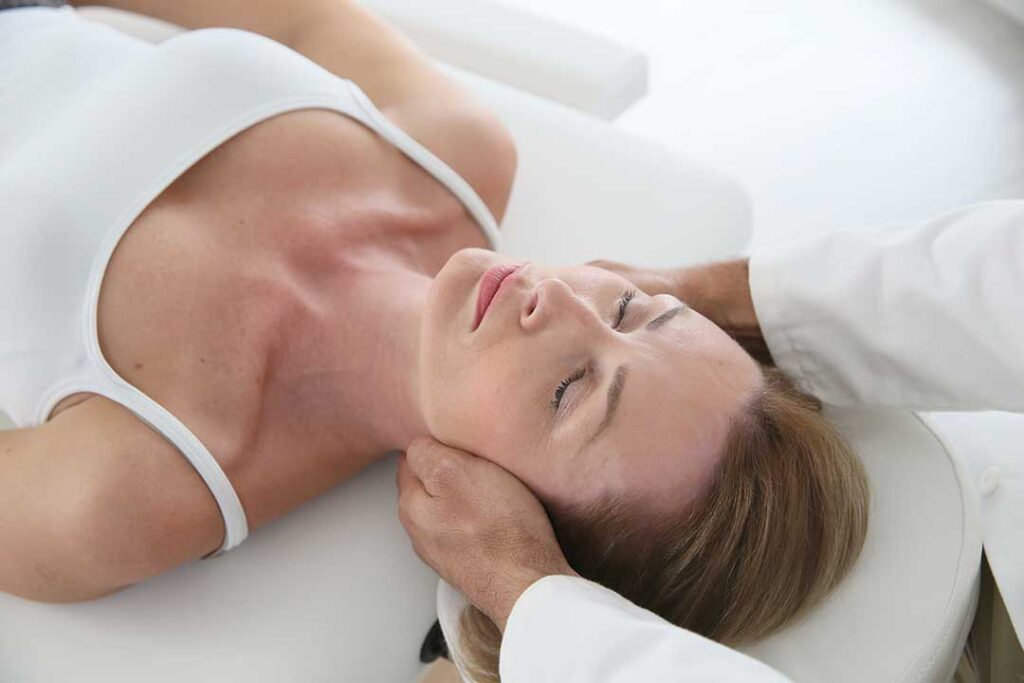
Clicking, popping, or grinding sounds in the neck are common and often harmless. The sound may come from normal movement inside a neck joint, a tendon or ligament shifting, muscle tension, or age-related changes. The key question is whether the noise occurs by itself or with pain, stiffness, weakness, numbness, dizziness, or a recent injury.
What causes clicking in the neck?
Neck clicking is usually caused by movement in the small joints and soft tissues that support the cervical spine. The medical term for joint noises such as popping, cracking, or grinding is crepitus.
Several normal processes can create these sounds:
- Small pressure changes inside a joint can produce a popping sound.
- Tendons or ligaments may move slightly over nearby bone.
- Tight muscles can alter how the neck moves.
- Mild joint wear can create a rougher clicking or grinding sensation.
- The sound may come from the upper back or shoulder area rather than the neck itself.
A painless click that happens occasionally, especially when turning the head after sitting still, is usually not a sign of serious damage.
Is neck clicking caused by gas bubbles?
Sometimes. Joints contain fluid that helps surfaces move smoothly. When the joint changes position, pressure inside the fluid can shift and create small gas pockets. Their movement or release may produce a pop.
This is similar to the sound produced when other joints crack. The noise itself does not necessarily mean that bones are rubbing together or that the neck is being injured.
A click can also sound louder during quiet moments at home, while working at a desk, or when turning the head slowly. In a dense community such as Lynbrook, NY, many residents spend portions of the day commuting, using computers, or looking down at phones, which can make normal neck sounds more noticeable when the surrounding muscles become tired.
Can poor posture make the neck click?
Poor posture can contribute indirectly. Keeping the head forward for long periods increases the workload on the muscles at the back of the neck and upper shoulders. Over time, this may lead to stiffness, muscle imbalance, and altered movement patterns.
Common examples include:
- Looking down at a phone for extended periods
- Working at a laptop with the screen too low
- Reading in bed with the head propped forward
- Driving with the head held rigidly or pushed toward the windshield
- Sleeping with the neck twisted or unsupported
Posture does not automatically damage the spine, and a clicking sound does not prove that posture is the cause. However, stiffness and fatigue can make clicking more frequent or easier to notice.
Gentle movement breaks, changing positions, and placing screens near eye level may reduce muscle strain. Movements should remain comfortable and should not involve forceful twisting.
Does arthritis cause neck clicking?
Arthritis and other age-related changes can contribute to clicking, grinding, or stiffness. The small joints between the vertebrae may become less smooth over time, and the discs between the vertebrae can gradually lose some height and flexibility.
These changes are common with aging and do not always cause symptoms. When they do, a person may notice:
- Reduced ability to turn the head
- Morning stiffness
- Aching after prolonged sitting
- Grinding rather than a single light click
- Pain that spreads toward the shoulder or upper back
Neck clicking does not mean that arthritis is present, and cracking the neck does not automatically cause arthritis. A diagnosis requires a medical history and physical examination, with imaging used only when it is appropriate.
Is it safe to crack the neck intentionally?
Occasional, gentle movement that produces a spontaneous pop is generally different from repeatedly forcing the neck to crack. Forceful or frequent self-manipulation can strain muscles, irritate joints, or aggravate an existing problem.
Avoid using strong pulling, rapid rotation, or devices designed to force the neck into a particular position. A person who feels compelled to crack the neck repeatedly may be responding to stiffness, muscle tension, or discomfort that deserves evaluation rather than more force.
Pain during or after cracking is a reason to stop. Sudden neck movements are especially inappropriate after a fall, collision, sports injury, or other trauma.
When is neck clicking a concern?
Clicking deserves medical attention when it is accompanied by symptoms that suggest more than a harmless joint noise. Warning signs include:
- Persistent or worsening neck pain
- Significant stiffness or loss of movement
- Pain traveling into the shoulder, arm, or hand
- Numbness, tingling, or weakness
- Loss of balance or coordination
- Severe headache, dizziness, or visual changes
- Fever or feeling acutely ill
- Clicking that began after an accident or fall
Severe neck pain after an injury, new weakness, numbness affecting an arm or leg, trouble walking, or loss of bladder or bowel control requires urgent medical assessment. Sudden dizziness, difficulty speaking, facial weakness, or one-sided weakness also warrants emergency care.
Most people with an occasional painless click do not have a dangerous condition. The combination of symptoms, timing, and functional changes is more useful than the sound alone.
What can help reduce neck clicking and stiffness?
If the clicking is painless, simple habits may help reduce the stiffness that makes it more noticeable:
- Change sitting or screen positions regularly.
- Take brief movement breaks during desk work or driving.
- Use slow, comfortable neck movements rather than forceful stretching.
- Keep frequently used screens close to eye level.
- Support the neck in a neutral position during sleep.
- Use warmth for short periods if muscle tightness is present.
- Avoid repeatedly testing or forcing the neck to produce a sound.
Gentle activity is usually preferable to prolonged immobilization. However, exercises should be modified or stopped if they cause sharp pain, arm symptoms, dizziness, or increasing stiffness.
How is the cause evaluated?
A healthcare professional typically asks when the clicking began, whether it follows an injury, what movements trigger it, and whether pain or nerve symptoms are present. The neck, shoulders, posture, strength, sensation, and range of motion may also be assessed.
Imaging is not always needed for an isolated, painless click. It becomes more relevant when symptoms persist, follow trauma, interfere with daily activities, or suggest arthritis, nerve compression, or another underlying condition.
For local residents, seasonal habits may also matter. Cold weather can encourage people to stay in one position indoors, while snow clearing, home maintenance, and prolonged driving can temporarily increase muscle tension. These factors may make a pre-existing movement issue more noticeable without being the primary cause.
The most useful distinction is simple: a neck that clicks without pain is often normal; a neck that clicks with neurological symptoms, significant pain, or injury should be evaluated.
