
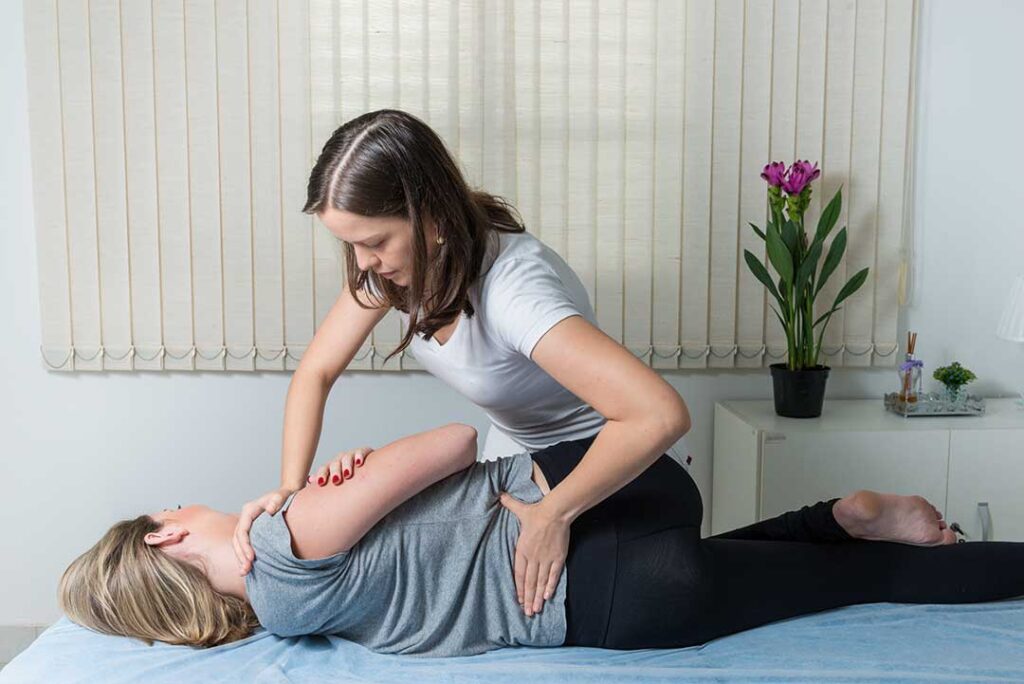
Tension headaches often feel like steady pressure, tightness, or a band wrapped around the forehead. The discomfort may also spread into the temples, jaw, neck, or shoulders. Gentle stretching can help when muscle tension, prolonged sitting, stress, or an awkward sleeping position contributes to the pain.
Stretching should feel mild and controlled, not forceful. Stop if symptoms become sharper, spread into an arm, cause dizziness, or produce numbness or weakness.
What makes a headache more likely to be tension-related?
A tension-type headache commonly affects both sides of the head and may feel dull, tight, or pressure-like rather than throbbing. Neck and shoulder tightness can occur at the same time.
Common contributing factors include:
- Holding the head forward while using a phone or computer
- Sitting for long periods without changing position
- Clenching the jaw or grinding the teeth
- Stress-related tightening of the shoulders and scalp
- Sleeping with the neck turned or unsupported
- Dehydration, poor sleep, or skipped meals
Seasonal routines can also affect muscle tension. During colder months, residents may spend more time indoors, sit near heating vents, or tighten the shoulders against cold air. Long commutes, desk work, and household tasks can create similar strain.
Which stretches may help relieve neck and shoulder tension?
The following movements are appropriate for many adults with mild, familiar tension. Perform them slowly and breathe normally. A few gentle repetitions are usually more useful than forcing a longer stretch.
Chin tuck
Sit or stand with the back of the head gently aligned over the shoulders.
- Look straight ahead.
- Draw the chin backward, as if making a small “double chin.”
- Keep the eyes level rather than looking down.
- Hold for 3 to 5 seconds.
- Relax and repeat 5 to 10 times.
This movement activates the deeper neck muscles and may counter the forward-head position that develops during screen use. It should not create pressure in the throat or sharp pain at the base of the skull.
Side neck stretch
Keep the shoulders relaxed and facing forward.
- Slowly tilt the right ear toward the right shoulder.
- Stop when a mild stretch is felt along the left side of the neck.
- Hold for 15 to 20 seconds.
- Return to center and repeat on the other side.
Do not lift the shoulder toward the ear. Avoid pulling the head down with the hand, especially if the neck is painful or sensitive.
Neck rotation
This stretch can help after looking in one direction for a long period.
- Sit upright with the chin level.
- Turn the head slowly to the right until a comfortable stretch is felt.
- Hold for about 10 seconds.
- Return to center and repeat to the left.
- Complete 3 to 5 repetitions per side.
The movement should remain within a comfortable range. Do not force the head to turn farther simply to match a demonstration.
Upper trapezius stretch
The upper trapezius muscles run from the base of the skull toward the shoulders and upper back.
- Sit on one hand or place that hand under the thigh.
- Tilt the head away from that side.
- Slightly angle the nose toward the armpit if a deeper but still comfortable stretch is desired.
- Hold for 15 to 20 seconds, then switch sides.
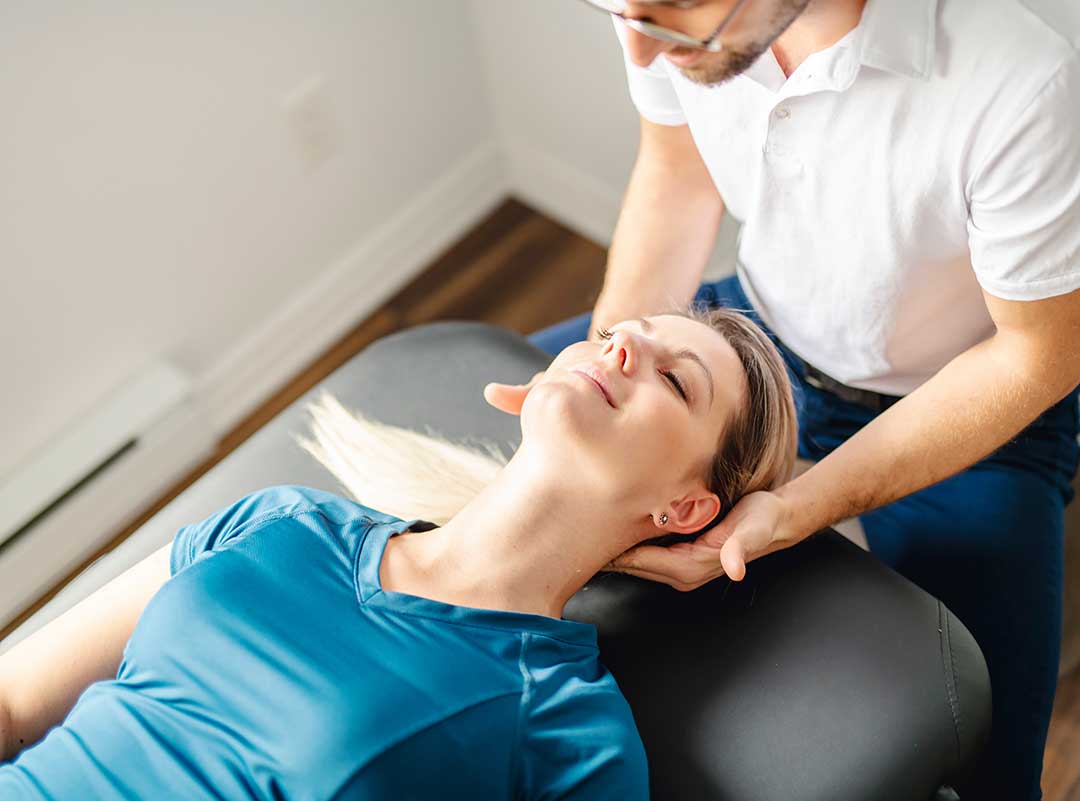
Keep the movement gentle. A pulling sensation is expected; burning, tingling, or shooting pain is not.
Shoulder rolls
Shoulder rolls are useful during work or household routines because they require little space.
- Lift the shoulders toward the ears.
- Move them backward and down in a slow circle.
- Repeat 8 to 10 times.
- Reverse the direction for another 8 to 10 repetitions.
The goal is to reduce habitual shoulder bracing, not to create large or fast movements.
Doorway chest stretch
Tight chest muscles can encourage the shoulders to round forward.
- Stand in a doorway with the forearms resting lightly against the frame.
- Step forward until a gentle stretch is felt across the chest.
- Keep the ribs relaxed and avoid arching the lower back.
- Hold for 15 to 30 seconds.
- Repeat 2 or 3 times.
This stretch should not cause shoulder instability, arm numbness, or pain in the front of the shoulder.
How often should these stretches be performed?
For prevention, a brief movement break every 30 to 60 minutes may be more practical than waiting until a headache becomes intense. During a break, stand up, relax the shoulders, take several slow breaths, and perform one or two comfortable stretches.
A simple routine may take five minutes:
1. Five chin tucks
2. One side neck stretch per side
3. Five slow neck rotations per side
4. Ten shoulder rolls
5. Several relaxed breaths with the jaw unclenched
Stretching should complement, not replace, adequate sleep, regular meals, hydration, and an ergonomic work position. A screen placed near eye level can reduce the tendency to bend the neck forward. Feet supported on the floor and elbows resting comfortably may also reduce shoulder tension.
Should stretching be used during an active headache?
Gentle stretching may help if the headache is familiar and the neck feels tight. Use smaller movements than usual, keep the room quiet if light or noise is bothersome, and avoid aggressive massage or forceful neck manipulation.
Some people benefit from placing a warm compress across the upper shoulders for 10 to 15 minutes before stretching. Heat should feel comfortably warm rather than hot, and it should not be used while sleeping.
If movement makes the headache worse, stop and rest. A headache that repeatedly returns despite reasonable self-care deserves evaluation, particularly if it interferes with work, sleep, driving, or daily responsibilities.
When is a headache not appropriate for self-treatment?
Seek urgent medical care for a sudden, severe headache or a headache accompanied by confusion, fainting, seizure, weakness, numbness, trouble speaking, double vision, fever, stiff neck, or a new rash. Medical attention is also warranted after a head injury, especially if symptoms are worsening.
A changing headache pattern should not automatically be assumed to be muscle tension. Frequent headaches, headaches that require pain medicine more than a couple of times each week, or pain that persists despite rest and routine measures should be discussed with a qualified healthcare professional.
For local residents, keeping a short headache record can be useful. Note the timing, duration, sleep, meals, hydration, screen time, stress, neck symptoms, and activities that helped or worsened the pain. This information can make it easier to recognize patterns and distinguish occasional tension from a recurring condition that needs further assessment.
