
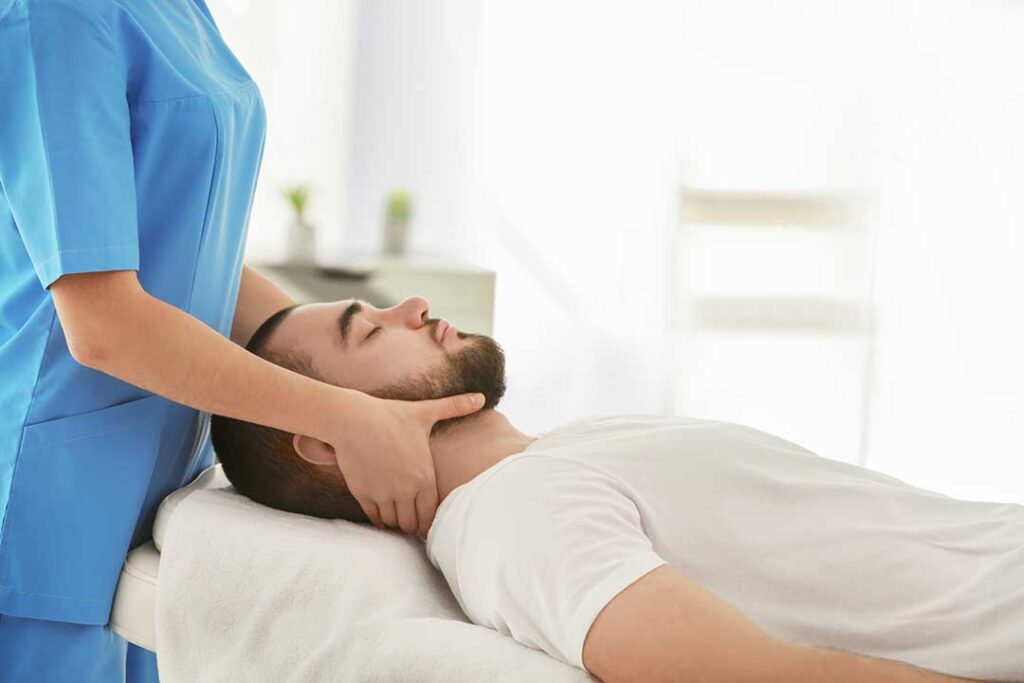
A minor back strain often improves with simple home care, gentle movement, and time. The usual goal is not complete bed rest, but reducing aggravating activity while keeping the body moving comfortably.
For residents of Lynbrook, NY, a strain may follow lifting a laundry basket, shoveling, gardening, moving household items, exercising, or spending too long in one position. Most mild strains cause localized aching, stiffness, muscle tightness, or pain that changes with movement.
How can you tell if back pain may be a minor strain?
A minor strain commonly begins after lifting, twisting, reaching, bending, or overusing the back. The discomfort is usually centered in the lower or middle back and may feel sore, tight, or sharp with certain movements.
Symptoms that are more consistent with a simple muscle strain include:
- Pain that stays mostly in the back rather than traveling down the leg
- Stiffness when standing up, turning, or changing position
- Muscle spasms or a feeling that the back is “locked”
- Gradual improvement over several days
- No fever, major injury, numbness, or loss of strength
Back pain can have many causes, so symptoms that do not fit this pattern should not automatically be treated as a strain.
Should you use ice or heat?
Ice may help during the first day or two if the back feels irritated after a specific activity. Apply a cold pack wrapped in a thin towel for about 15 to 20 minutes at a time. Do not place ice directly on the skin or fall asleep while using it.
Heat can be more comfortable when stiffness or muscle tightness is the main problem. A warm shower, heating pad on a low setting, or warm compress may help the muscles relax. Limit each session and protect the skin from burns.
There is no requirement to use ice before heat. Many people simply choose whichever feels better. Stop if either treatment increases pain, causes skin changes, or produces numbness.
Is bed rest helpful for a strained back?
Extended bed rest usually is not helpful. Staying in bed for a day or two may be reasonable if movement is initially very painful, but prolonged inactivity can increase stiffness and make normal activities harder to resume.
Try short, easy periods of movement instead:
- Walk around the home for a few minutes every hour or two
- Change sitting or standing positions regularly
- Avoid lying or sitting in one position for long periods
- Return gradually to ordinary tasks as symptoms allow
During icy winter weather, outdoor walking may not be safe. Indoor walking through the home or gentle movement while standing can provide a safer alternative.
What movements should you avoid?
For several days, reduce activities that clearly increase pain. This may include heavy lifting, repeated bending, twisting, intense exercise, deep cleaning, or carrying objects up and down stairs.
Avoid testing the back repeatedly to see whether it is “better.” A movement that causes a sharp increase in pain may be too demanding at that stage.
When lifting is necessary, keep the object close to the body, bend through the hips and knees, and avoid twisting while carrying. Smaller loads are safer than trying to move everything at once.
Can gentle stretching help?
Gentle movement may help, but stretching should not be forced. A mild pulling sensation can be acceptable; sharp, shooting, burning, or spreading pain is a reason to stop.
Examples that may feel comfortable for some people include:
- A slow walk
- Gentle pelvic tilting while lying on the back with knees bent
- Slowly bringing one knee toward the chest, only as far as comfortable
- Easy abdominal bracing while breathing normally
These exercises are not appropriate for every condition. If symptoms travel into the leg, or if movement produces tingling, numbness, or weakness, avoid experimenting with stretches and seek medical guidance.
What about over-the-counter pain medicine?
Some adults use nonprescription pain relievers for short-term discomfort. However, these medicines are not safe for everyone.
Anti-inflammatory medicines may be unsuitable for people with a history of stomach ulcers, kidney disease, certain heart conditions, blood-thinning medication use, or other medical concerns. Acetaminophen may also be unsafe with some liver conditions or when combined with excessive alcohol.
Read the label carefully, avoid taking more than directed, and ask a pharmacist or medical professional if there is uncertainty. Do not combine products that contain the same active ingredient.
How should you sleep with a back strain?
The most comfortable position varies. Side sleeping with a pillow between the knees may reduce twisting. Back sleeping with a pillow under the knees can also lessen tension for some people.
A supportive mattress is useful, but replacing a mattress is not necessary for most short-term strains. Avoid sleeping in a position that causes the pain to spread or leaves the back more painful after waking.
Getting out of bed may be easier by rolling onto one side, lowering the legs, and pushing up with the arms rather than sitting straight up.
When should back pain be checked promptly?
Seek urgent medical attention for back pain accompanied by:
- New loss of bladder or bowel control
- Numbness around the groin or inner thighs
- Weakness or numbness in both legs
- Inability to walk normally
- Severe pain after a fall, collision, or other significant injury
- Fever, chills, or feeling seriously ill
- Unexplained weight loss or a history of cancer
- Severe pain that worsens quickly or does not ease with rest
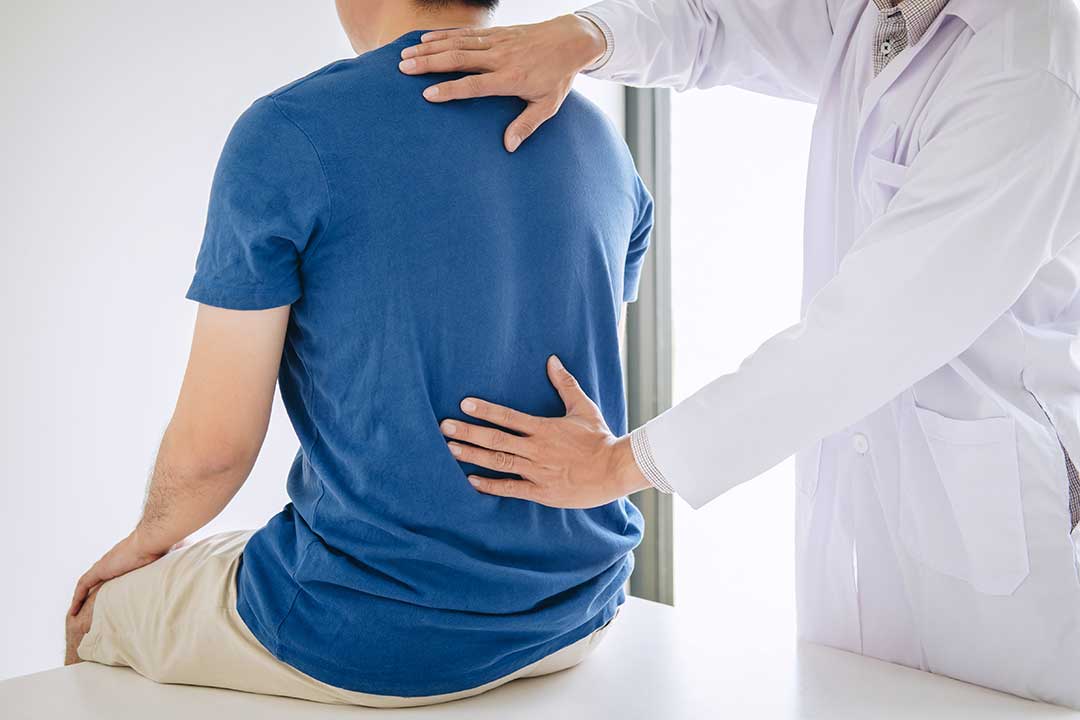
Medical advice is also appropriate when pain repeatedly returns, remains severe, interferes with sleep, or is not clearly improving after several days of home care. Pain that travels below the buttock, especially with tingling or weakness, may involve nerve irritation rather than a simple muscle strain.
How can minor strains be prevented?
Prevention usually comes from pacing rather than avoiding activity altogether. Warm up before strenuous work, divide heavy household tasks into smaller sessions, and take breaks during prolonged sitting or driving.
Seasonal chores deserve extra care. Snow and ice can make footing unpredictable, while spring yard work may involve sudden lifting, bending, and twisting after months of reduced activity. Use stable footwear, clear walkways when possible, and avoid rushing through demanding tasks.
Once the back is comfortable, regular walking and gradual strengthening of the trunk, hips, and legs can support everyday movement. Exercises should build gradually and should not create persistent or increasing pain.
A minor strain should generally show some improvement with sensible self-care. If the pattern is unusual, symptoms are worsening, or recovery has stalled, the problem may need a more careful evaluation rather than additional home remedies.
