
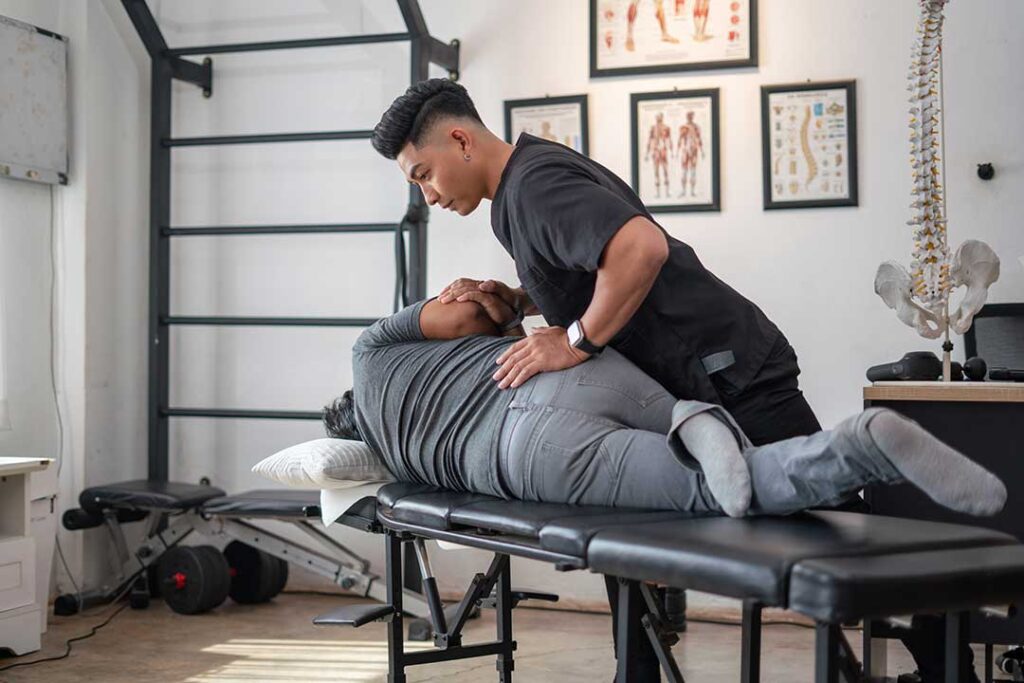
Tension headaches often feel like steady pressure, tightness, or a band around the forehead, temples, or back of the head. Tight muscles in the neck, shoulders, jaw, and upper back can contribute, especially after long periods of screen use, driving, desk work, stress, or poor sleep.
Gentle stretching may reduce muscle tension and improve comfort for some people. The goal is not to force the neck into a deep position. Slow, easy movement is generally more useful than aggressive stretching.
Which stretches may help a tension headache?
The most practical stretches target the neck, upper shoulders, chest, and upper back. Perform them in a comfortable seated or standing position, breathing slowly throughout.
Chin tuck
A chin tuck helps reduce the forward-head position that often develops while looking down at a phone or computer.
- Sit or stand with the head balanced over the shoulders.
- Look straight ahead.
- Gently draw the chin backward, as if making a small double chin.
- Do not tip the head up or down.
- Hold for 3 to 5 seconds, then relax.
- Repeat 5 to 10 times.
This should feel like mild work in the front of the neck or a gentle lengthening at the base of the skull. It should not cause sharp pain, dizziness, or numbness.
Side neck stretch
This stretch focuses on the muscles along the side of the neck.
- Sit upright with both shoulders relaxed.
- Slowly bring the right ear toward the right shoulder.
- Keep the face pointed forward rather than turning the chin.
- Hold for 15 to 20 seconds.
- Return to the center and repeat on the other side.
- Perform 2 times per side.
Do not pull the head down with the hand. The weight of the head is usually enough to create a gentle stretch.
Upper trapezius stretch
The upper trapezius muscle runs from the base of the skull toward the shoulder and can become tense during stress or prolonged sitting.
- Sit on one hand or place it under the thigh to keep that shoulder relaxed.
- Turn the head slightly away from that side.
- Bring the opposite ear gently toward the opposite shoulder.
- Hold for 15 to 20 seconds.
- Switch sides.
The stretch should remain mild. Tingling, burning, or pain traveling into the arm is a reason to stop.
Levator scapulae stretch
This muscle connects the upper shoulder blade to the neck and may feel tight after extended computer or phone use.
- Sit upright.
- Turn the head about 45 degrees to the right, as if looking toward a pocket.
- Gently lower the chin toward the right side of the chest.
- Hold for 15 to 20 seconds.
- Repeat on the other side.
Keep the shoulder on the stretching side relaxed. Avoid pulling forcefully on the head.
Doorway chest stretch
Tight chest muscles can encourage rounded shoulders and place additional strain on the neck and upper back.
- Stand in a doorway with the forearms resting lightly on the frame.
- Step forward until a mild stretch is felt across the chest.
- Keep the ribs relaxed rather than arching the lower back.
- Hold for 20 to 30 seconds.
- Repeat 2 times.
This can be particularly useful after working at a laptop, reading, or spending time on a handheld device.
Upper-back extension
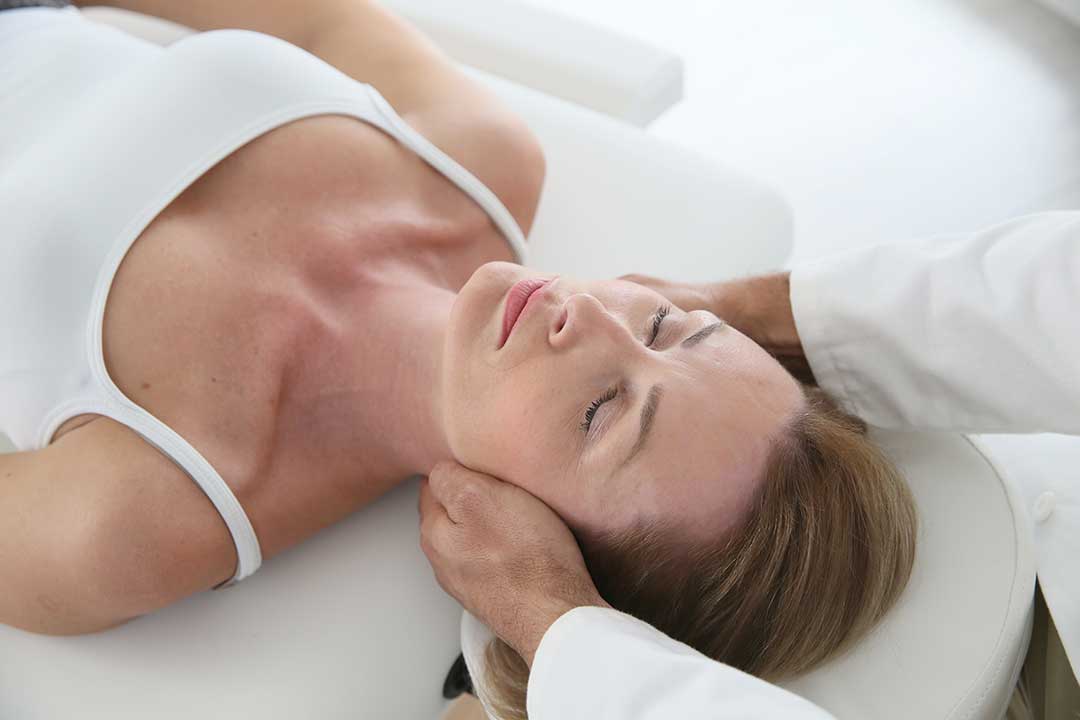
Gentle movement through the upper back can reduce the need for the neck to compensate.
- Sit in a chair with a firm backrest.
- Place the hands behind the head or across the chest.
- Lean the upper back slightly over the chair’s backrest.
- Keep the movement small and comfortable.
- Repeat 5 to 8 times.
Do not force the neck backward. The movement should come mainly from the upper back.
How should stretches be used during a headache?
Stretching is usually most helpful when it is gentle, brief, and combined with other basic measures. A five-minute routine may be enough to determine whether movement is helping.
Try this sequence:
1. Take several slow breaths and let the shoulders drop.
2. Perform 5 chin tucks.
3. Hold the side neck stretch on each side for 15 seconds.
4. Hold the upper trapezius stretch on each side for 15 seconds.
5. Finish with 5 slow shoulder rolls and a chest stretch.
If the headache worsens during the routine, stop. Stretching should not produce sharp pain, throbbing that rapidly intensifies, dizziness, visual changes, or symptoms traveling into an arm.
Can heat, posture, or daily habits make a difference?
Yes. A warm shower or a covered heating pad placed on the neck or shoulders for a short period may help muscles relax. Some people prefer a cool pack over the forehead or neck. A thin cloth should separate the skin from any hot or cold source.
Posture is not about holding the body rigidly upright all day. More useful habits include:
- Changing position every 30 to 45 minutes.
- Bringing screens closer to eye level.
- Keeping both feet supported while seated.
- Resting the forearms when using a keyboard.
- Avoiding prolonged phone use with the head bent forward.
- Relaxing the jaw instead of clenching the teeth.
- Using a pillow that keeps the neck in a neutral position.
Seasonal routines can also affect symptoms for local residents. Winter heating may contribute to dry air and disrupted sleep, while humid summer weather, outdoor activity, and changes in routine may increase fatigue or muscle tension. Hydration, regular meals, and consistent sleep are often as relevant as stretching.
What common mistakes should be avoided?
Stretching harder is not necessarily more effective. Common problems include bouncing, holding the breath, pulling on the head, and repeating a movement that causes symptoms.
Avoid neck circles that swing the head quickly or force the neck into its end range. Slow, controlled movements are easier to monitor. If a stretch produces lasting soreness, reduce the range or stop using it.
Massage of the temples, jaw muscles, shoulders, or upper back may feel soothing, but pressure should remain light. Persistent jaw clenching, tooth grinding, or morning headaches may point to a separate issue that stretching alone will not resolve.
When is a headache more than ordinary muscle tension?
A sudden, extremely severe headache, a headache after a head injury, or head pain accompanied by confusion, fainting, weakness, numbness, trouble speaking, loss of vision, fever, or a stiff neck requires urgent medical evaluation.
It is also sensible to seek medical guidance when headaches are new, steadily changing, unusually frequent, associated with vomiting, or interfering with normal activities. Repeated use of pain medicine can sometimes contribute to medication-overuse headaches, so frequent headaches should not be managed by continually increasing self-treatment.
A typical tension headache may improve with rest, gentle movement, heat, hydration, and reduced muscle strain. If stretching repeatedly fails to help, or if neck symptoms include arm weakness, numbness, or significant loss of motion, the pattern deserves a more complete medical assessment.
How often should these stretches be done?
For prevention, a short routine once or twice daily may be reasonable, especially after long periods of sitting. During a headache, one careful session is enough to test whether movement provides relief.
The best response is usually gradual: relaxed breathing, small movements, and frequent position changes rather than a long, intense stretching session. Keeping a simple record of headache timing, sleep, screen use, stress, meals, and activities can also help identify patterns specific to each person.
