

A minor back strain often improves with simple care over several days to a few weeks. The most useful approach is usually a combination of brief activity modification, comfortable movement, cold or heat, careful lifting habits, and attention to warning signs.
A strain can happen after lifting a box, shoveling, gardening, exercising, reaching awkwardly, or sitting in one position for too long. In Lynbrook, seasonal chores such as clearing wet leaves, moving outdoor furniture, or preparing homes for winter can place extra demands on the lower back.
How can you tell if back pain may be a minor strain?
A minor strain commonly causes localized aching, tightness, soreness, or muscle spasm in the lower or middle back. Pain may become more noticeable when bending, twisting, standing up, or changing positions.
Symptoms are more consistent with a simple strain when:
- The discomfort began after a clear movement or activity.
- Pain stays mostly in the back rather than traveling down the leg.
- There is no numbness, significant weakness, fever, or unexplained illness.
- Symptoms gradually improve with comfortable movement and rest from aggravating activities.
Back pain can have other causes, so these signs do not provide a diagnosis. Severe, unusual, or persistent pain deserves medical evaluation.
Should you use ice or heat?
Both cold and heat may help, but they serve different purposes. Cold can be useful during the first day or two after a sudden strain, particularly when the area feels irritated or swollen. Heat may be more comfortable when stiffness or muscle tightness is the main problem.
For cold care, wrap an ice pack or a bag of frozen food in a thin towel. Apply it for about 15 to 20 minutes, then remove it and allow the skin to return to its normal temperature. Never place ice directly on the skin.
For heat, use a warm—not very hot—compress, shower, or heating pad on a low setting. Limit each session to about 15 to 20 minutes and avoid falling asleep with a heating device in place. People with reduced skin sensation, circulation problems, or difficulty sensing temperature should use extra caution.
There is no requirement to choose one method permanently. If warmth relaxes a tight muscle, it may be helpful. If cold provides better relief after activity, it may be the better option.
Is bed rest helpful for a strained back?
Extended bed rest usually is not helpful and can increase stiffness and weakness. A short period of reduced activity may be reasonable during the first day or two, but complete inactivity is generally not necessary for a minor strain.
Try gentle movement throughout the day:
- Walk around the home for a few minutes at a time.
- Change sitting positions regularly.
- Stand up slowly, using support if the back feels guarded.
- Avoid movements that sharply increase pain.
- Return to routine tasks gradually rather than attempting to “push through” discomfort.
In a dense residential community, everyday movements such as climbing stairs, carrying laundry, or getting in and out of a car can reveal which activities are irritating the back. Break larger tasks into smaller steps and avoid carrying several items at once.
What gentle exercises are safe at home?
Gentle walking is often a practical first exercise. Some people also tolerate slow pelvic tilts, relaxed knee bends while lying down, or bringing one knee toward the chest without forcing the movement. The goal is comfortable mobility, not intense stretching.
Stop an exercise if it causes sharp pain, increasing pain down the leg, numbness, or weakness. Avoid aggressive twisting, deep forward bending, heavy sit-ups, and forceful stretching during the early phase of a strain.
As symptoms improve, gradually resume normal activity. A back that feels better for a few hours is not necessarily ready for heavy lifting, prolonged yard work, or a demanding workout.
Which sleeping positions may reduce discomfort?
There is no single correct sleeping position, but support can reduce strain.
People who sleep on their side may feel more comfortable with a pillow between the knees. Those who sleep on their back can try placing a pillow beneath the knees. A supportive mattress should feel stable without creating pressure or forcing the spine into an uncomfortable position.
Getting out of bed may be easier by rolling onto one side, lowering the legs, and pushing up with the arms rather than bending sharply at the waist.
Can over-the-counter medicine help?
Over-the-counter pain medicine may reduce discomfort, but it is not appropriate for everyone. Anti-inflammatory medicines can pose risks for people with a history of stomach ulcers, kidney disease, certain heart conditions, bleeding problems, or medication interactions. Acetaminophen also requires caution in people with liver disease or significant alcohol use.
Read the package directions carefully and avoid combining products that contain the same active ingredient. A pharmacist or medical professional can help determine whether a medication is appropriate, especially during pregnancy or when prescription medicines are already being taken.
Topical pain-relief products may also help some people, but they should be used according to their labels and kept away from irritated or broken skin.
What should you avoid while the back is healing?
A few common habits can prolong irritation:
- Staying in bed for most of the day.
- Lifting while twisting.
- Testing the injury repeatedly to see whether it still hurts.
- Returning suddenly to heavy exercise.
- Using very high heat for long periods.
- Stretching forcefully into pain.
- Carrying heavy objects close to one side of the body.
For household tasks, keep objects close to the body, bend through the hips and knees, and turn with the feet instead of twisting the spine. Snow, wet leaves, and bulky storage containers can be especially awkward because their weight shifts unexpectedly.
When should back pain be evaluated promptly?
Seek urgent medical care for back pain accompanied by new loss of bladder or bowel control, numbness around the groin, major leg weakness, or difficulty walking. Immediate evaluation is also appropriate after a significant fall, collision, or other traumatic injury.
Prompt medical attention is warranted when pain occurs with fever, unexplained weight loss, a history of cancer, severe abdominal symptoms, or feeling unusually ill. Pain that travels down the leg with numbness or weakness may involve nerve irritation rather than a simple muscle strain.
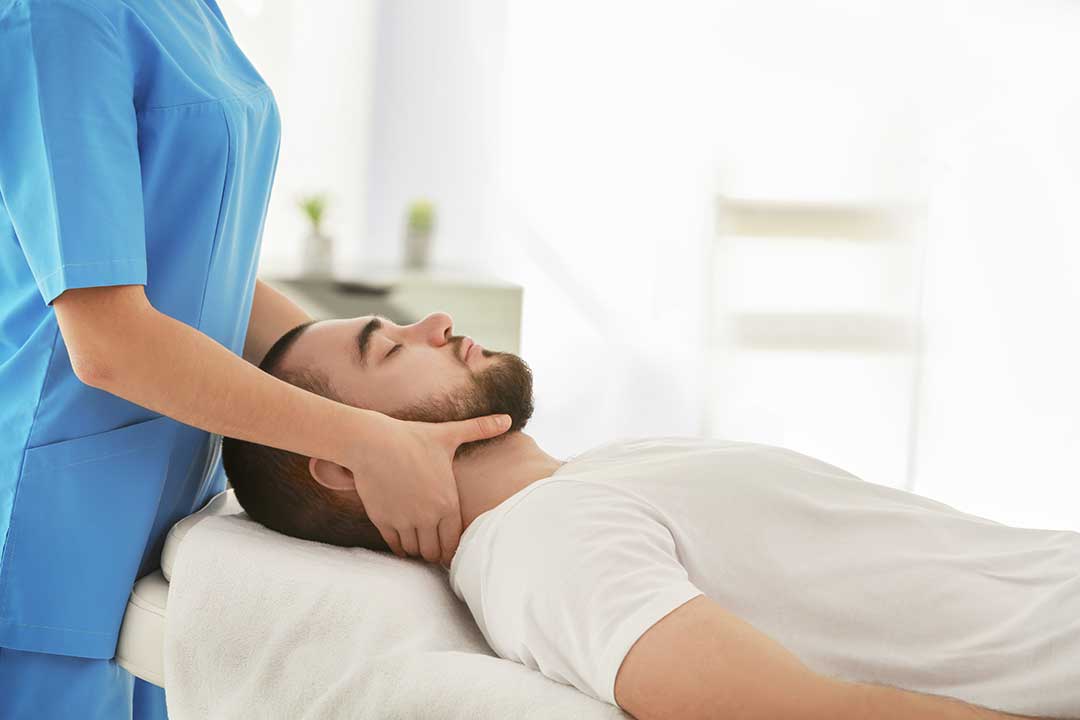
If a minor strain is not clearly improving after several days, keeps getting worse, or continues beyond a few weeks, it should be assessed. Chiropractic care may be one part of evaluation and conservative management for some uncomplicated musculoskeletal problems, but manipulation is not appropriate for every cause of back pain. The underlying symptoms and health history should guide the choice of care.
How can future strains be prevented?
Prevention depends less on perfect posture and more on building tolerable movement habits. Strengthening the hips and trunk, taking breaks from prolonged sitting, warming up before strenuous activity, and increasing exercise gradually can reduce the chance of repeated irritation.
During home projects, alternate demanding tasks with lighter ones. Use a cart or ask for help with bulky objects rather than carrying them alone. A few minutes of walking and gentle mobility each day can be more useful than occasional intense exercise followed by several days of inactivity.
