
Jaw pain can seem unrelated to the spine, but the jaw, neck, shoulders, and upper back work as a connected movement system. Changes in one area may influence muscle tension, posture, movement patterns, and pain elsewhere.
For residents of Lynbrook, NY, everyday habits such as prolonged computer use, commuting, phone use, stress-related clenching, and seasonal changes in activity may all contribute to discomfort around the jaw and neck. The connection is real, but it is not as simple as saying that poor posture always causes jaw problems.
How are jaw pain and spinal health connected?
Jaw movement depends on more than the temporomandibular joints, commonly called the TMJs. The jaw also relies on muscles in the face, throat, neck, and upper shoulders. These areas help stabilize the head while speaking, chewing, swallowing, and opening the mouth.
When the head and neck remain in a strained position, some muscles may work harder than usual. For example, holding the head forward while looking down at a phone or laptop can increase tension through the neck and upper shoulders. That tension may overlap with the muscles involved in jaw movement.
The relationship can also work in the opposite direction. A painful jaw may cause a person to hold the head differently, limit neck movement, or tighten the shoulders without realizing it. Over time, this can contribute to neck discomfort, headaches, or upper-back fatigue.
Research has found associations between temporomandibular disorders and neck-related problems, including reduced neck movement and increased muscle sensitivity. However, the evidence does not show that spinal posture is the sole cause of every jaw disorder.
What symptoms may suggest a jaw-and-neck connection?
Jaw and spinal factors may be interacting when symptoms occur together rather than in isolation. Common patterns include:
- Pain near the jaw joint, ear, cheek, temple, or side of the head
- Neck stiffness or aching that appears along with jaw discomfort
- Headaches that seem to begin near the temples, forehead, or base of the skull
- Jaw fatigue during chewing or prolonged talking
- Clicking, popping, catching, or limited opening of the mouth
- Tightness in the upper shoulders
- Increased symptoms after computer work, driving, phone use, or stressful periods
- Pain that changes when the neck position or jaw activity changes
These symptoms do not identify a single diagnosis. Jaw pain can also result from dental problems, arthritis, injury, sinus-related symptoms, nerve irritation, infection, or other medical conditions.
A painless click does not necessarily mean the joint is damaged. Likewise, neck tightness does not prove that the spine is causing jaw symptoms. The overall pattern, duration, severity, and changes in function matter more than one symptom by itself.
Can poor posture cause TMJ problems?
Poor posture may contribute to jaw symptoms, but it is rarely the only explanation. Studies have found that some people with temporomandibular disorders show altered head or neck posture, while other studies have found a weaker or inconsistent relationship.
Posture is better understood as one possible contributing factor. Jaw clenching, nighttime grinding, stress, trauma, dental changes, joint inflammation, muscle overload, and sleep habits may be equally or more relevant.
A practical goal is not to maintain a rigid “perfect” posture. Instead, vary positions regularly and avoid remaining in one strained position for long periods. A relaxed head position, supported back, and shoulders that are not constantly elevated may reduce unnecessary muscle effort.
What daily habits may aggravate both areas?
Several ordinary activities can increase strain on the jaw and spine:
Looking down for long periods
Phone use, reading, sewing, homework, and handheld gaming can keep the head bent forward. This may increase neck and upper-shoulder tension, especially when breaks are infrequent.
Clenching without realizing it
Many people keep their teeth lightly touching during concentration, exercise, driving, or stressful conversations. At rest, the teeth generally do not need to remain pressed together. Allowing the jaw to relax can reduce muscle workload.
Chewing on one side
Favoring one side because of dental sensitivity, missing teeth, or habit may place uneven demand on the jaw muscles. Persistent one-sided chewing deserves attention, particularly if it is accompanied by pain.
Sleeping with the neck unsupported
A pillow that is too high, too low, or poorly suited to a person’s sleeping position may contribute to morning neck and jaw stiffness. Sleeping on the stomach can also require the head to remain rotated for extended periods.
Cold-weather muscle tension
During colder months, people may unconsciously raise their shoulders, tighten the jaw, or spend more time indoors at desks and screens. These habits can make existing tension more noticeable.
What can be tried safely at home?
For mild, recent symptoms without alarming features, conservative measures are often reasonable:
- Choose softer foods temporarily if chewing is painful.
- Avoid gum, chewy foods, and very wide yawning.
- Use gentle warmth over tense jaw or neck muscles if it feels soothing.
- Take regular movement breaks during desk work and phone use.
- Keep screens closer to eye level rather than repeatedly bending the neck.
- Practice relaxed breathing while allowing the teeth to separate slightly.
- Notice whether clenching occurs during work, driving, exercise, or concentration.
- Use gentle, pain-free neck movement rather than forceful stretching.
- Avoid repeatedly testing a clicking or painful jaw by opening it widely.

Aggressive jaw exercises, forceful self-manipulation, or attempts to “realign” the bite can worsen symptoms. The best approach depends on whether the main problem involves the joint, muscles, teeth, nerves, or another condition.
What role can spinal care play?
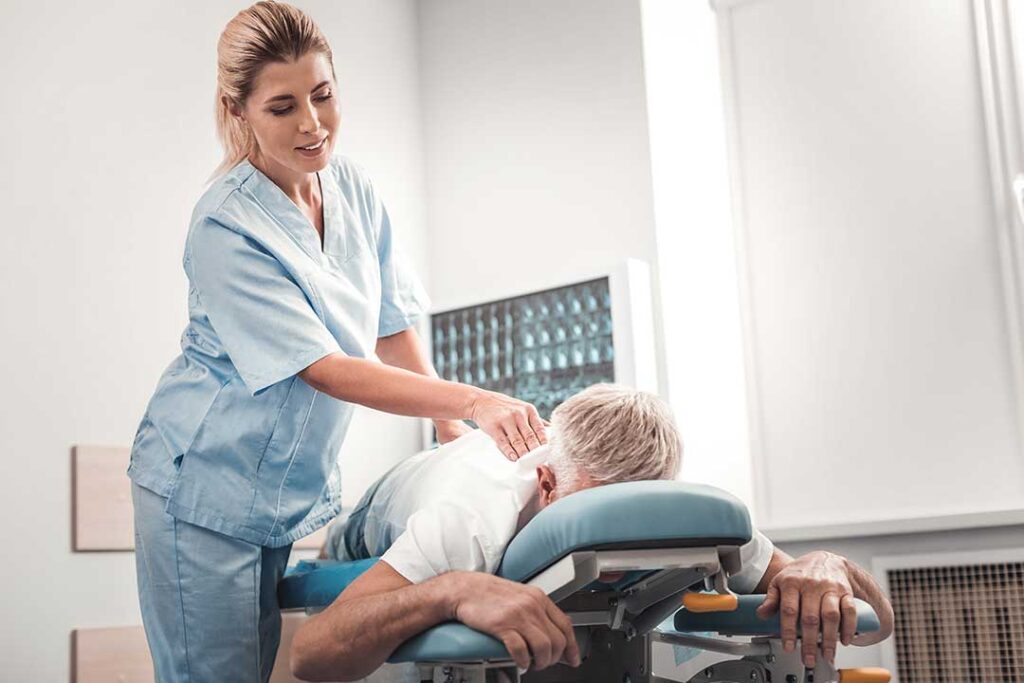
An evaluation of the neck and upper back may be useful when jaw symptoms occur with neck pain, restricted movement, headaches, or shoulder tension. Care may focus on movement assessment, posture variation, muscle relaxation, ergonomic changes, and gentle exercises.
Spinal treatment should not be presented as a universal cure for temporomandibular disorders. A jaw problem may require dental or medical assessment, particularly when there is tooth pain, bite change, joint locking, swelling, or significant loss of movement. Treatment aimed at the neck should complement—not replace—appropriate evaluation of the jaw and mouth.
Because the evidence linking posture and jaw pain is mixed, a careful assessment should focus on the individual’s symptoms rather than assuming that one spinal finding explains everything.
When should jaw pain be evaluated promptly?
Seek prompt medical or dental evaluation for jaw pain associated with:
- Facial swelling, fever, redness, or signs of infection
- A recent blow to the face, jaw, or neck
- A jaw that is locked open or closed
- Sudden inability to open the mouth normally
- New numbness, weakness, severe headache, or vision changes
- Difficulty breathing or swallowing
- Severe tooth pain or significant dental sensitivity
- Chest pressure, shortness of breath, sweating, nausea, or pain spreading to the arm or neck
Heart-related pain can sometimes be felt in the jaw, so jaw discomfort with chest or breathing symptoms should be treated as an emergency rather than assumed to be a joint or posture problem.
Persistent symptoms, worsening pain, or difficulty eating also deserve evaluation. Jaw pain may involve several overlapping factors, and identifying the actual source is more useful than focusing on the spine alone.
