

Families in Lynbrook, NY often balance school, work, sports, commuting, household responsibilities, and outdoor activity in a limited amount of time. Chiropractic care may support that active lifestyle by addressing certain musculoskeletal concerns, improving movement awareness, and helping family members understand how daily habits affect comfort and function.
It is not a replacement for emergency care, medical diagnosis, rehabilitation, strength training, or injury prevention. Its role is best understood as one possible part of a broader health plan.
What does chiropractic care involve?
Chiropractic care commonly focuses on the relationship between the spine, joints, muscles, nerves, and movement. A visit may include a health history, movement assessment, physical examination, and discussion of symptoms or activity demands.
Some chiropractic approaches use spinal manipulation or mobilization, while others emphasize:
- Mobility exercises
- Strength and stability work
- Posture and movement education
- Soft-tissue techniques
- Advice about lifting, sitting, sleeping, or training habits
The appropriate approach depends on the person’s age, health history, symptoms, activity level, and goals. Treatment should not be assumed to be identical for every member of a household.
How might it help active adults?
Adults may develop aches from recreational exercise, prolonged sitting, lifting children, yard work, home projects, or repetitive work tasks. These issues can involve the lower back, neck, shoulders, hips, knees, or feet.
For some forms of uncomplicated musculoskeletal pain, manual therapy may provide short-term relief or improve movement when combined with active strategies. The most useful care generally includes an explanation of the problem and practical steps the person can continue independently.
An active adult may benefit from guidance on:
- Returning gradually after a period of inactivity
- Alternating demanding workouts with recovery days
- Improving lifting and carrying mechanics
- Building strength around the hips, trunk, and shoulders
- Adjusting a workstation or driving position
- Recognizing the difference between normal exercise soreness and concerning pain
Regular physical activity remains important. Adults are generally encouraged to include both aerobic activity and muscle-strengthening exercise, with the amount adjusted for age, health status, and ability.
Can chiropractic care help children and teenagers?
Children and teenagers are not simply smaller adults. Their bones, joints, coordination, training loads, and communication skills are still developing, so care should be age-appropriate and based on a careful assessment.
Young athletes may experience soreness or strain from running, throwing, jumping, gymnastics, dance, skating, or repeated practice. In these situations, the most valuable guidance may involve training balance, rest, technique, footwear, warm-up habits, and a gradual return to activity.
Evidence for chiropractic and spinal manipulation in children is more limited than evidence for adults, and safety research in younger age groups is also less extensive. Any evaluation should account for growth-related concerns, previous injuries, medications, neurological symptoms, and the child’s ability to describe what they are feeling.
Parents should be cautious about broad claims that chiropractic care can treat unrelated childhood conditions or improve general health without a specific musculoskeletal reason. Children with significant, persistent, or unexplained symptoms may need evaluation through a pediatric or medical provider.
What about pregnancy and the postpartum period?
Pregnancy changes posture, balance, joint loading, muscle activity, and tolerance for certain positions. After delivery, lifting, feeding, carrying, reduced sleep, and a rapid change in activity can place additional demands on the back, hips, neck, and shoulders.
Some pregnant or postpartum adults seek conservative care for musculoskeletal discomfort. However, treatment should be adapted to the stage of pregnancy and individual health history. Pregnancy-related complications, high blood pressure, bleeding, severe headache, abdominal pain, weakness, numbness, or other concerning symptoms require medical assessment rather than routine musculoskeletal treatment.
After childbirth, gradual rebuilding of strength and coordination is usually more useful than rushing back to previous exercise levels. Pelvic-floor symptoms, significant abdominal separation concerns, or persistent pain may warrant evaluation by an appropriately trained medical or rehabilitation provider.
Does chiropractic care prevent sports injuries?
Chiropractic care cannot guarantee that an injury will be prevented. Injury risk is influenced by training volume, sleep, previous injury, conditioning, equipment, technique, playing surface, recovery, and sudden increases in activity.
Families can reduce avoidable strain by:
- Increasing practice or exercise demands gradually
- Including rest and lighter training days
- Warming up with activity-specific movements
- Practicing strength, balance, and coordination
- Replacing worn or poorly fitting equipment
- Taking pain seriously instead of repeatedly training through it
- Returning to sport in stages after an injury
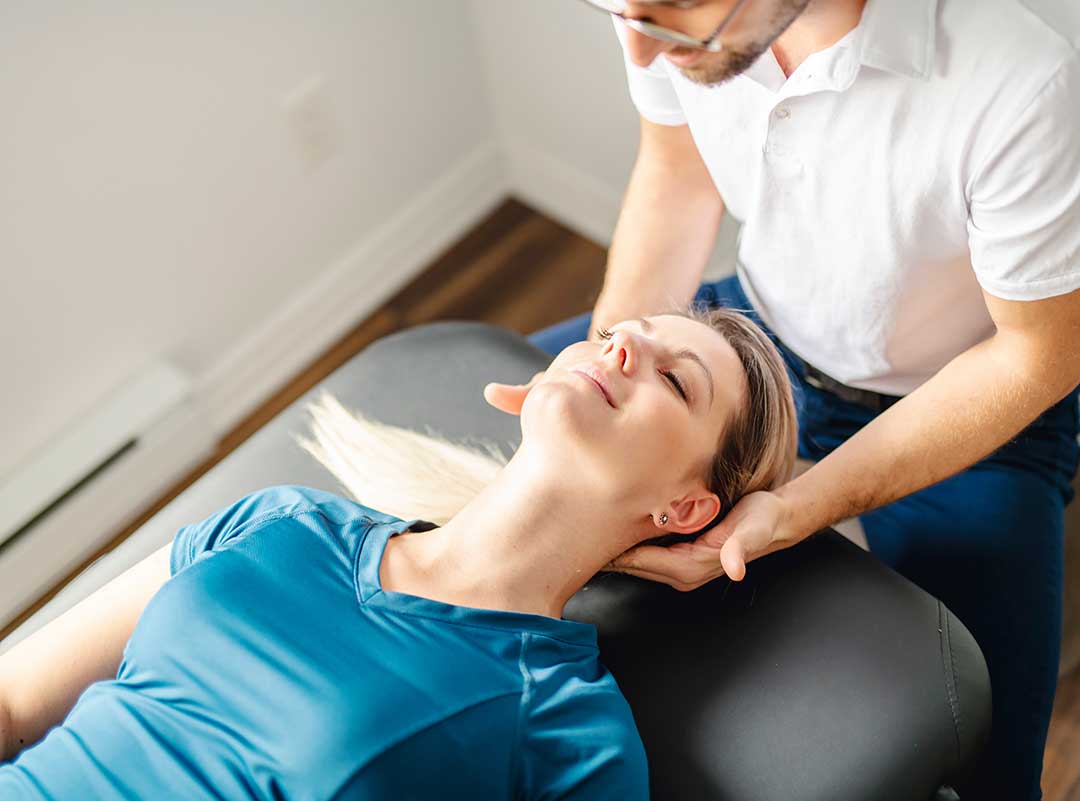
Seasonal changes can affect routines. In a dense suburban community, families may shift quickly between school sports, indoor exercise, walking, household projects, and winter activities. A sudden change from low activity to intense practice is a common reason symptoms appear.
When should a family seek medical evaluation first?
Certain symptoms should not be managed as a routine joint or muscle problem. Prompt medical evaluation is appropriate for symptoms such as:
- Major trauma, a suspected fracture, or inability to bear weight
- Progressive weakness or loss of coordination
- New loss of bladder or bowel control
- Numbness in the groin or saddle area
- Fever, unexplained weight loss, or severe nighttime pain
- Chest pain, shortness of breath, fainting, or severe abdominal pain
- A sudden severe headache or neurological change
- Pain that is rapidly worsening or unexplained
Neck manipulation deserves particular caution. Serious complications are rare, but neck-related symptoms and risk factors should be discussed carefully before any treatment involving forceful rotation or thrust.
How can families use chiropractic care responsibly?
The clearest role is supportive rather than all-purpose. Families should expect a reasonable explanation of the suspected musculoskeletal issue, the proposed treatment, potential risks, alternatives, and signs that further evaluation is needed.
A responsible plan may combine hands-on care with home exercises, regular physical activity, sleep, hydration, strength development, and changes to aggravating habits. It should also be adjusted when symptoms fail to improve or when new signs appear.
For households managing busy schedules, the practical question is not whether every family member needs chiropractic care. It is whether a specific person has a movement or musculoskeletal concern for which conservative care is appropriate, safe, and connected to clear everyday goals.
