
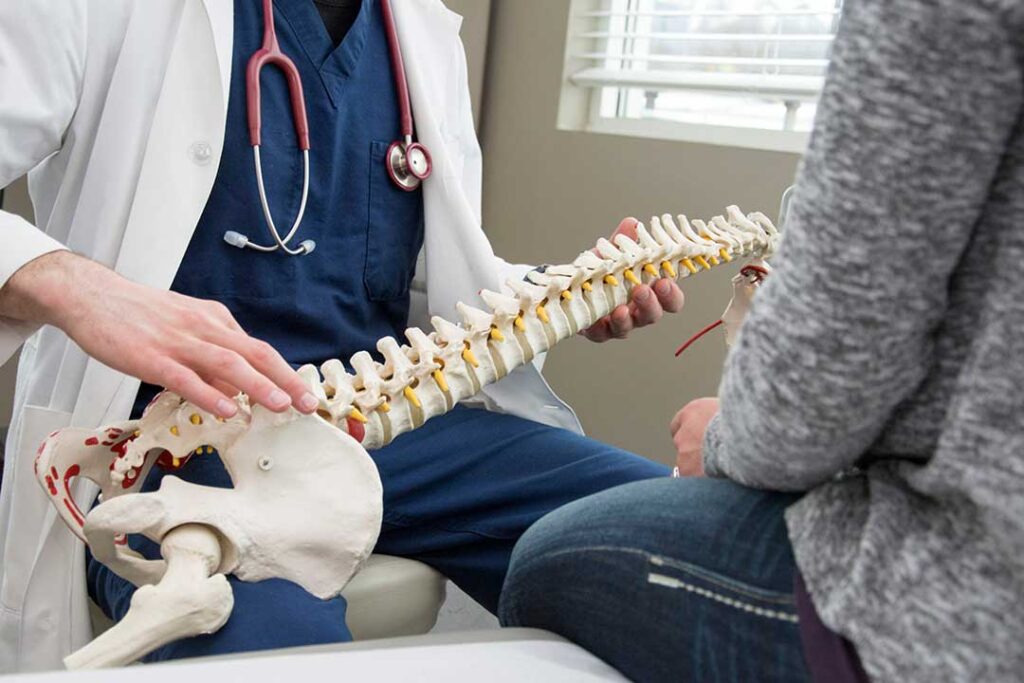
Tension headaches often feel like steady pressure, tightening, or a dull ache across the forehead, temples, or back of the head. Tight muscles in the neck, shoulders, jaw, and upper back can contribute to this discomfort, especially after long periods of screen use, driving, desk work, stress, or poor sleep.
For local residents, everyday habits can play a role. Commuting, working at a computer, carrying bags, looking down at a phone, or staying indoors during cold-weather months may encourage the shoulders and neck to remain tense. Gentle stretching may reduce that tension, but movements should be slow, comfortable, and never forced.
Which stretches may help a tension headache?
Gentle neck, shoulder, and upper-back stretches may ease muscle tightness associated with a tension-type headache. They are most useful when performed regularly, not only after pain becomes severe.
Try the following sequence while sitting or standing with the spine relaxed:
Chin tuck
A chin tuck helps reduce the forward-head position that often develops during computer or phone use.
- Sit upright with the shoulders relaxed.
- Look straight ahead.
- Gently draw the chin backward, as though making a small double chin.
- Hold for three to five seconds.
- Relax and repeat five to ten times.
Do not tilt the head downward. The movement should be small and controlled.
Side neck stretch
This targets the muscles along the side of the neck.
- Sit tall and keep both shoulders down.
- Slowly tilt the right ear toward the right shoulder.
- Stop when a mild stretch is felt on the left side of the neck.
- Hold for 15 to 30 seconds.
- Return to center and repeat on the opposite side.
Avoid pulling on the head with the hand. If the shoulder rises toward the ear, relax it before continuing.
Neck rotation
Limited neck rotation can increase strain during driving, reading, and screen work.
- Keep the chin level.
- Slowly turn the head to the right as if looking over the shoulder.
- Move only as far as comfortable.
- Hold briefly, return to center, and repeat to the left.
- Perform three to five repetitions on each side.
A gentle stretch is expected. Sharp pain, dizziness, numbness, or a spinning sensation is not.
Upper trapezius stretch
The upper trapezius muscles run from the base of the neck toward the shoulders and commonly tighten during stress.
- Sit on one hand or place it beneath the thigh to keep that shoulder down.
- Tilt the opposite ear toward the opposite shoulder.
- Slightly turn the nose toward the armpit if a more comfortable stretch is felt.
- Hold for 15 to 30 seconds.
- Switch sides.
Use light movement rather than strong pressure.
Levator scapulae stretch
This stretch may help tension along the back and side of the neck.
- Turn the head about 45 degrees to the right.
- Look down toward the right pocket or armpit.
- Keep the right shoulder relaxed.
- Hold for 15 to 30 seconds.
- Repeat on the other side.
This should feel like a mild pull along the back corner of the neck, not pain at the spine.
Shoulder rolls
Shoulder rolls can interrupt prolonged stillness and reduce upper-back tension.
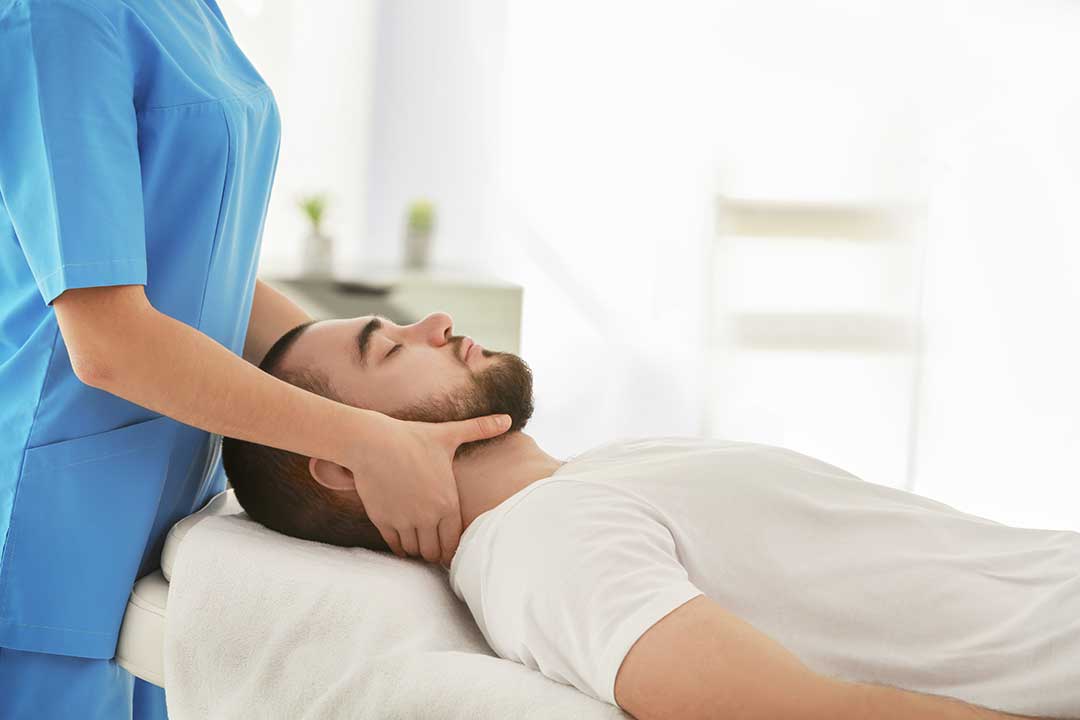
- Lift the shoulders gently toward the ears.
- Move them backward, then down.
- Complete five to ten slow circles.
- Reverse direction for another five to ten circles.
Keep the motion smooth. Quick or exaggerated circles may irritate already-sensitive muscles.
How often should these stretches be done?
A short routine can be repeated once or twice daily, or during breaks from desk work and close-up tasks. Holding each stretch for 15 to 30 seconds is usually sufficient. Stretching should create mild tension but should not cause sharp, burning, electric, or increasing pain.
During a headache, a quieter approach may work better. Try two or three gentle movements rather than completing a long routine. Slow breathing can help reduce the tendency to brace the jaw and shoulders:
- Breathe in gently through the nose.
- Let the abdomen expand.
- Exhale slowly while allowing the shoulders to drop.
- Continue for five to ten breaths.
Heat applied to the neck and shoulders may also help muscles relax. A warm shower, heating pad on a low setting, or warm towel can be useful. Protect the skin from excessive heat and avoid falling asleep with a heating device in place.
Can stretching prevent tension headaches?
Stretching may help reduce one contributing factor, but it does not prevent every headache. Tension headaches can also be associated with stress, inadequate sleep, dehydration, skipped meals, jaw clenching, eye strain, and prolonged static posture.
Prevention is more likely when stretching is combined with regular movement. During computer work, change position frequently, let the arms rest comfortably, and keep the screen near eye level. A brief walk, shoulder reset, or neck movement every 30 to 60 minutes may be more helpful than maintaining a “perfect” posture for several hours.
Cold weather can also encourage people to raise their shoulders or spend more time in one position indoors. Warm clothing, periodic movement, and avoiding prolonged neck flexion while reading or using a phone may help during the colder season.
What should be avoided?
Do not force the neck into a deep stretch, bounce at the end of a movement, or use a rapid twisting motion. Strong self-manipulation or attempts to “crack” the neck are not necessary for routine muscle tension and can aggravate symptoms.
Stretching should also be paused if it causes:
- Dizziness or lightheadedness
- Numbness or tingling
- Weakness in an arm or hand
- Vision changes
- Severe or unusual neck pain
- Pain that travels down an arm
A headache that repeatedly returns despite self-care deserves medical evaluation, particularly if it is becoming more frequent, more severe, or different from previous headaches. Frequent use of over-the-counter pain medicine can itself contribute to recurring headaches, so medication directions and limits should be reviewed with a qualified healthcare professional.
When is a headache an emergency?
Seek urgent medical care for a sudden, extremely severe headache, especially if it reaches maximum intensity within seconds or minutes. Immediate evaluation is also warranted when head pain occurs with confusion, fainting, seizure, severe weakness, trouble speaking, a new loss of vision, high fever, stiff neck, or repeated vomiting.
A headache after a significant head injury, or a new headache during pregnancy or in someone with a serious medical condition, also requires prompt medical guidance.
For a typical mild-to-moderate pressure headache without warning signs, gentle stretching, hydration, rest, reduced screen exposure, and relaxation may provide relief. Stop any exercise that worsens symptoms rather than trying to stretch through the pain.
