
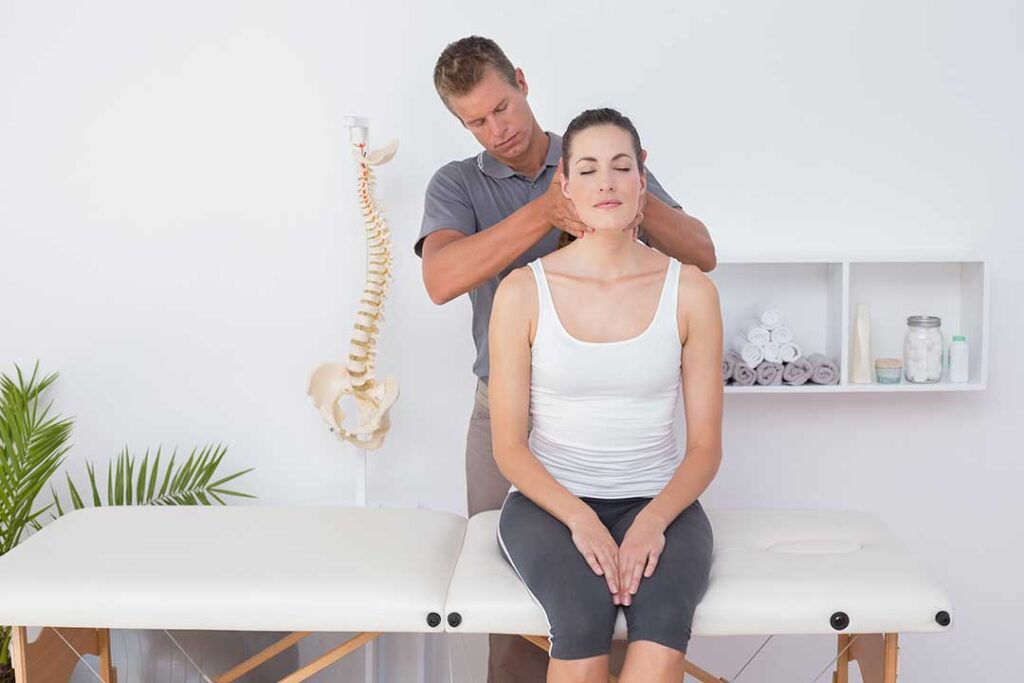
Balance problems can sometimes be related to the way the head, neck, back, hips, and legs work together. However, spinal alignment is only one part of a much larger balance system that also includes the inner ear, vision, brain, muscles, joints, blood pressure, medications, and foot sensation.
For residents of Lynbrook, balance concerns may become more noticeable during winter walking, on uneven sidewalks, while moving between crowded rooms, or when rising quickly after sitting. Understanding the connection between posture and balance can help separate manageable movement issues from symptoms that require prompt medical attention.
How does the spine affect balance?
The spine helps position the head over the pelvis and provides a stable base for movement. When the neck, upper back, lower back, or pelvis is stiff or painful, the body may change its posture to avoid discomfort. That compensation can affect how weight is distributed through the feet and how steadily a person walks or stands.
The body constantly gathers information from:
- The eyes, which identify the surrounding environment
- The inner ears, which sense head movement and orientation
- Muscles and joints, which provide information about limb and body position
- The feet, which detect pressure and contact with the ground
This information is combined by the nervous system to keep the body upright. A stiff neck, restricted spinal movement, muscle weakness, or pain can alter the signals coming from the joints and muscles. The result may feel like unsteadiness, especially when turning the head, walking in dim lighting, or standing on a soft or uneven surface.
That does not mean a “misaligned spine” is automatically the cause of dizziness or poor balance. Balance symptoms have many possible explanations, and spinal posture should be considered as one factor rather than a complete diagnosis.
Can neck problems cause dizziness or unsteadiness?
Neck problems can contribute to a sensation of unsteadiness in some people, particularly after an injury or during periods of significant neck stiffness. Changes in neck muscle activity may affect how the brain interprets head and body position. Some people describe this as lightheadedness, floating, visual sensitivity, or feeling off-balance rather than a true spinning sensation.
True vertigo, in which the room seems to spin, is more commonly associated with the inner ear or other neurological causes than with spinal alignment alone. Neck-related symptoms also tend to occur alongside neck pain, limited motion, headaches, or symptoms that change with head position.
Because dizziness has several possible causes, persistent or recurring symptoms should not be self-diagnosed as a posture problem. A careful evaluation may need to consider the ears, eyes, nervous system, blood pressure, medications, hydration, and musculoskeletal system.
What does poor posture have to do with walking stability?
Posture influences the position of the body’s center of mass. A forward head, rounded upper back, or excessive leaning may shift that center of mass and require additional muscle activity to remain upright. Over time, a person may develop shorter steps, slower turns, or a tendency to look down while walking.
Pain can reinforce this pattern. Someone with low back pain may avoid fully extending the hips. Someone with knee or foot discomfort may shift weight to one side. Someone with neck stiffness may turn the entire upper body instead of moving the head freely. These adaptations can make walking less efficient and may reduce the ability to respond quickly to a trip or change in surface.
In older adults, balance changes are often caused by several factors at once. Lower-body weakness, reduced vision, foot numbness, medication effects, previous falls, and home hazards may matter as much as spinal stiffness.
Can chiropractic care improve balance?
Chiropractic assessment may help identify restricted spinal motion, painful movement patterns, muscle imbalance, or posture-related factors that could be affecting mobility. Treatment may include movement education, manual techniques, flexibility work, strengthening, and advice about safer activity.
The purpose should be to improve function and comfort, not to claim that every balance problem comes from a vertebra being out of place. Evidence for spinal treatment is stronger for some neck and back pain conditions than for unexplained dizziness or complex balance disorders.
Balance rehabilitation may also involve physical therapy, vestibular exercises, strength training, vision care, medication review, or evaluation of the inner ear. These approaches address different parts of the balance system. A coordinated plan is often more useful than relying on a single explanation or treatment.
What symptoms should not be blamed on alignment?
Balance problems deserve medical attention when they are new, worsening, recurrent, or interfering with normal activities. Prompt evaluation is especially important after a fall, head injury, or sudden change in walking ability.
Emergency care is appropriate for dizziness or unsteadiness accompanied by symptoms such as:
- New weakness or numbness on one side
- Trouble speaking, confusion, or fainting
- Severe sudden headache
- Double vision or sudden vision changes
- Chest pain, serious shortness of breath, or an irregular heartbeat
- Inability to walk safely
- Sudden hearing loss or severe vomiting

These symptoms may indicate a neurological, cardiovascular, or other urgent condition. They should not be attributed to posture without immediate assessment.
How can residents reduce everyday balance risks?
Simple environmental and movement changes can reduce the chance of losing balance. During icy or wet conditions, use well-maintained walkways, allow extra time, and avoid carrying loads that block the view of the ground. Inside the home, loose rugs, cluttered hallways, poor lighting, and unsecured cords can create avoidable hazards.
Other practical steps include:
- Wear supportive footwear with good traction
- Rise slowly after lying or sitting
- Keep frequently used items within easy reach
- Improve lighting near stairs, entrances, and bathrooms
- Build leg and trunk strength gradually
- Practice standing and walking tasks near a stable support
- Review medications if dizziness or drowsiness begins after a change
- Record when symptoms occur, how long they last, and what triggers them
Balance exercises should be performed in a safe setting. Anyone with a history of falls, fainting, severe dizziness, or major weakness should avoid challenging balance drills without appropriate guidance.
What is the most accurate way to think about spinal alignment?
Healthy alignment is not a single perfect posture that looks identical for every person. The spine naturally moves, curves, and adapts to different tasks. The more useful question is whether a person can move comfortably, maintain control, respond to changes in the ground, and perform daily activities safely.
Spinal stiffness or pain may contribute to balance difficulty, especially when it changes head, trunk, or hip movement. But balance problems can also begin in the inner ear, eyes, brain, circulation, feet, or medications. A complete evaluation looks at all of these possibilities rather than assuming the spine is the sole cause.
