
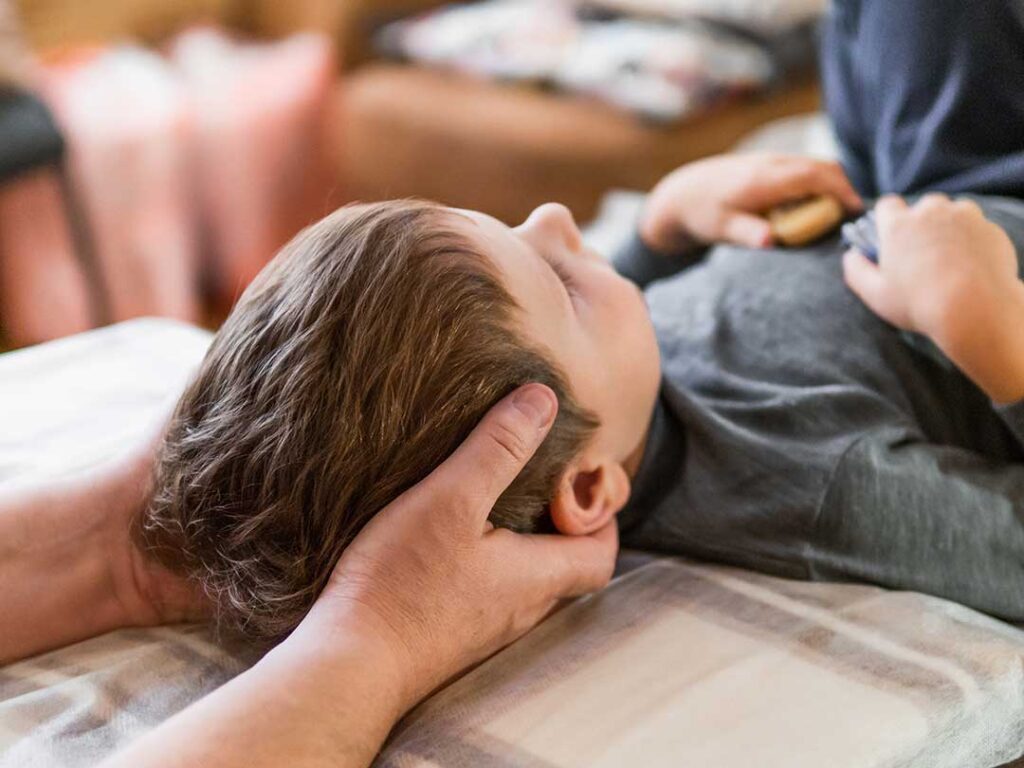
How can a heavy backpack affect a child’s health?
A backpack that is too heavy, poorly fitted, or carried unevenly can contribute to neck, shoulder, and back discomfort. It may also change the way a child walks, stands, or lifts the bag throughout the school day.
Children often adapt by leaning forward, rounding their shoulders, tightening their neck muscles, or shifting the bag from side to side. These adjustments may help them manage the load temporarily, but repeating them during daily walks, bus rides, stair climbing, and classroom transitions can place extra stress on muscles and joints.
A heavy backpack does not usually cause permanent spinal damage by itself. However, it can aggravate existing muscle soreness, poor movement habits, or an underlying condition. Pain that continues after the bag is removed deserves attention rather than being dismissed as a normal part of growing up.
How heavy is too heavy for a child’s backpack?
A commonly used safety guideline is to keep a loaded backpack at no more than 10% to 15% of a child’s body weight. Staying closer to 10% may be more comfortable for younger children, smaller-framed children, or those who walk longer distances.
For example:
- A child weighing 60 pounds would carry about 6 to 9 pounds at the 10% to 15% range.
- A child weighing 80 pounds would carry about 8 to 12 pounds.
- A child weighing 100 pounds would carry about 10 to 15 pounds.
These numbers are practical limits, not guarantees that every child will be comfortable at the upper end. A bag may be too demanding even when it falls within the recommended range if it is worn for a long time, hangs too low, or contains items that shift as the child moves.
The easiest way to check is to weigh the backpack while it contains the items used for a typical school day. Include books, folders, electronic devices, sports clothing, lunch containers, and water bottles. Families may be surprised by how quickly small items add up.
What are the signs that a backpack is causing strain?
A child may not describe the problem as “back pain.” Instead, watch for changes in movement or behavior, including:
- Leaning forward while walking
- Difficulty putting on or taking off the backpack
- Complaints of neck, shoulder, or lower back soreness
- Red marks or numbness beneath the shoulder straps
- Tingling in the arms or hands
- A noticeable change in posture while carrying the bag
- Trouble walking normally, climbing stairs, or keeping balance
- Frequently asking an adult to carry the backpack
- Pain that lasts after school or returns each day
A child who develops weakness, persistent numbness, severe pain, unexplained limping, or pain following a fall should be evaluated promptly. Ongoing symptoms also warrant attention, especially if they interfere with sleep, sports, school participation, or ordinary activities.
Does the way a backpack is worn matter as much as its weight?
Yes. A moderately heavy backpack may be more manageable when it fits correctly, while a lighter bag can still cause discomfort if it hangs unevenly or pulls backward.
The backpack should sit close to the body, with the bottom resting around the middle of the back rather than near the hips. Both shoulder straps should be used and adjusted so the bag does not swing from side to side. Wide, padded straps can reduce pressure on the neck and shoulders.
If the backpack has a chest or waist strap, using it can help keep the load close to the body. A waist strap is especially useful when a child must carry a heavier load for a short period, although it does not make an overloaded backpack safe.
The heaviest objects should be placed low and close to the child’s back. This reduces pulling away from the body and limits shifting. Loose items should be secured so they do not move with every step.
Carrying a backpack over one shoulder may look convenient, but it concentrates the load on one side. Over time, children may compensate by hiking one shoulder or bending the trunk, which can lead to uneven muscle fatigue.
How can families reduce the load?
Reducing unnecessary items is usually more effective than simply tightening the straps. A weekly backpack check can remove papers, books, clothing, and supplies that are no longer needed.
Useful steps include:
- Carry only the books and materials needed for that day.
- Empty water bottles when they are not needed.
- Use lighter folders and containers when practical.
- Keep duplicate supplies in a classroom, locker, or study area when permitted.
- Place electronic devices in a protected compartment close to the back.
- Avoid carrying toys, extra shoes, and unrelated objects throughout the day.
- Recheck the backpack after schedule changes, sports seasons, or project assignments.
For households managing rainy or snowy weather, wet outerwear, boots, and additional layers can make a school bag substantially heavier. During colder months, it may be helpful to plan where those items will be stored instead of placing them inside the backpack. A damp bag can also become heavier and less comfortable against the back.
Rolling bags may reduce the load carried on the shoulders, but they are not suitable for every route. Uneven sidewalks, stairs, crowded hallways, and winter conditions can make pulling a rolling bag awkward or unsafe. The choice should depend on the child’s route, strength, school rules, and ability to control the bag without twisting.
Can a backpack cause poor posture or scoliosis?
A backpack can temporarily change posture while it is being carried, particularly if it is heavy or worn on one shoulder. That does not mean it causes scoliosis. Scoliosis is a structural sideways curvature of the spine and is not created by ordinary school-bag use.
A child may still benefit from improving backpack fit and carrying habits. Better positioning can reduce avoidable muscle strain and make walking, standing, and sitting more comfortable. It can also help distinguish temporary posture changes from symptoms that continue when the backpack is not being worn.
When should a child be checked for pain?
Mild tiredness after carrying a backpack may improve with rest, a lighter load, and better adjustment. Pain that persists, worsens, or repeatedly returns should not be ignored.
A health assessment is especially appropriate when pain is accompanied by numbness, weakness, headaches, balance problems, changes in walking, nighttime discomfort, fever, or a recent injury. Children who already have a diagnosed musculoskeletal condition may need individualized guidance rather than a general weight percentage.
For local families, a simple backpack check before the school year and again during the colder months can help account for changing clothing, equipment, and travel routines. The goal is not perfect posture or a completely empty bag. It is a load that the child can carry comfortably, safely, and without changing the way the body moves.
