
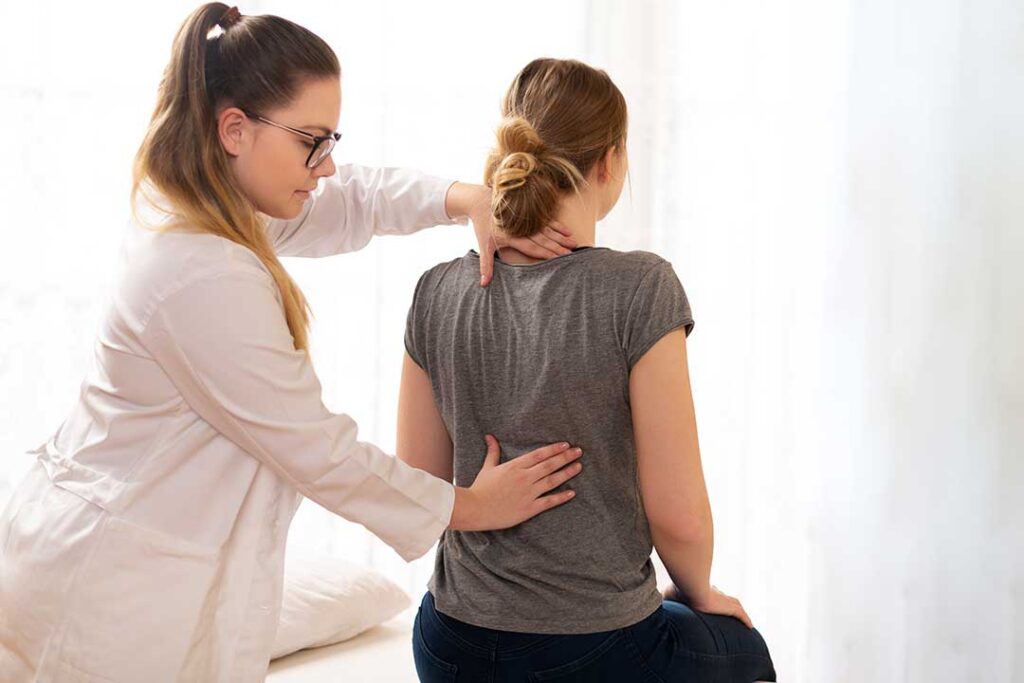
How can a heavy backpack affect a child’s health?
A backpack that is too heavy, poorly fitted, or carried on one shoulder can place extra strain on a child’s neck, shoulders, back, hips, and legs. The effects are usually related to muscle fatigue, altered posture, and discomfort rather than permanent damage to the spine.
Children in Lynbrook, NY may carry books, folders, lunch containers, water bottles, sports clothing, and electronic devices between home, school, buses, after-school activities, and walking routes. The total load can become excessive even when each individual item seems light.
A heavy pack may cause a child to:
- Lean forward or to one side while walking
- Round the shoulders or arch the lower back
- Tighten the neck and shoulder muscles
- Take shorter steps or move less naturally
- Develop soreness in the back, shoulders, or hips
- Experience tingling, numbness, or pressure from straps
These changes may be more noticeable during longer walks, on stairs, in crowded hallways, or when a child is also carrying sports equipment or other items by hand.
How much should a child’s backpack weigh?
A commonly used safety guideline is to keep the loaded backpack at no more than 10% to 15% of the child’s body weight. Staying closer to 10% may be more comfortable for younger children, smaller-framed children, or those who already have pain.
For example:
- A 50-pound child should carry about 5 to 7.5 pounds or less.
- A 70-pound child should carry about 7 to 10.5 pounds or less.
- An event? Need avoid typo. A 100-pound child should carry about 10 to 15 pounds or less.
The percentage is a practical guide, not a guarantee that a particular weight will be comfortable for every child. A backpack that feels manageable for a short walk may be difficult to carry repeatedly throughout the day. Fit, duration, terrain, physical condition, and how the pack is worn all influence the strain placed on the body.
The easiest way to check the load is to weigh the filled backpack on a household scale. This can be useful at the beginning of the school year and again after schedules change or additional supplies are added.
Does carrying a heavy backpack cause scoliosis?
A heavy backpack does not generally cause scoliosis. Scoliosis is a sideways curvature of the spine with causes that may include growth-related or developmental factors. A child may appear to lean while carrying a loaded pack, but that temporary posture change is not the same as a structural spinal curve.
A backpack can, however, make existing discomfort more noticeable. It may also cause muscle fatigue, uneven shoulder positioning, or pain that leads parents to look more closely at a child’s posture. Persistent unevenness when the backpack is removed, one shoulder appearing consistently higher, or ongoing pain deserves medical attention.
What is the safest way to wear a backpack?
A properly worn backpack rests close to the body and distributes weight across both shoulders and, when available, the hips. Children should avoid carrying a full backpack by one shoulder or letting it hang low near the hips.
Useful fitting steps include:
- Use both shoulder straps.
- Adjust the straps so the pack sits high on the back rather than near the buttocks.
- Choose wide, padded straps that do not dig into the neck.
- Use a chest or waist strap when the backpack has one.
- Keep heavier items close to the child’s back.
- Place smaller items in outer compartments so they do not shift.
- Tighten loose straps after putting the backpack on.
- Select a backpack that is proportionate to the child’s torso.
A backpack should not extend much wider than the child’s body or hang substantially below the waist. A large pack may encourage families to carry more than the child needs.
How should families reduce backpack weight?
The most effective approach is to remove unnecessary items before changing the child’s posture. A brief daily or weekly review can identify duplicate notebooks, old papers, extra clothing, toys, and containers that are rarely needed.
Families can also ask whether certain materials can remain in a classroom, be stored in a locker, or be carried only on specific days. A water bottle filled at school may weigh less during the commute than one filled before leaving home. Lightweight folders and supplies can help, but reducing the total number of items usually matters more than choosing specialized equipment.
During colder months, coats, hats, and additional layers may already make walking and stair travel more tiring. In wet or icy weather, children may also change their stride to maintain balance. A heavy backpack can add to that challenge, so reducing the load is especially useful on days when walking conditions are poor.
Can backpack use affect posture?
Yes. A heavy or poorly fitted backpack can temporarily change how a child stands and walks. The child may lean forward to keep from falling backward, lift one shoulder, tighten the upper back, or tilt the pelvis to compensate for the load.
These changes usually improve when the backpack is removed and the child rests. They should not be interpreted as proof that a child has permanently poor posture. Children naturally change position throughout the day, and occasional slouching is not automatically harmful.
The concern is repeated pain, reduced activity, or a posture change that remains after the bag is off. A child who regularly complains of neck or back discomfort may also be dealing with other factors, such as prolonged sitting, limited movement, an unsuitable desk setup, sports strain, or an unrelated medical condition.
What symptoms should parents take seriously?
Mild muscle tiredness after carrying a backpack may improve with rest, lighter packing, and better adjustment. More persistent or severe symptoms should not be dismissed as a normal part of school.
Parents should seek medical guidance if a child has:
- Pain that lasts more than several days or keeps returning
- Numbness, tingling, or weakness in an arm or leg
- Pain that interrupts sleep or normal activities
- Difficulty walking, climbing stairs, or lifting the backpack
- Visible swelling, bruising, or an injury after a fall
- Pain that continues even when the backpack is not being worn
- A noticeable spinal or shoulder asymmetry that persists without the pack
A health professional can help distinguish backpack-related muscle strain from an injury or another condition. Chiropractic assessment may be one part of evaluating movement, posture, and musculoskeletal discomfort, but persistent, severe, or neurologic symptoms may require medical or orthopedic evaluation.
A practical backpack check for the school week
Once a week, place the filled backpack on a scale and inspect how the child wears it. Ask whether the child can put it on, walk, climb stairs, and remove it without struggling or complaining of pain.
The pack should remain within the 10% to 15% guideline, sit close to the back, and be worn with both straps. If discomfort continues after the load and fit are corrected, the backpack may not be the only cause and should not be used as an explanation for ongoing symptoms.
