
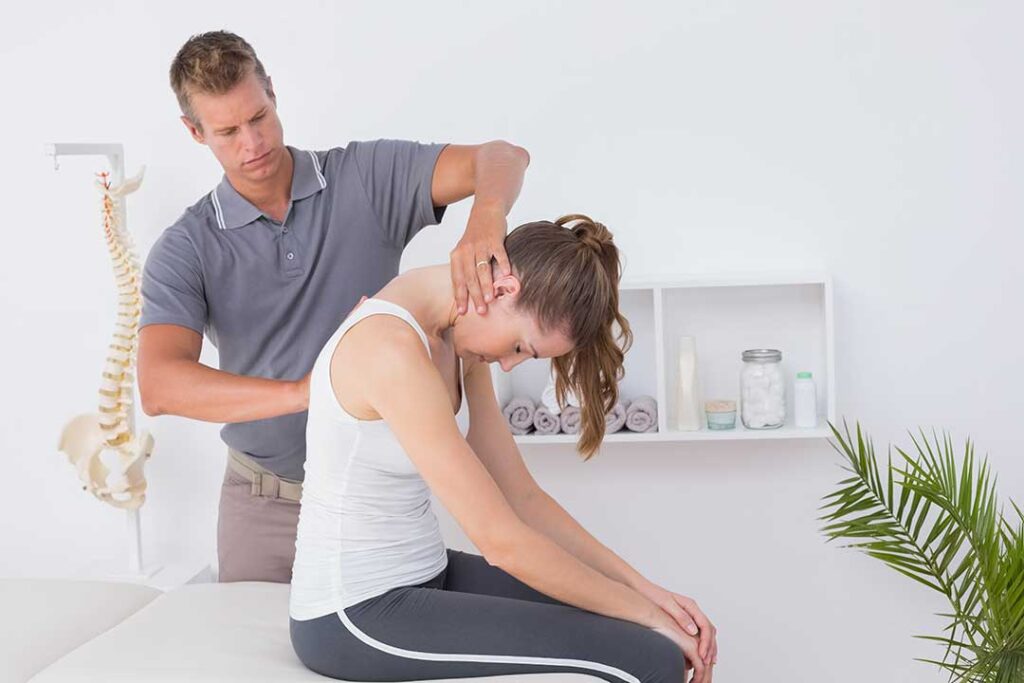
Back strength is built through steady, controlled movement rather than intense workouts. For many residents in Lynbrook, NY, a simple routine involving the hips, abdomen, upper back, and lower back can support easier walking, lifting, bending, and household activity.
A stronger back does not mean the spine must be worked aggressively. The goal is to improve muscular support, coordination, and endurance while avoiding movements that increase symptoms.
Which muscles help support the back?
The back works as part of a larger movement system. The abdominal muscles, hips, buttocks, pelvic muscles, and upper back all help control forces placed on the spine.
Weakness or poor endurance in these areas may make routine activities more tiring. Sitting for long periods, carrying groceries, lifting laundry, gardening, climbing stairs, or clearing seasonal outdoor debris can all challenge the back when the supporting muscles are not conditioned.
A balanced routine should include:
- Core exercises that improve trunk control
- Hip and buttock exercises that support lifting and walking
- Gentle back movements that maintain mobility
- Upper-back exercises that encourage better posture
What are simple exercises for beginners?
The following exercises can usually be performed at home without special equipment. Begin slowly, use a comfortable surface, and focus on smooth motion.
Pelvic tilts
Lie on the back with the knees bent and feet flat on the floor. Allow the arms to rest at the sides.
Gently tighten the abdominal muscles and flatten the lower back toward the floor. Hold for about five seconds, then relax. Avoid pressing forcefully or holding the breath.
Start with 5 to 10 repetitions. This exercise helps a person learn how to control the position of the pelvis and lower spine.
Glute bridges
Remain on the back with the knees bent and feet about hip-width apart. Tighten the abdomen and buttocks, then slowly lift the hips until the body forms a comfortable line from the shoulders toward the knees.
Pause for one or two breaths, then lower the hips with control. Begin with 5 repetitions and gradually work toward 10 to 15.
The movement should come from the hips. If the lower back arches sharply or pain increases, lift the hips less or stop the exercise.
Bird-dog exercise
Start on the hands and knees, with the hands below the shoulders and knees below the hips. Tighten the abdomen gently.
Slowly extend one leg backward. If balance allows, extend the opposite arm forward at the same time. Keep the hips and shoulders facing the floor. Hold for a few seconds, return to the starting position, and switch sides.
Begin with 3 to 5 repetitions on each side. The goal is control, not height or speed. Placing a folded towel under the knees may make the position more comfortable.
Wall sit
Stand with the back against a wall and feet slightly forward. Slide down a small amount, keeping the knees comfortable and aligned with the feet. Hold for 10 to 20 seconds, then return to standing.
This exercise strengthens the thighs and hips, which can reduce the amount of work demanded from the lower back during standing, stair use, and lifting.
There is no need to lower into a deep squat. A shallow position is suitable for beginners.
Shoulder-blade squeezes
Sit or stand tall without forcing the shoulders backward. Gently draw the shoulder blades toward each other, as if holding a small object between them.
Hold for about five seconds, then relax. Repeat 5 to 10 times.
This exercise targets the muscles of the upper back and may help counter the rounded posture that can develop during desk work, driving, reading, or phone use.
How often should these exercises be done?
A short routine performed consistently is generally more useful than an occasional demanding workout. Many beginners can start with two or three sessions each week, allowing a day of rest between strengthening sessions if the muscles feel tired.
A practical starting routine might include:
- Pelvic tilts: 5 to 10 repetitions
- Glute bridges: 5 to 10 repetitions
- Bird-dog: 3 to 5 repetitions per side
- Wall sit: 10 to 20 seconds, repeated twice
- Shoulder-blade squeezes: 5 to 10 repetitions

Walking can complement these exercises. A comfortable walk supports general conditioning without requiring repetitive bending or heavy loading. During icy or snowy weather, indoor walking and controlled home exercises may be safer than outdoor activity on slippery surfaces.
Increase repetitions gradually. Adding only one or two repetitions at a time makes it easier to identify whether the body is adapting appropriately.
Should exercises hurt?
Mild muscle effort, stretching, or temporary fatigue can be normal. Sharp pain, worsening pain, numbness, tingling, or pain that travels down an arm or leg is a reason to stop and reassess the movement.
Exercise should not cause symptoms to build steadily throughout the session or remain significantly worse afterward. A smaller range of motion, slower pace, or fewer repetitions may be appropriate, but persistent symptoms should not be ignored.
Avoid bouncing, twisting quickly, or forcing the spine into an extreme position. Keep breathing normally rather than holding the breath during effort.
What common mistakes can make back exercises less effective?
Several habits can increase strain even during otherwise useful exercises:
- Moving too quickly
- Trying to complete too many repetitions
- Lifting the hips too high during bridges
- Allowing the back to sag during bird-dog exercises
- Holding the breath
- Exercising through sharp or radiating pain
- Treating stretching as a substitute for strength and endurance
- Remaining seated for long periods between exercise sessions
Good form is usually more valuable than a larger number of repetitions. If control is lost, the set is probably long enough for that session.
When should someone seek medical evaluation?
Back exercises are not appropriate for every cause of pain. Prompt medical evaluation is warranted for back pain accompanied by new bowel or bladder problems, numbness in the groin area, severe or progressive weakness, loss of balance, fever, unexplained weight loss, or pain following a significant fall or accident.
Medical guidance is also appropriate when pain consistently travels down the leg, symptoms interfere with sleep, or discomfort does not improve with reasonable activity changes.
People recovering from surgery, a fracture, a significant injury, or a newly diagnosed spinal condition may need an individualized exercise plan. Pregnancy, osteoporosis, inflammatory conditions, and certain neurological problems can also change which movements are suitable.
How can back strength fit into daily routines?
Back care is not limited to formal exercise. During household tasks, keep frequently used items at a manageable height, bend through the hips and knees when lifting, and hold loads close to the body. When carrying bags, divide the weight between both hands when possible.
After sitting, stand and walk briefly rather than remaining in one position for hours. During seasonal chores, alternate tasks, take short breaks, and avoid repeatedly twisting while holding a load.
A few controlled exercises, regular walking, and more careful movement during everyday tasks can gradually improve the endurance of the muscles that support the spine.
