
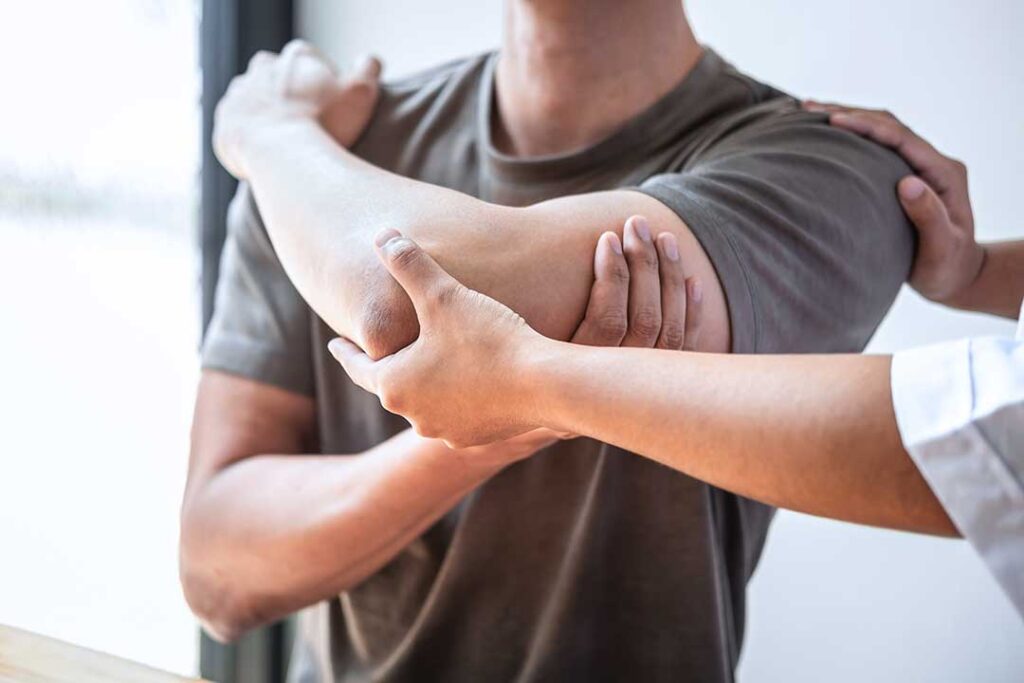
A minor back strain often improves with simple home care, especially when discomfort began after lifting, bending, reaching, yard work, exercise, or an awkward movement. The main goals are to calm irritation, keep the body moving safely, and avoid activities that repeatedly stress the injured area.
This guidance is for mild, familiar back discomfort without warning signs. Severe or unusual symptoms require medical evaluation.
What does a minor back strain feel like?
A minor strain usually causes aching, tightness, tenderness, or muscle spasm in the lower or middle back. Pain may be worse when standing up, bending, twisting, coughing, or changing position. The area may feel stiff after sitting or sleeping.
A simple strain generally does not cause progressive leg weakness, loss of feeling, fever, or new problems controlling the bladder or bowel. Pain that travels sharply down the leg may suggest irritation of a nerve rather than an isolated muscle strain.
Should ice or heat be used first?
Ice can be useful during the first day or two after a sudden strain, particularly if the back feels inflamed, tender, or swollen. Place a cold pack wrapped in a thin towel over the painful area for about 15 to 20 minutes at a time. Do not place ice directly on the skin.
Heat may be more comfortable when stiffness or muscle tightness is the main problem. A warm shower, heating pad, or warm compress can help loosen guarded muscles. Use a comfortable temperature and limit sessions to about 15 to 20 minutes to reduce the risk of skin irritation or burns.
There is no universal rule that every person must use ice before heat. The safest choice is the option that reduces discomfort without irritating the skin or increasing pain. Some people prefer alternating the two, leaving enough time between applications for the skin to return to its normal temperature.
Is bed rest helpful?
Extended bed rest usually slows recovery and can increase stiffness. During the first day, reducing strenuous activity may be sensible, but complete inactivity is rarely necessary for a minor strain.
Try short, easy periods of movement throughout the day:
- Walk around the home for a few minutes.
- Change sitting positions regularly.
- Stand up carefully rather than twisting out of a chair.
- Continue ordinary light activities if they do not increase symptoms.
Movement should remain controlled and comfortable. If an activity causes sharp pain, significant spasm, or worsening symptoms that continue afterward, stop and try a gentler version later.
For residents in Lynbrook, seasonal chores can be a common trigger. Clearing leaves, moving outdoor furniture, carrying bags, or shoveling after winter weather can place sudden demands on back muscles. Breaking these tasks into smaller intervals is safer than trying to finish everything at once.
Which positions may make resting easier?
A comfortable position can reduce muscle guarding while the back settles. Some people feel better lying on their side with a pillow between the knees. Others prefer lying on their back with the lower legs supported on a chair or pillows.
When getting out of bed, roll onto one side first, move the legs toward the edge, and use the arms to push the upper body up. This avoids a sudden twisting motion through the lower back.
A supportive chair may be more comfortable than a soft couch. If sitting increases pain, place both feet on the floor and use a small cushion or rolled towel behind the lower back. Avoid remaining in one position for long periods.
Are gentle stretches safe?
Gentle movement can help, but stretching should not be forced during the painful phase. Avoid bouncing, deep forward bends, aggressive twisting, or trying to “stretch through” sharp pain.
A few low-intensity options may be reasonable if they feel comfortable:
- Slow walking on a level surface.
- Gentle pelvic movements while lying on the back.
- Easy knee movements within a pain-free range.
- Light standing extensions if sitting has made the back feel stiff.
The purpose is to restore comfortable motion, not to test how far the back can bend. Stop if pain spreads into the buttock or leg, numbness develops, or symptoms become more intense.

Can over-the-counter medicine help?
Some adults use nonprescription pain relievers for short-term relief, but these medicines are not appropriate for everyone. Anti-inflammatory medicines may be unsafe with certain stomach, kidney, heart, bleeding, pregnancy, or medication-related conditions. Acetaminophen also requires caution in people with liver disease or heavy alcohol use.
Read the label carefully, avoid taking more than directed, and do not combine products that contain the same active ingredient. A pharmacist or medical clinician can help identify a safer option when there are other health conditions or regular medicines involved.
Topical pain-relief products may help some people, but they should be used only as directed and kept away from broken or irritated skin.
What activities should be avoided temporarily?
A back strain can worsen when the same motion that caused it is repeated before the muscles recover. For several days, reduce or modify:
- Heavy lifting from the floor.
- Repeated bending or twisting.
- Carrying loads on one side of the body.
- High-impact exercise.
- Long periods of sitting without movement.
- Snow, leaf, or household tasks requiring forceful pulling.
If lifting is unavoidable, keep the object close to the body, bend through the hips and knees, and turn with the feet instead of twisting the spine. Smaller loads are preferable to one heavy load.
When is back pain more than a minor strain?
Seek urgent medical attention for back pain accompanied by new loss of bladder or bowel control, numbness around the groin or inner thighs, marked leg weakness, difficulty walking, or rapidly worsening symptoms.
Prompt medical evaluation is also appropriate after a significant fall or blow, or when pain occurs with fever, unexplained weight loss, abdominal symptoms, burning during urination, blood in the urine, or severe pain that does not ease in a comfortable position.
Pain that repeatedly travels below the knee, wakes a person at night, or continues to worsen should not be treated as an ordinary strain without evaluation. People with a history of cancer, osteoporosis, significant immune suppression, or prolonged steroid use may also need earlier assessment.
How long should a minor strain take to improve?
Many uncomplicated strains begin improving within several days and continue settling over the next few weeks. Improvement should be gradual: movement becomes easier, spasms occur less often, and ordinary activities become more manageable.
If symptoms are not clearly improving after several days of sensible home care, continue beyond a few weeks, or repeatedly return with normal activity, an evaluation can help clarify whether the problem is muscular or related to a joint, disc, nerve, or another condition. Home care is most useful when it supports recovery without masking warning signs.
