
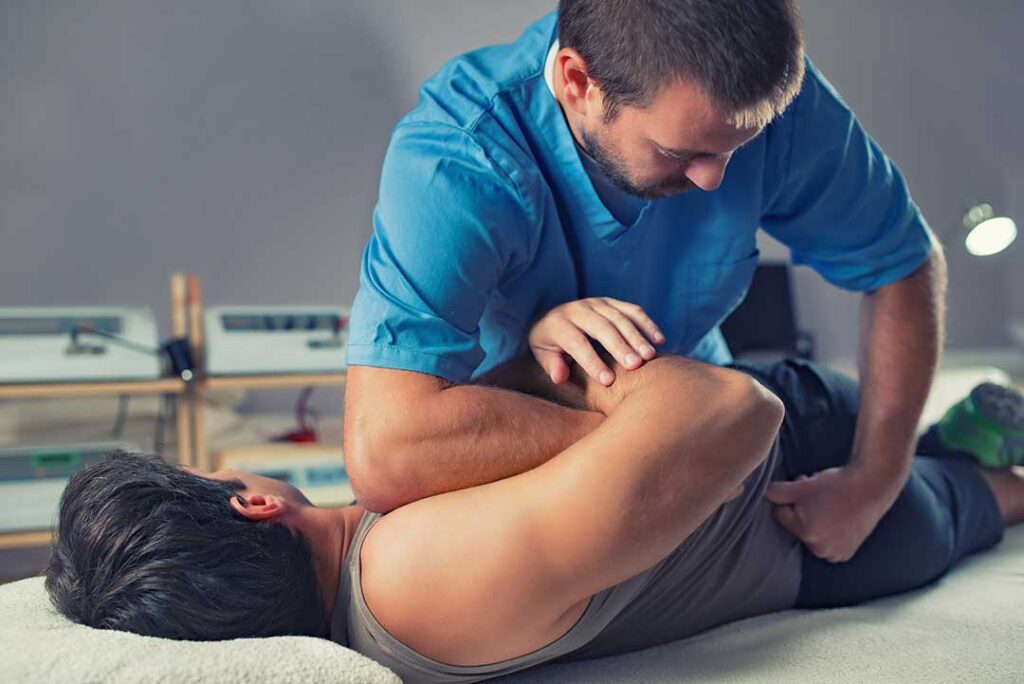
Golf depends on coordinated movement through the feet, hips, spine, shoulders, and arms. If one area is stiff, weak, painful, or poorly controlled, another part of the body often has to compensate. Chiropractic care may help some golfers move more comfortably and manage musculoskeletal problems, especially when it is combined with exercise, warm-ups, swing adjustments, and sensible training.
Can chiropractic care actually improve a golf game?
Chiropractic care may improve golf performance indirectly by addressing physical limitations that affect posture, rotation, balance, and follow-through. It does not automatically correct swing technique or guarantee longer drives.
A golf swing requires controlled rotation rather than forceful movement from the lower back alone. The hips and upper back should contribute to rotation while the trunk provides stability. When the hips or mid-back do not move well, golfers may overuse the lumbar spine, shoulders, elbows, or wrists.
A focused evaluation may look at:
- Spinal and hip mobility
- Balance and weight transfer
- Shoulder movement
- Core and lower-body control
- Pain during address, backswing, impact, or follow-through
- Repeated movement patterns that may increase strain
The practical goal is not to make the spine “perfect.” It is to help the golfer move through the swing with less restriction and better control.
How can treatment affect swing mechanics?
Restricted movement in the hips or upper back can change the way a golfer turns away from the ball and rotates toward the target. Chiropractic treatment may include gentle joint mobilization, spinal manipulation when appropriate, soft-tissue techniques, and movement exercises.
Improved mobility may make it easier to:
- Maintain a more comfortable setup position
- Rotate the upper body without excessive lower-back motion
- Keep the pelvis and shoulders working together
- Complete the follow-through without guarding
- Practice longer without symptoms becoming more intense
These changes are usually most useful when paired with active rehabilitation. Mobility work can improve available movement, but strength and coordination help a golfer use that movement safely.
For example, a golfer with limited hip rotation may benefit from hip mobility exercises, single-leg balance drills, and trunk-control work in addition to hands-on care. Without those active components, short-term relief may not translate into a more consistent swing.
What golf-related problems may respond to chiropractic care?
Chiropractic care is commonly considered for mechanical low-back pain, neck discomfort, hip stiffness, and some types of joint or muscle-related pain. Research on spinal manipulation suggests that it can provide modest relief for some people with low-back pain, with results varying by condition and individual.
Golfers may seek care for symptoms such as:
- Aching in the lower back after a round
- Stiffness when standing after sitting
- Pain during the backswing or finish
- Limited ability to turn the head or upper body
- Hip or pelvic discomfort during weight transfer
- Shoulder or upper-back tightness
- Recurrent muscle tension after practice
Symptoms do not always come from the area that hurts. For instance, limited hip mobility may contribute to extra stress in the lower back. A thorough assessment helps distinguish a movement problem from an injury that needs a different type of evaluation.
Chiropractic care is less likely to be useful as a stand-alone answer for a torn tendon, a fracture, severe nerve compression, or a major structural injury. In those situations, appropriate medical assessment is more important than repeated manipulation.
Is chiropractic care useful before playing golf?
Pre-round care should focus on movement preparation rather than trying to force a joint into a particular position. A brief dynamic warm-up is generally more suitable than aggressive, prolonged stretching immediately before swinging.
A practical warm-up can include:
- Five to ten minutes of easy walking
- Gentle trunk rotations
- Hip hinges with a neutral spine
- Controlled bodyweight squats
- Shoulder circles and arm swings
- Gradual practice swings, beginning with short shots
A golfer with known stiffness may use individualized mobility exercises before playing. Any movement that produces sharp pain, numbness, weakness, or steadily worsening symptoms should be stopped.
A chiropractic visit immediately before a round is not automatically beneficial. Some people feel looser after treatment, while others may experience temporary soreness or fatigue. Timing and treatment intensity should be based on the individual’s response rather than a general assumption that more treatment produces better performance.

What can golfers in Lynbrook do between rounds?
Seasonal habits often affect golf readiness. During colder months, local residents may spend more time indoors and become less active. A sudden return to frequent rounds in spring can expose the hips, back, shoulders, and feet to more work than they have recently handled.
Maintaining basic conditioning throughout the year can reduce that abrupt workload change. Useful exercises include:
- Hip-strengthening movements such as bridges and controlled step-ups
- Core exercises that resist rotation rather than repeatedly twisting
- Upper-back strengthening
- Calf and ankle mobility work
- Balance exercises performed near a stable support
- Moderate aerobic activity such as walking
The objective is not bodybuilding. Golfers need enough strength and endurance to maintain posture and control during repeated swings, walking, carrying equipment, and uneven terrain.
Household routines can also matter. Long periods of sitting, limited winter activity, and carrying bags or equipment awkwardly may contribute to stiffness before the golfer reaches the course. Light movement breaks during the day can be helpful.
Can chiropractic care prevent golf injuries?
No treatment can guarantee injury prevention. Chiropractic care may support injury-risk reduction when it identifies restricted movement, poor load tolerance, or recurring pain and then connects those findings to an exercise plan.
Injury prevention also depends on:
- Increasing practice and playing volume gradually
- Taking breaks during extended sessions
- Using clubs and equipment that fit the golfer’s abilities
- Avoiding full-power swings before warming up
- Building hip, trunk, and shoulder strength
- Reviewing swing mechanics when pain repeatedly appears
- Allowing recovery after unusually long rounds or practice sessions
A golfer who changes swing technique, plays more often, or begins carrying equipment should give the body time to adapt. Pain that repeatedly returns after the same movement deserves attention rather than being treated as ordinary soreness.
When should back or golf-related pain be evaluated urgently?
Mild muscle soreness after unfamiliar activity often improves with rest and gentle movement. More concerning symptoms include pain after a fall or collision, progressive weakness, loss of coordination, numbness that spreads, severe night pain, fever, unexplained weight loss, or changes in bladder or bowel control.
Pain traveling down an arm or leg may indicate nerve involvement and should not be dismissed simply because it began during golf. Sudden severe pain, inability to bear weight, or visible swelling also warrants prompt medical evaluation.
Chiropractic care can be one part of conservative musculoskeletal care, but it should fit the diagnosis. The most useful plan may include exercise, activity modification, medical care, physical therapy, or swing instruction depending on the underlying problem.
What is the realistic expectation?
The realistic benefit is improved comfort, mobility, and movement confidence—not a guaranteed lower score. A golfer may notice that setting up feels easier, rotating is less restricted, or recovery after a round is more manageable. Performance gains are more likely when physical care is combined with sound technique, conditioning, adequate sleep, and gradual practice.
For local golfers, the most practical approach is to treat chiropractic care as one tool within a broader movement plan. The focus should remain on understanding the source of discomfort, improving useful mobility, strengthening the body’s supporting muscles, and returning to play at a level the body can tolerate.
