
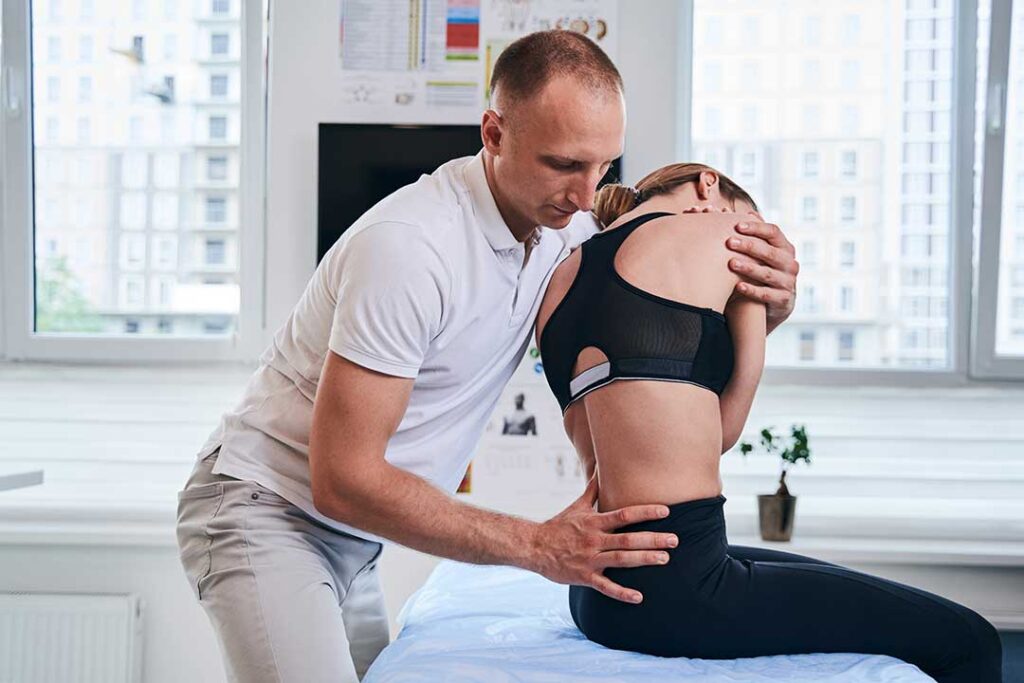
Can chiropractic care correct scoliosis?
Usually, no. Chiropractic care has not been shown to straighten a structural scoliosis curve or reliably stop the curve from progressing. It may, however, help some people manage related discomfort, stiffness, muscle tension, or movement limitations as part of a broader care plan.
Scoliosis is a sideways curvature of the spine that may also involve rotation of the vertebrae. A visible difference in shoulder height, waist shape, or hip position can raise concern, but posture alone does not confirm scoliosis. A physical examination and, when appropriate, X-rays are used to identify and measure a spinal curve.
For residents of Lynbrook, NY, questions may arise after noticing uneven shoulders in a child, discomfort during commuting, or back fatigue after household work. The first step is determining whether the problem is a true spinal curve, a temporary postural imbalance, a leg-length difference, or another condition.
What can chiropractic treatment realistically do?
Chiropractic treatment may provide short-term relief for symptoms that occur alongside scoliosis, particularly when discomfort is influenced by muscle tightness, restricted joint motion, or altered movement patterns.
A chiropractor may use:
- Gentle manual techniques to address stiffness
- Mobility exercises for the hips, mid-back, or shoulders
- Strengthening activities for the trunk and supporting muscles
- Advice about lifting, sitting, sleep positions, and daily movement
- Guidance about when medical evaluation or imaging may be appropriate
These approaches focus on comfort and function. They should not be presented as a way to “realign” the spine permanently or reverse a structural curve.
Research and clinical guidance do not support chiropractic adjustments as a replacement for observation, bracing, scoliosis-specific rehabilitation, or surgery when those treatments are medically indicated. A person can feel better without the curve itself becoming smaller.
How is scoliosis usually evaluated?
Evaluation begins with a health history and physical examination. The clinician may look for uneven shoulders, a prominent shoulder blade, changes in the waistline, or rib prominence when the person bends forward.
An X-ray can confirm scoliosis and measure the curve, commonly using the Cobb angle. In children and teenagers, the amount of remaining growth matters because curves may progress more quickly during growth spurts.
Additional testing may be considered when symptoms are unusual or concerning. For example, an MRI may be appropriate if there are neurological findings, severe pain, or a concern that another condition is affecting the spinal cord.
Not every uneven posture requires repeated imaging. Imaging decisions should account for age, symptoms, previous results, and whether the person is still growing.
Does treatment differ for children and adults?
Yes. Children and adolescents with scoliosis require attention to growth and the possibility of curve progression. Mild curves may only need periodic monitoring. Bracing may be recommended for some growing children with moderate curves, while surgery is considered in selected cases involving larger or progressive curves.
For adults, scoliosis may have been present since adolescence or may be related to age-associated changes such as arthritis, disc degeneration, or osteoporosis. Adult care often focuses on pain control, strength, balance, walking tolerance, and maintaining daily activities. Physical therapy is commonly part of conservative management.
Chiropractic care may be considered as a symptom-management option for some adults, but it should fit within the overall treatment plan rather than replace evaluation of the curve or related conditions.
Can adjustments make scoliosis worse?
The safety of manual treatment depends on the person’s diagnosis, bone health, symptoms, and the techniques used. Scoliosis by itself does not automatically mean that every form of hands-on care is unsafe, but forceful or poorly matched treatment may be inappropriate.
Extra caution is needed when a person has:
- Osteoporosis or a history of fractures
- Recent spinal surgery
- Significant spinal arthritis or instability
- Numbness, weakness, or changes in coordination
- A suspected infection, tumor, or inflammatory condition
- Severe or rapidly worsening pain
A complete health history matters. Children with a known or suspected spinal curve should not be treated as though they simply have ordinary muscle tightness.
When should someone seek medical evaluation promptly?
Back discomfort related to scoliosis is often manageable, but certain symptoms deserve timely medical attention. These include:
- New weakness in an arm or leg
- Numbness or tingling that is persistent or spreading
- Loss of bladder or bowel control
- Difficulty walking or repeated falls
- Severe pain after a fall or collision
- Fever, unexplained weight loss, or unusual fatigue
- Pain that is severe at night or rapidly worsening
- A visibly increasing curve during a child’s growth

For a child or teenager, a noticeable change in posture should be assessed rather than assumed to be caused by backpacks, sports, or poor sitting habits. Those factors may affect comfort but do not explain every spinal curve.
What daily habits may help with comfort?
Daily habits cannot reshape a structural curve, but they may reduce strain and improve function. Helpful measures can include regular walking, gradual strengthening, changing positions during deskwork, and avoiding long periods of static sitting.
In a community where many residents balance school, commuting, household responsibilities, and limited indoor space, practical adjustments may be more useful than elaborate routines. A brief movement break during computer work, carrying loads evenly, and using a stable surface for home exercises can reduce avoidable strain.
During icy or wet seasonal conditions, fall prevention is also relevant. Clear walkways, supportive footwear, and attention to balance can be especially important for adults with stiffness, reduced strength, or a history of spinal problems.
Exercises should match the person’s age, symptoms, curve pattern, and general health. Scoliosis-specific physical therapy may be more appropriate than a generic stretching program when the goal is improved posture, breathing mechanics, or movement control.
What questions should patients ask about chiropractic care?
Useful questions include:
- Is the goal pain relief, improved movement, or changing the spinal curve?
- Has the curve been measured or medically evaluated?
- What treatment techniques are being proposed?
- How will progress be monitored?
- What symptoms would require referral for additional evaluation?
- Could the plan interfere with bracing, physical therapy, or other treatment?
- Are there reasons manual treatment should be avoided?
Clear answers help distinguish supportive care from claims that exceed the available evidence.
Chiropractic care may have a role in managing selected symptoms associated with scoliosis, especially stiffness and muscular discomfort. It should be viewed as supportive care—not a proven method for correcting the curve—and coordinated with appropriate medical evaluation when scoliosis is suspected, progressing, or accompanied by neurological symptoms.
