
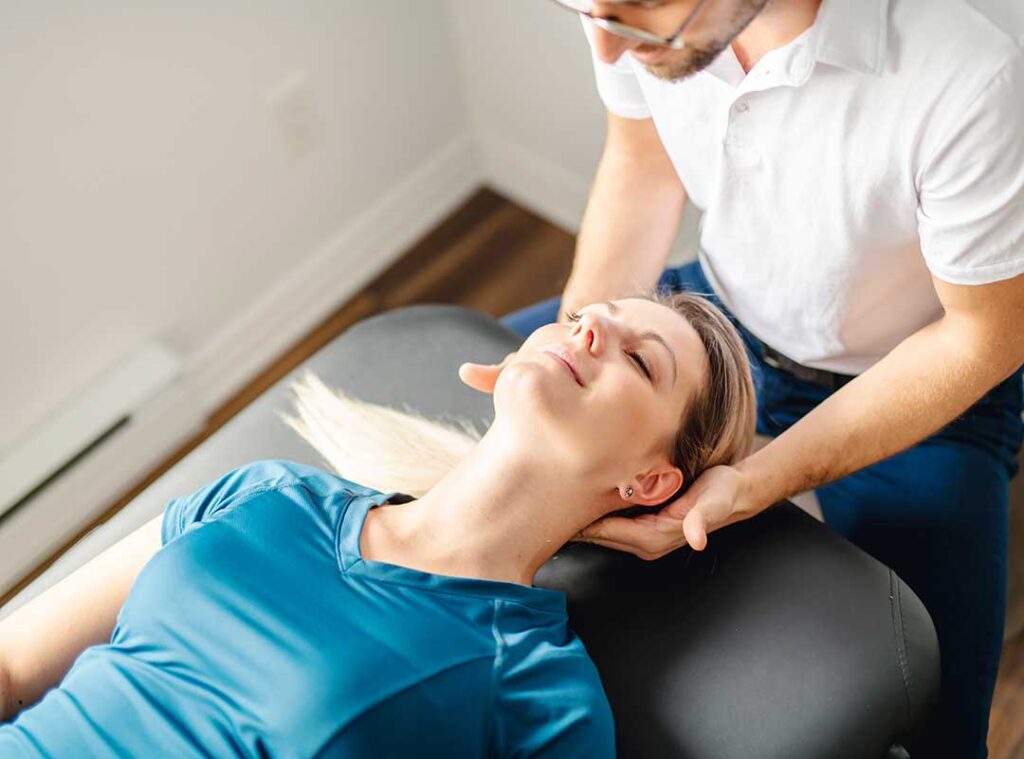
Tension headaches often feel like steady pressure, tightening, or a dull ache across the forehead, temples, back of the head, or neck. Gentle stretching may reduce muscle guarding and help ease discomfort, especially when long periods of screen use, driving, desk work, stress, or poor sleep contribute to the problem.
Stretching is not a cure for every headache, and it should never cause sharp pain, dizziness, numbness, or worsening symptoms. The following movements are intended for mild, familiar tension-type discomfort.
What does a tension headache usually feel like?
A tension headache commonly causes pain on both sides of the head or a band-like feeling around the forehead. The neck, scalp, jaw, and shoulder muscles may also feel tender or tight.
Unlike many migraines, tension headaches typically do not cause vomiting or visual disturbances. However, headache symptoms can overlap, and a new or changing pattern should not automatically be assumed to be muscle tension.
In Lynbrook, NY, seasonal changes may encourage more indoor sitting, heating-related dryness, or extended computer and phone use. These habits do not directly explain every headache, but they can contribute to stiff neck and shoulder muscles for some residents.
How should stretching be done during a headache?
Use slow, comfortable movements rather than forceful pulling. Sit or stand with the shoulders relaxed and breathe normally.
A practical approach is:
- Hold each gentle stretch for 15 to 30 seconds.
- Repeat each movement one or two times per side.
- Keep the stretch mild, usually no more than a light pulling sensation.
- Move slowly when returning to a neutral position.
- Stop if symptoms intensify or spread.
Stretching works best as a way to reduce accumulated tension, not as a test of flexibility. The goal is relaxed movement, not reaching a particular range.
Which neck stretches may help?
Chin tuck
A chin tuck gently activates the deep muscles that support the neck and may counter the forward-head position common during screen use.
Sit upright with the eyes level. Without looking down, draw the chin straight backward, as if making a small double chin. Hold for five seconds, then relax. Repeat five to ten times.
Do not press the head backward or tilt the chin toward the chest.
Side neck stretch
This targets the muscles along the side of the neck.
Sit with both shoulders down. Slowly bring the right ear toward the right shoulder until a gentle stretch is felt on the left side of the neck. Keep the face pointing forward. Hold, then switch sides.
Avoid pulling the head with the hand. If the shoulders rise toward the ears, reduce the range.
Upper trapezius stretch
The upper trapezius muscle runs from the neck toward the shoulder and often becomes tense during stress or prolonged sitting.
Sit on one hand or place that hand beneath the thigh. Tilt the opposite ear toward the opposite shoulder. A slight turn of the nose toward the armpit can change the location of the stretch. Hold gently, then repeat on the other side.
This movement should not create tingling down the arm.
Levator scapulae stretch
This stretch may be useful when discomfort is concentrated at the back corner of the neck near the shoulder blade.
Turn the head about 45 degrees to the right, then look downward as if checking the right front pocket. Keep the right shoulder relaxed. Hold the stretch on the left side of the neck, then switch directions.
Use a small range. Looking too far down can strain the neck rather than relax it.
Can shoulder and upper-back stretches help?
Yes. Neck tension is often affected by the upper back and shoulder blades, so focusing only on the head and neck may leave part of the problem unaddressed.
Shoulder rolls
Lift the shoulders gently toward the ears, move them backward, then let them drop. Make five slow circles, then reverse direction.
Avoid fast or exaggerated circles. The movement should feel smooth and easy.
Doorway chest stretch
Tight chest muscles can encourage rounded shoulders and forward-head posture.
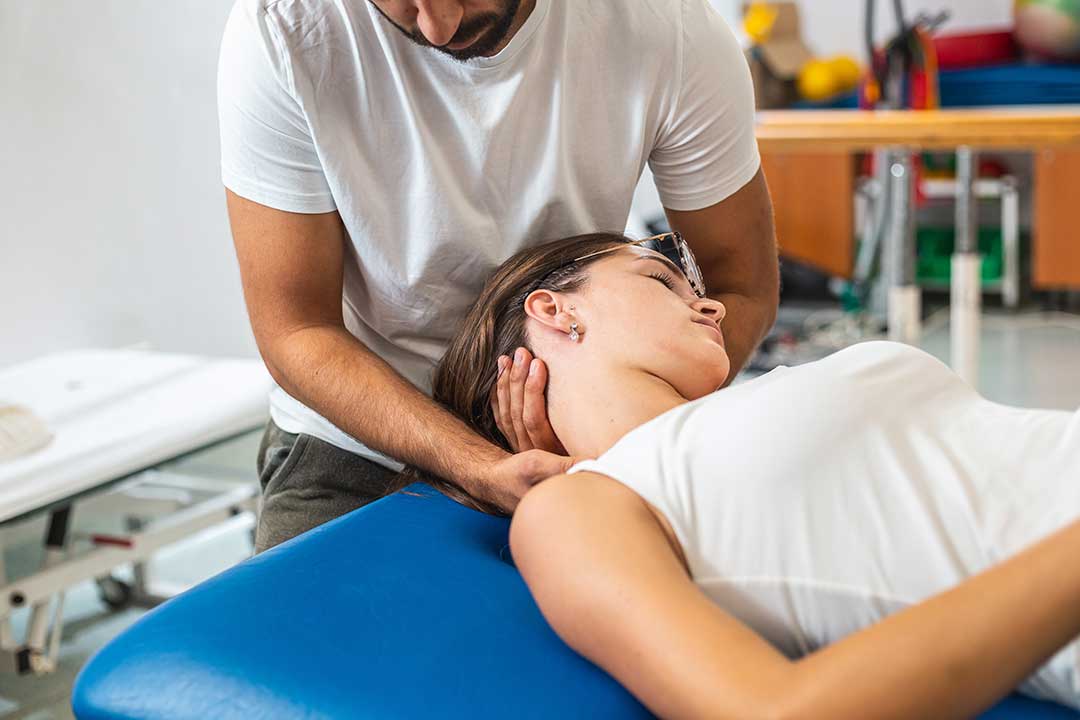
Stand in a doorway with the forearms resting lightly on the frame and the elbows near shoulder height. Step forward until a mild stretch is felt across the chest. Keep the ribs relaxed and avoid arching the lower back.
If the shoulders or arms become numb, lower the elbows or stop.
Seated upper-back movement
Sit with the hands resting on the thighs. Slowly round the upper back while allowing the head to follow slightly, then return to a comfortable upright position. Repeat five to eight times.
This is a mobility exercise rather than a prolonged stretch. It should not involve forcing the neck forward.
What about the jaw and face?
Jaw clenching can contribute to temple, forehead, and neck discomfort. A simple resting position may help: place the tongue lightly on the roof of the mouth, keep the lips together, and allow the upper and lower teeth to remain slightly apart.
Avoid aggressively stretching or massaging the jaw during a headache. If there is persistent jaw pain, clicking with limited movement, tooth damage, or morning headaches with noticeable clenching, the issue may require evaluation beyond neck stretching.
How often should these stretches be performed?
For prevention, a short routine once or twice during the day may be more useful than stretching only after pain becomes intense. People who work at a computer, study, drive frequently, or perform repetitive household tasks can try a brief movement break every 30 to 60 minutes.
A simple routine may take three to five minutes:
- Five chin tucks
- One side neck stretch on each side
- One upper trapezius stretch on each side
- Five shoulder rolls in each direction
- Five slow upper-back movements
Pair the routine with relaxed breathing. During colder months, residents may also spend more time indoors in fixed postures, making regular movement breaks particularly useful.
What common mistakes should be avoided?
Stretching harder is not necessarily more effective. Avoid bouncing, pulling the head forcefully, holding the breath, or continuing through pain.
It is also a mistake to assume every headache is caused by tight muscles. Dehydration, missed meals, sleep disruption, caffeine changes, medication overuse, jaw clenching, vision problems, migraine, and other conditions can produce similar symptoms.
Heat applied to the neck or shoulders may feel soothing for some people, while others prefer a cool cloth over the forehead. Neither should be hot or cold enough to injure the skin.
When should a headache be medically evaluated?
Seek urgent medical care for a sudden, severe headache; a headache after a head injury; or headache accompanied by weakness, numbness, confusion, fainting, seizure, trouble speaking, double vision, fever, or a stiff neck.
A non-urgent medical evaluation is appropriate when headaches are frequent, progressively worsening, disrupting sleep or daily activities, or different from previous episodes. A headache diary can help identify patterns involving sleep, meals, hydration, stress, screen time, posture, and menstrual cycles.
Stretching can be a reasonable part of self-care for familiar, mild tension-type symptoms, but persistent or unusual headaches deserve a broader assessment rather than repeated stretching alone.
