

Can chiropractic care help with sports injuries?
Chiropractic care may help some people manage sports-related pain, restore movement, and gradually return to normal activity. It is generally most useful as part of a broader recovery plan that may include activity modification, therapeutic exercise, mobility work, and medical evaluation when needed.
Sports injuries vary widely. A mild muscle strain, ankle sprain, overuse injury, joint irritation, and suspected fracture should not be treated the same way. Chiropractic care is not a substitute for emergency treatment, imaging, surgery, or diagnosis by a medical clinician when those services are necessary.
For local residents who run, cycle, play recreational sports, exercise at home, or participate in school athletics, the main value of care is often improving function rather than simply trying to eliminate pain as quickly as possible.
What types of sports injuries may respond to chiropractic treatment?
Chiropractic treatment may be considered for certain muscle, joint, and movement-related problems, particularly when there is no sign of a serious structural injury.
Examples include:
- Low-back pain after lifting, running, or repeated twisting
- Neck or upper-back discomfort after contact or awkward movement
- Mild joint stiffness in the shoulders, hips, knees, or ankles
- Certain activity-related strains and sprains
- Pain associated with restricted mobility or altered movement patterns
- Overuse-related discomfort that develops gradually
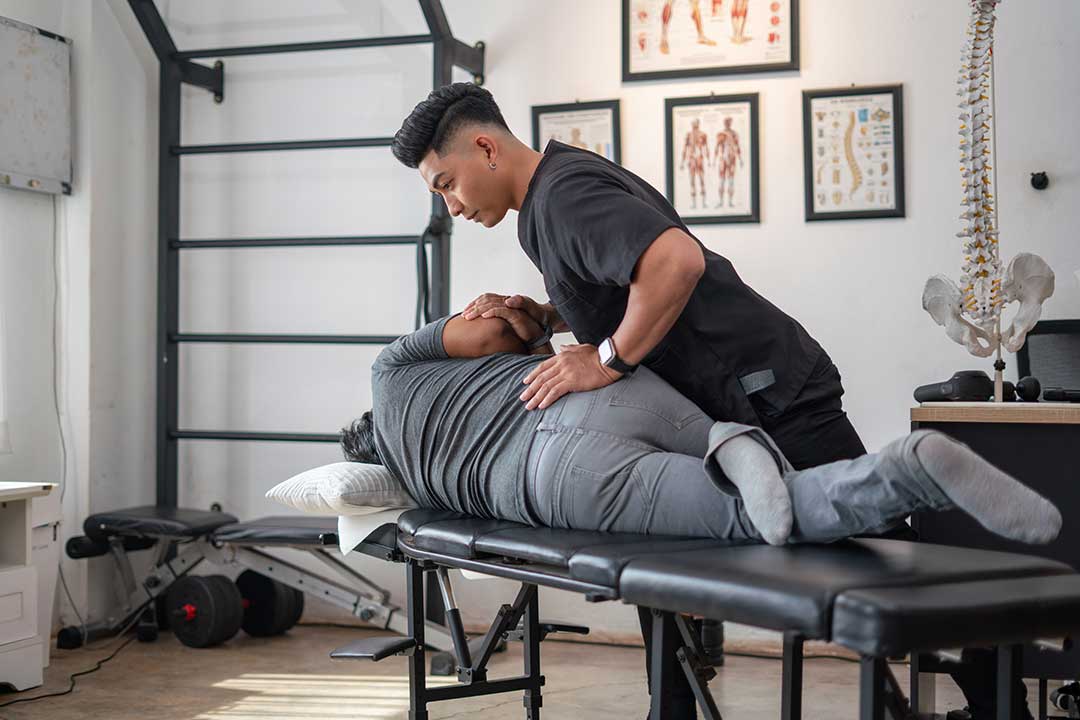
Treatment may involve hands-on mobilization, spinal manipulation, soft-tissue techniques, stretching, and exercise recommendations. The specific approach should depend on the injury, the person’s health history, and how symptoms behave during movement.
A treatment that is reasonable for mild back stiffness may be inappropriate for a swollen knee, unstable ankle, or suspected tendon rupture.
How can treatment support recovery?
The body often protects an injured area by creating pain, muscle tension, swelling, or guarded movement. That protective response can be useful at first, but it may also lead to stiffness and compensations if it continues.
A careful assessment may look at:
- Range of motion
- Muscle strength and control
- Joint movement
- Balance and coordination
- Walking, running, lifting, or sport-specific mechanics
- The timing and pattern of symptoms
Hands-on treatment may temporarily improve mobility or reduce discomfort. Exercise is usually important for maintaining those gains and rebuilding capacity. For example, a person recovering from an ankle sprain may need progressive balance and calf-strengthening exercises, not only treatment directed at the ankle joint.
The goal is not to force a joint into motion or repeatedly treat the painful area without addressing why the injury occurred. A useful plan should gradually restore the activities needed for work, recreation, exercise, or competition.
Does an adjustment heal a torn ligament or broken bone?
No. Chiropractic adjustments do not directly repair a broken bone, fully torn ligament, severe tendon injury, or major cartilage damage.
Some injuries need imaging, bracing, medication, surgery, or supervised rehabilitation. Manipulating an unstable or seriously injured area could worsen symptoms or delay appropriate care. This is why a proper history and physical examination matter before treatment begins.
Severe swelling, obvious deformity, inability to bear weight, a joint that feels unstable, or a sudden loss of strength should not be dismissed as a routine sports injury.
How does chiropractic care fit with physical therapy and medical care?
Chiropractic care and physical therapy may overlap in areas such as exercise, mobility, and manual treatment, but the professions can approach assessment and rehabilitation differently. Some people may benefit from one type of care, while others need coordinated treatment involving several clinicians.
Medical evaluation becomes especially important when symptoms suggest a fracture, dislocation, concussion, significant ligament injury, infection, or neurological problem. Physical therapy may be particularly useful when the main need is progressive strength, endurance, balance, or sport-specific retraining.
A sensible recovery plan may involve communication among the people managing the injury. This is especially relevant for young athletes, older adults, people taking blood-thinning medication, and anyone with conditions affecting bone health, balance, or healing.
Is spinal manipulation safe after a sports injury?
Spinal manipulation is not risk-free, although temporary soreness, stiffness, headache, or increased discomfort are the more common side effects reported after treatment. Serious complications are uncommon, but risk can be higher when a person has certain medical conditions or when a treatment is performed without adequate screening.
Neck manipulation deserves particular caution. New severe neck pain, unusual headache, dizziness, double vision, weakness, numbness, trouble speaking, or loss of coordination requires urgent medical attention rather than manual treatment.
Anyone considering manipulation should disclose recent trauma, previous surgery, osteoporosis, blood-clotting problems, neurological symptoms, cancer history, and current medications. A treatment plan should also be adjusted if symptoms become worse, spread, or change character.
When should a sports injury be evaluated urgently?
Some symptoms require prompt medical evaluation. These include:
- Inability to walk or use the affected limb
- Visible deformity or a joint that appears out of place
- Rapid or severe swelling
- Severe pain after a collision, fall, or direct blow
- Numbness, weakness, or loss of coordination
- A popping sensation followed by instability or loss of function
- Chest pain, shortness of breath, or fainting during exercise
- Confusion, repeated vomiting, worsening headache, or unusual drowsiness after a head injury
A concussion can occur without loss of consciousness. Athletes with possible concussion symptoms should not return to play simply because they feel better after resting briefly.
How can local athletes reduce the chance of re-injury?
Seasonal habits can influence injury risk. In a community where residents may move between indoor exercise, outdoor running, school sports, and recreational leagues, sudden changes in activity level are common. Cold weather can also make muscles feel less prepared for intense effort, while hot and humid conditions increase fluid and heat-related concerns.
Helpful habits include:
- Increase training volume gradually rather than making large jumps
- Warm up with movements that resemble the planned activity
- Build strength in the hips, trunk, shoulders, and lower legs
- Replace worn footwear when traction or support has declined
- Practice balance and landing mechanics
- Take persistent pain seriously instead of repeatedly training through it
- Resume sport in stages, beginning with easier drills before full-speed competition
Returning to activity should be based on function, not only on the number of days since injury. A person should be able to perform relevant movements with controlled technique and without worsening symptoms during or after activity.
What should someone expect from an evaluation?
An evaluation should begin with questions about how the injury happened, what movements provoke symptoms, previous injuries, training changes, and general health. The examination may include movement testing, strength checks, neurological screening, and assessment of nearby joints.
The most appropriate recommendation may be treatment, home exercise, temporary activity modification, referral for imaging, or urgent medical care. That decision should be guided by the findings rather than by a preset number of visits or a promise of rapid recovery.
For sports injuries, chiropractic care is best understood as one possible component of rehabilitation. Its role is to help appropriate patients move more comfortably and function more effectively while recognizing when another type of medical care is needed.
