

Poor posture is not simply a matter of appearance. Repeatedly holding the head, shoulders, pelvis, or spine in an awkward position can increase strain on muscles and joints, contribute to pain, limit movement, and make ordinary activities more tiring.
For residents of Lynbrook, posture often becomes an issue during long workdays, schoolwork, commuting, household tasks, phone use, or extended periods indoors during cold or rainy weather. The goal is not to maintain a rigid “perfect” position all day. Healthy posture is more about balance, comfort, regular movement, and the ability to change positions easily.
What does poor posture do to the body?
Poor posture changes how weight and muscle effort are distributed. For example, leaning forward over a laptop or phone may cause the neck and upper back muscles to work continuously to support the head. Sitting with the pelvis rolled backward can place additional stress on the lower back.
Over time, these patterns may contribute to:
- Neck stiffness or soreness
- Headaches related to muscle tension
- Shoulder tightness and reduced shoulder movement
- Upper-back discomfort
- Low-back pain
- Hip stiffness
- Muscle fatigue
- Tingling or discomfort in the arms or legs when nerves are irritated
Posture is only one possible contributor to pain. Injury, arthritis, disc problems, muscle weakness, stress, sleep position, work demands, and lack of physical activity can also play a role. A painful area should not automatically be blamed on posture alone.
Can poor posture affect breathing and energy?
It can make comfortable breathing more difficult, particularly when the trunk is compressed or the shoulders remain rounded for long periods. A slumped position may limit how freely the rib cage and diaphragm move. This does not usually mean that poor posture causes a serious lung condition, but it can make breathing feel less natural and may encourage shallow breathing during sedentary tasks.
Postural strain can also contribute to a sense of fatigue. Muscles that remain partially contracted for hours may use energy without producing useful movement. Someone may feel tired or achy after sitting at a desk even without strenuous exercise.
Improving posture will not solve every cause of fatigue or shortness of breath. New, severe, or unexplained breathing problems require prompt medical attention rather than posture exercises.
Why do neck and shoulder symptoms often appear first?
The head is relatively heavy, and the neck muscles must continually support it. When the head moves forward, the muscles at the back of the neck and upper shoulders may work harder to keep the eyes level. This can produce tightness, soreness, or tension-type headaches.
Phone use is a common example. Looking down for a few minutes is not dangerous by itself, but holding that position repeatedly for long periods can aggravate symptoms. Similar strain may develop while reading, sewing, driving, studying, or working at a computer that is positioned too low.
Helpful adjustments include raising reading material closer to eye level, keeping frequently used items within easy reach, and allowing the neck to return to a neutral position regularly.
How can sitting affect the lower back?
Long periods of sitting may reduce movement through the hips and spine and increase pressure or fatigue in the lower-back muscles. Sitting becomes more stressful when the chair does not support the body well, the feet do not reach the floor, or the person remains in one position for hours.
A supportive sitting setup usually includes:
- Feet resting on the floor or a stable footrest
- Knees roughly level with or slightly lower than the hips
- Shoulders relaxed rather than lifted
- Elbows close to the body
- A screen near eye level
- The lower back supported without forcing an exaggerated arch
Even a well-arranged chair cannot replace movement. Standing, walking briefly, changing tasks, or gently moving the spine throughout the day may be more useful than trying to hold one fixed position indefinitely.
Does poor posture cause scoliosis or a permanently “crooked” spine?
Ordinary slouching does not usually cause structural scoliosis. Scoliosis involves a three-dimensional curvature of the spine and has different possible causes. Poor posture can make an existing curve look more noticeable, and some people have temporary asymmetries related to muscle tightness, leg positioning, or habits.
Likewise, a rounded sitting position does not automatically mean the spine has been permanently damaged. Many posture-related symptoms improve when the contributing activity, workload, strength imbalance, or movement pattern changes. Persistent or worsening symptoms deserve an appropriate evaluation so that more serious conditions are not overlooked.
What are practical ways to improve posture?
Posture improves most reliably through small changes repeated consistently. Useful habits include:
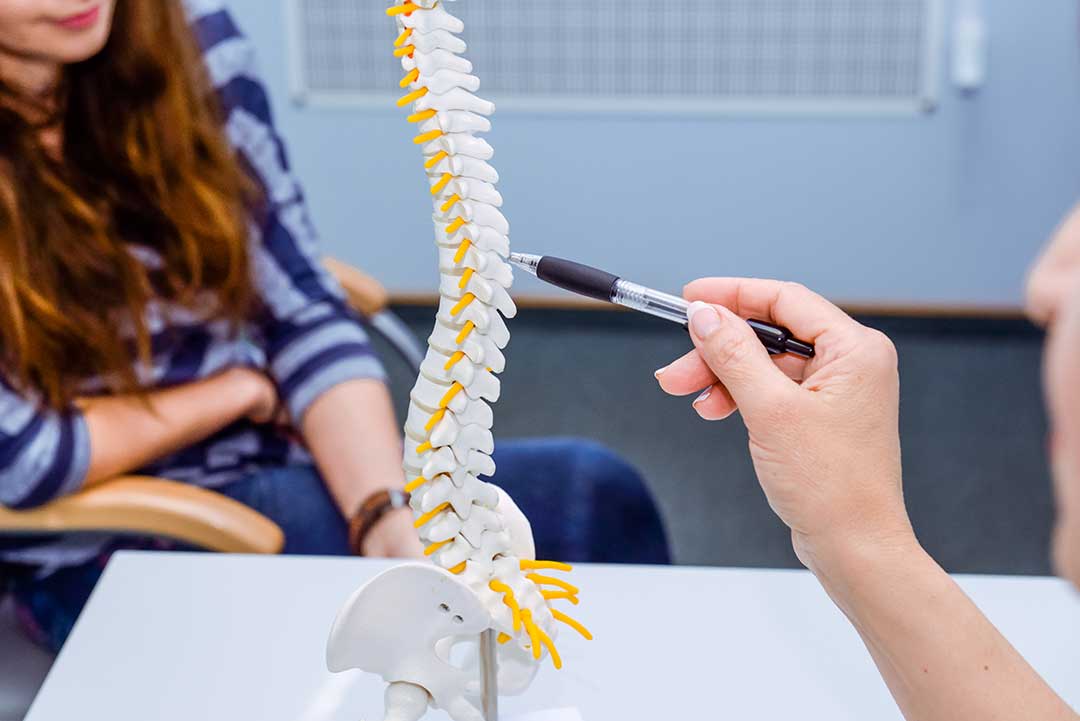
- Change position every 30 to 60 minutes rather than waiting until discomfort becomes severe.
- Take short walking or standing breaks during desk work.
- Keep both feet supported while sitting.
- Use a backpack or work bag in a way that avoids carrying excessive weight on one side.
- Hold phones and books higher instead of keeping the head bent downward for long periods.
- Strengthen the hips, upper back, abdomen, and legs through appropriate exercise.
- Stretch areas that feel restricted, but avoid forcing painful movements.
- Adjust work surfaces so the screen, keyboard, and chair fit the person using them.
In homes with limited workspace, a dining table, kitchen counter, or couch may be used for school or computer work. These arrangements can be workable for short periods, but they often encourage reaching, bending, or unsupported sitting. Alternating locations and adding simple support, such as a separate keyboard or footrest, may reduce strain.
When should posture-related pain be evaluated?
Mild soreness that improves with movement and rest is often manageable, but pain should be assessed if it persists, repeatedly returns, or interferes with sleep, work, walking, or daily activities.
Prompt medical attention is especially important after a significant fall or collision, or when back or neck pain occurs with:
- Weakness in an arm or leg
- Numbness that is spreading or persistent
- Loss of bladder or bowel control
- Fever or unexplained weight loss
- Severe pain that is rapidly worsening
- Trouble walking or maintaining balance
- Chest pain or difficulty breathing
A chiropractor may assess movement, joint function, muscle balance, and everyday mechanical stresses, but posture-related complaints can also require medical, physical therapy, or other evaluation depending on the symptoms. The safest approach is to match the evaluation to the pattern and severity of the problem rather than assume every ache has the same cause.
Is there one correct posture for everyone?
No. Bodies differ, and a position that feels comfortable for one person may not work for another. Even a generally good position can become uncomfortable if held too long.
Healthy posture is better understood as the ability to move between comfortable positions, distribute effort, and perform daily activities without unnecessary strain. For local residents balancing desk work, driving, household responsibilities, and seasonal indoor routines, frequent position changes may matter more than trying to sit perfectly still.
