

Regular spinal maintenance generally refers to periodic attention to movement, posture, muscle balance, and recurring discomfort before a problem becomes more limiting. For residents of Lynbrook, NY, it may be relevant to people who spend long hours at desks, commute by car or train, care for a home, walk regularly, or manage seasonal outdoor tasks.
The term does not describe a single treatment plan. Depending on a person’s needs, it may include movement education, exercise, hands-on care, ergonomic changes, and monitoring of symptoms over time.
What are the potential benefits of regular spinal maintenance?
Regular care may help some people maintain mobility, recognize recurring problems earlier, and manage musculoskeletal discomfort without relying only on treatment during a flare-up. The strongest evidence for spinal manipulation and mobilization relates to certain types of low-back and neck pain, not to preventing every future spinal problem.
Possible benefits include:
- Improved short-term comfort during episodes of low-back or neck pain
- Better ability to move, stand, walk, sleep, or complete household activities
- Greater awareness of posture, lifting habits, and repetitive strain
- Support for an exercise routine focused on strength, flexibility, and balance
- Earlier recognition of symptoms that need medical evaluation
The effects are usually modest and vary from person to person. Regular spinal care should be viewed as one part of musculoskeletal health rather than a substitute for physical activity, sleep, medical care, or treatment of an underlying condition.
Does spinal maintenance prevent back pain?
Not necessarily. Periodic spinal care may help a person manage symptoms, but there is limited evidence that routine adjustments alone prevent all future back pain or protect the spine from normal aging.
Back pain often reflects several factors at once, including muscle conditioning, lifting demands, prolonged sitting, sleep quality, stress, previous injury, body weight, and certain medical conditions. A maintenance approach is more useful when it includes practical self-care, such as:
- Changing position regularly instead of sitting for long uninterrupted periods
- Building strength in the legs, hips, abdomen, and back
- Using controlled movement when lifting or carrying
- Gradually increasing activity after a period of inactivity
- Avoiding prolonged bed rest during most uncomplicated episodes of back pain
Adults generally benefit from regular aerobic activity and muscle-strengthening activity each week. Walking, water exercise, resistance training, and appropriately modified recreational activities can all support spinal function.
Who might consider regular spinal care?
People with recurring, uncomplicated musculoskeletal discomfort may find periodic care useful, particularly when symptoms interfere with normal activities but do not involve warning signs. This can include adults with intermittent low-back pain, stiffness after desk work, neck discomfort related to prolonged screen use, or reduced mobility after a previous strain.
Regular monitoring may also be useful for people whose daily routines place repeated demands on the spine. Local households may encounter a combination of commuting, extended computer use, stair climbing, home maintenance, carrying groceries, and winter-related changes in walking conditions. These activities do not automatically cause injury, but sudden increases in effort can contribute to strain.
A person who has no pain and is considering routine adjustments should understand that preventive benefits are less certain than symptom-management benefits. Exercise, movement variety, and healthy work habits have a clearer role in long-term function.
What should a maintenance visit include?
A responsible plan should be based on current symptoms, medical history, activity level, and goals. It should not rely on a fixed schedule that treats every person the same.
An evaluation may consider:
- Where symptoms occur and how long they have lasted
- Whether pain travels into an arm or leg
- Strength, sensation, balance, and range of motion
- Previous injuries, surgeries, osteoporosis, or inflammatory conditions
- Medications and other health concerns
- Work, exercise, sleep, and lifting demands
Care may involve gentle mobilization, spinal manipulation, stretching, strengthening, movement instruction, or advice about daily activities. A useful plan should also explain what can be done independently between visits.
There is no universal number of visits required for “maintenance.” Frequency should be reconsidered when symptoms change, progress stops, or the person can manage comfortably with exercise and self-care.
Is spinal manipulation safe?
For many adults, spinal manipulation and mobilization cause temporary side effects such as soreness, stiffness, headache, or increased discomfort. These effects commonly resolve within a day or so. Serious complications are rare, but they can occur, and risk may be higher for people with certain health conditions.
Neck manipulation deserves particular caution because rare artery injuries in the neck have been reported. Research has not fully established whether manipulation directly causes these events, because similar artery injuries can occur spontaneously or after other sudden neck movements. A careful health history and clear discussion of risks are appropriate before forceful neck techniques.
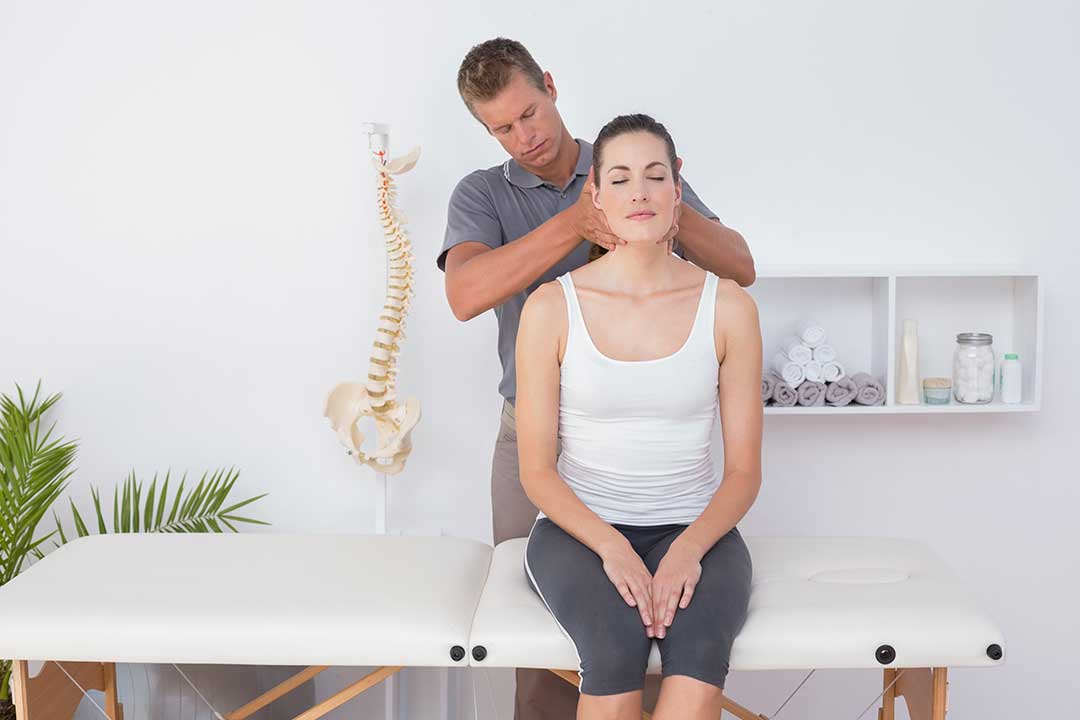
Extra caution is warranted with a history of:
- Recent major trauma
- Severe osteoporosis or known bone weakness
- Cancer involving bone
- Infection, fever, or unexplained illness
- Bleeding disorders or blood-thinning medication
- Progressive neurological symptoms
- Recent surgery
- Significant inflammatory or connective-tissue disease
Pregnancy, older age, and multiple medical conditions may also require modification of care. Gentle approaches and coordination with a medical clinician may be more appropriate than forceful techniques.
When is back or neck pain a warning sign?
Routine maintenance is not appropriate for every symptom. Prompt medical evaluation is warranted for new or worsening pain accompanied by:
- Loss of bladder or bowel control
- Numbness around the groin or inner thighs
- Progressive weakness in an arm or leg
- Difficulty walking or maintaining balance
- Fever, unexplained weight loss, or a history of cancer
- Significant pain after a fall or collision
- Severe pain that is constant or worse at night
- New symptoms in a person with serious medical conditions
Sudden neurological symptoms, including facial drooping, speech difficulty, severe dizziness, or one-sided weakness, require emergency attention rather than routine spinal care.
How can residents support spinal health between visits?
The most durable benefits usually come from daily habits rather than passive treatment alone. Short periods of movement throughout the day can be useful for people who work at a computer or spend long periods seated. A screen positioned near eye level, feet supported on the floor, and regular changes in posture may reduce unnecessary strain.
For household tasks, keep loads close to the body, avoid twisting while lifting, and divide heavy loads into smaller portions when possible. During colder or wetter seasons, slippery surfaces and reduced outdoor activity may increase stiffness or deconditioning. Indoor walking, mobility exercises, and gradual strength training can help maintain activity when outdoor routines change.
Regular spinal maintenance is best understood as an individualized approach to preserving movement and managing recurring discomfort. Its value depends on appropriate assessment, realistic expectations, active participation, and recognition of symptoms that require a different type of care.
