
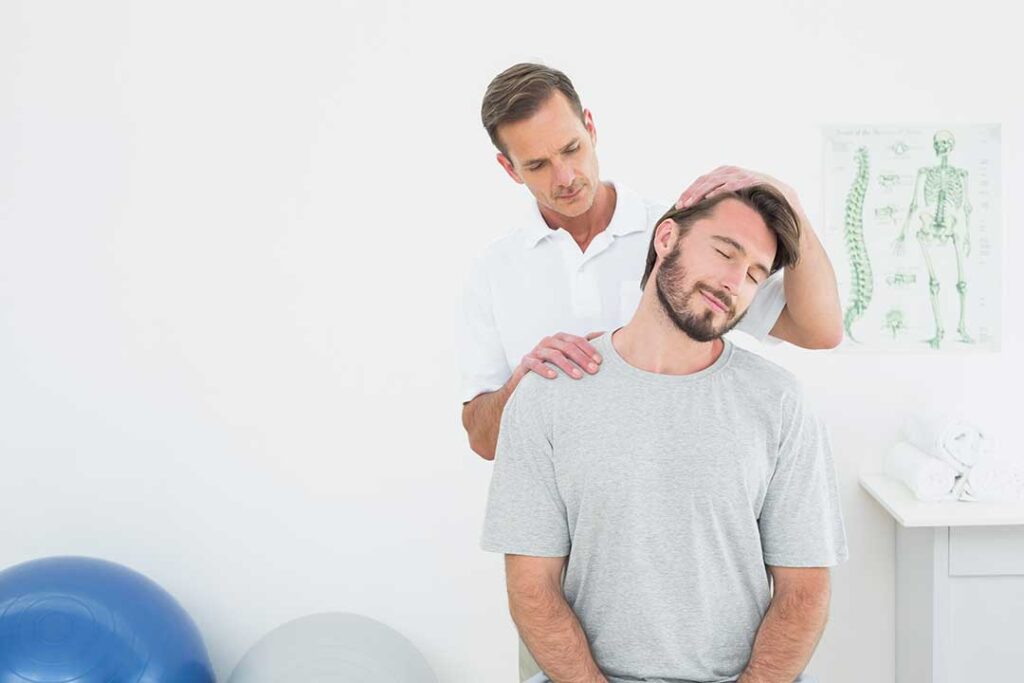
Golf depends on more than club selection and practice. A stable address position, controlled rotation, hip mobility, balance, and the ability to repeat a movement without irritation all influence how well a golfer plays. Chiropractic care may support these physical factors, particularly when stiffness, restricted movement, or recurring musculoskeletal discomfort interferes with the swing.
Chiropractic care does not automatically increase driving distance or correct golf technique. Its potential value is more practical: helping a golfer move with less restriction, manage certain types of back or joint pain, and maintain the physical capacity needed to practice and play consistently.
Can chiropractic care directly improve a golf swing?
Chiropractic care may improve the physical conditions that support a golf swing, but it does not replace instruction from a qualified golf coach or correction of equipment problems.
The golf swing is a fast, rotational movement. The hips, pelvis, thoracic spine, shoulders, wrists, and ankles must work together while the body transfers force from the ground through the legs and trunk. If one area is stiff or painful, another area may compensate.
For example, limited hip rotation may cause a golfer to rotate excessively through the lower back. Restricted movement in the upper back may lead to extra stress on the shoulders or lumbar spine. Treatment aimed at improving joint motion and reducing discomfort can sometimes make the swing feel smoother, but results vary from person to person.
Research on spinal manipulation for athletic performance remains limited and mixed. The strongest rationale is usually symptom relief and improved function rather than a guaranteed performance boost.
Why is the lower back a common problem for golfers?
The lower back is exposed to repeated bending, rotation, and loading during practice and play. Golfers may hit dozens of balls in a session, repeat the same motion on the course, and spend additional time sitting in a car or at a desk before and after playing.
Common contributors include:
- Limited hip internal rotation
- Weak or poorly coordinated trunk muscles
- Inadequate warm-up
- Sudden increases in practice or playing time
- Poor swing mechanics
- Fatigue late in a round
- Repeatedly practicing from uneven ground
- Carrying equipment in a way that strains one side of the body
A golfer may also develop discomfort because the body is trying to protect an injured area. A restricted hip, for instance, can alter pelvic motion. A stiff upper back can make the lower back work harder during the backswing and follow-through.
In Lynbrook, NY, many golfers balance outdoor play with long periods indoors during colder months. A sudden return to frequent rounds in spring can expose a body that has not maintained the strength, mobility, or conditioning required for repeated swings.
What might a chiropractic evaluation examine?
A thorough evaluation should look beyond the painful area. The goal is to understand how the entire movement system contributes to the golfer’s symptoms or limitations.
An assessment may include:
- Spinal and pelvic movement
- Hip rotation and flexibility
- Shoulder and upper-back mobility
- Leg strength and balance
- Posture during standing and bending
- Walking pattern
- Tolerance for rotation
- Whether symptoms change during a partial or full swing
A clinician may also ask about practice volume, previous injuries, work posture, sleep, exercise habits, and when symptoms appear. Pain that occurs only after several holes may have a different contributing pattern than pain that begins during the first few swings.
The evaluation should also distinguish between a movement problem and a technical golf problem. A swing instructor may be better equipped to address grip, alignment, tempo, and club path, while a healthcare provider evaluates pain, mobility, strength, and physical function.
How can treatment support practice and play?
Treatment may include spinal or joint mobilization, soft-tissue techniques, movement coaching, and exercises. The specific approach depends on the person’s symptoms, health history, age, medications, and goals.
The most useful care plans usually include active participation rather than relying only on hands-on treatment. Examples may include:
- Hip mobility exercises
- Trunk-strengthening movements
- Balance training
- Shoulder and upper-back mobility work
- Glute and leg strengthening
- Gradual return-to-play planning
- Advice on warm-up and recovery
Hands-on care may reduce short-term stiffness or discomfort for some people. Exercise and improved movement habits are generally more important for maintaining progress between rounds.
A golfer should not assume that a joint “needs to be adjusted” simply because the swing feels uneven. Mobility restrictions, muscle weakness, fatigue, technique, and equipment can all create similar sensations.
What should a golfer do before a round?

A brief dynamic warm-up is more useful than beginning with full-power drives. The body should gradually rehearse the movements required for golf.
A practical warm-up may include five to ten minutes of walking followed by controlled movements such as:
- Gentle trunk rotations
- Hip hinges
- Alternating lunges
- Shoulder circles
- Standing leg swings
- Slow practice swings with a short club
- Gradually increasing swing speed
Stretching should be comfortable and controlled. Forceful stretching into pain is not necessary. It is also helpful to begin practice with putting, chipping, and partial swings before moving to longer clubs.
Golfers who play early in the morning may feel especially stiff after a night of limited movement. A few minutes of walking and mobility work before the first tee can help the body transition more gradually into the demands of the swing.
Can chiropractic care prevent golf injuries?
It may help identify and address movement limitations, but no treatment can guarantee injury prevention. Injury risk is influenced by conditioning, technique, workload, age, previous injury, recovery, and general health.
Prevention is more likely when several habits work together:
- Increase practice volume gradually
- Avoid hitting large baskets of balls at full speed
- Strengthen the legs, hips, and trunk year-round
- Take short breaks during extended practice
- Use a warm-up before playing
- Stop or modify activity when pain changes the swing
- Pay attention to fatigue, not only pain
A swing that becomes shorter, slower, or noticeably altered because of discomfort is a warning that the body may not be tolerating the workload.
When is back or joint pain a reason to stop playing?
Pain that is mild and improves with rest may reflect temporary soreness, but persistent or worsening symptoms deserve evaluation. Golfers should stop playing and seek timely medical attention if pain is severe, follows a fall or collision, causes weakness, or is accompanied by numbness or tingling traveling into an arm or leg.
Other warning signs include loss of bladder or bowel control, unexplained fever, significant night pain, or pain that does not improve with ordinary rest. These symptoms are not typical signs of a simple golf-related muscle strain.
Chiropractic care may be one part of care for appropriate musculoskeletal problems, but a golfer may also need evaluation from a primary care clinician, sports medicine provider, physical therapist, or other qualified healthcare professional. The safest choice depends on the symptoms and medical history.
How should golfers judge whether care is helping?
Useful measures are functional rather than promotional. A golfer can track whether it is easier to rotate, walk 18 holes, practice without increasing symptoms, maintain posture, or complete a swing without protective movements.
Improvements should be assessed over time, not only by how the body feels immediately after treatment. A short-term reduction in stiffness is encouraging, but lasting improvement usually depends on strengthening, movement practice, recovery, and appropriate swing adjustments.
For local residents, the most practical goal is not simply to swing harder. It is to remain comfortable enough to practice, walk, rotate, and recover so that golf can remain a sustainable part of an active lifestyle throughout the year.
