
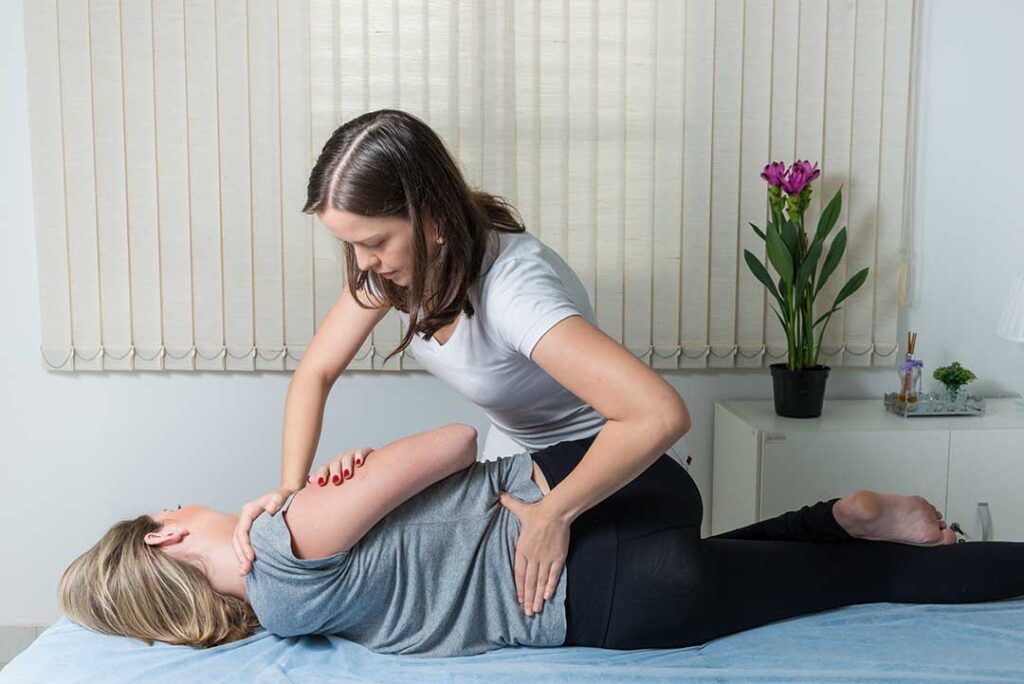
Persistent back or neck pain does not automatically mean surgery is necessary. For many people, a carefully planned combination of exercise, activity changes, physical rehabilitation, medication when appropriate, and manual care can improve pain and function without an operation.
The right approach depends on the cause of symptoms, how long they have lasted, whether nerves are affected, and whether any warning signs are present. Chiropractic care may be one part of a broader non-surgical plan, but it should not replace medical evaluation when symptoms suggest a serious condition.
What does “conservative care” mean?
Conservative care means treating a musculoskeletal problem without surgery. It often begins with lower-risk measures and progresses only if symptoms do not improve.
Common elements include:
- Staying active within tolerable limits rather than prolonged bed rest
- Structured exercise or physical therapy
- Education about posture, lifting, and daily movement
- Heat or cold for short-term symptom relief
- Manual therapy, including mobilization or spinal manipulation
- Nonprescription medication when medically appropriate
- Gradual return to work, household tasks, and recreation
- Behavioral or psychological support for persistent pain
Treatment is usually more effective when several appropriate approaches are combined. For example, hands-on care may temporarily reduce stiffness, while strengthening and movement training help address the limitations that allow symptoms to return.
Can chiropractic care help avoid back surgery?
Chiropractic care may help some people with mechanical low back pain, joint stiffness, or certain uncomplicated neck and back conditions. Spinal manipulation and mobilization are considered noninvasive options for some forms of low back pain, particularly when combined with exercise and self-management.
The expected benefit is generally modest, and results vary. Chiropractic treatment is not a way to “put a disc back in place,” permanently correct every spinal abnormality, or guarantee that surgery will be avoided. Imaging findings such as disc bulges, arthritis, or narrowing are common, including in people who have little or no pain.
A responsible non-surgical plan should focus on measurable goals, such as:
- Walking farther
- Sleeping more comfortably
- Bending or lifting with less difficulty
- Returning to work duties
- Reducing reliance on pain medication
- Improving strength, balance, and confidence with movement
If those goals are not improving, the treatment plan may need to change or the diagnosis may need to be reconsidered.
Which alternatives to surgery are commonly used?
Exercise and physical rehabilitation
Exercise is one of the most consistently useful non-surgical strategies for ongoing low back pain. Programs may include walking, strengthening, mobility work, balance training, motor-control exercises, aquatic exercise, or gradual conditioning.
The most suitable program depends on the person’s age, fitness, symptoms, work demands, and other health conditions. A plan for someone who sits for long periods may differ from one for a person who lifts, climbs, or spends much of the day on their feet.
Movement should usually be increased gradually. A temporary increase in soreness does not always mean harm, but sharp, worsening, or spreading symptoms should be reassessed.
Manual therapy
Manual therapy includes spinal manipulation, mobilization, and soft-tissue techniques. These methods may reduce pain or stiffness for some people, especially when paired with exercise and practical self-care guidance.
Manual therapy is not appropriate for every condition. A careful history and examination should occur first, particularly for people with osteoporosis, recent trauma, inflammatory disease, blood-clotting problems, severe nerve symptoms, or other medical risks.
Medication and symptom relief
Over-the-counter anti-inflammatory medication or other pain relievers may be helpful for certain people, but they are not risk-free. Kidney disease, stomach ulcers, blood-thinning medication, pregnancy, high blood pressure, and medication interactions can affect whether these products are appropriate.
Heat may help muscle-related discomfort, especially during cold weather when people spend more time indoors and move less. Cold packs can be useful after an aggravating activity. Neither should be applied directly to the skin for prolonged periods.
Work, posture, and daily activity changes
Small adjustments can reduce repeated strain without requiring a rigid “perfect posture.” Examples include changing position regularly, placing frequently used items within easy reach, using safe lifting mechanics, and avoiding long periods of uninterrupted sitting.
In a densely settled community such as Lynbrook, daily routines may include commuting, stair use, carrying groceries, maintaining older homes, shoveling, and moving through icy or wet conditions during winter. These activities can expose the back to repeated bending, twisting, or sudden loading. Preparing for seasonal tasks, dividing heavy loads, and taking brief movement breaks may reduce flare-ups.
Multidisciplinary rehabilitation
Persistent pain sometimes involves sleep disruption, fear of movement, stress, reduced conditioning, or difficulty returning to work. A coordinated program may combine physical rehabilitation with education, medication review, and cognitive behavioral strategies.
This does not mean the pain is imaginary. Pain is influenced by the nervous system, muscles, joints, sleep, stress, and previous injury. Addressing several contributing factors can improve function even when imaging shows long-standing spinal changes.
When is surgery more likely to be considered?
Surgery is generally considered when a clearly identified structural problem is causing significant, persistent disability or progressive nerve impairment, especially after appropriate non-surgical treatment has been tried.

Examples may include:
- Progressive muscle weakness
- Severe spinal narrowing with persistent walking or standing limitations
- A disc problem causing ongoing nerve symptoms that do not improve
- Spinal instability or worsening vertebral slippage
- A fracture, infection, tumor, or other serious condition
Surgery may also be urgent when nerve compression affects bladder or bowel control or causes numbness in the area around the groin and inner thighs.
An MRI or other imaging study is not automatically needed for every episode of back pain. Imaging is most useful when the result is likely to change treatment, when symptoms persist despite conservative care, or when warning signs are present. An abnormal scan alone does not prove that surgery is needed.
Which symptoms require prompt medical attention?
Back or neck pain should be assessed promptly if it follows a significant fall or collision, occurs with fever or unexplained weight loss, or develops in a person with a history of cancer, serious infection, or major immune suppression.
Urgent evaluation is warranted for:
- New or worsening weakness in an arm or leg
- Loss of bladder or bowel control
- Numbness around the groin or inner thighs
- Severe pain that is rapidly worsening
- Difficulty walking that is new or progressive
- Unexplained pain that is constant and unrelated to movement
These symptoms are not situations for routine chiropractic treatment alone.
How should residents compare non-surgical options?
A useful comparison focuses less on labels and more on safety, goals, and evidence. Ask whether the approach:
- Has a clear explanation for how it may help
- Includes active exercises or self-management
- Sets reasonable expectations rather than promising a cure
- Tracks function as well as pain
- Includes a plan for reassessment
- Recognizes when another type of medical evaluation is needed
For many people, avoiding surgery is not about finding one substitute treatment. It is about identifying the cause of symptoms, maintaining safe movement, strengthening gradually, and reassessing when progress stalls. A non-surgical plan can be appropriate, but it should remain flexible and guided by changes in symptoms and function.
