
Can chiropractic care correct scoliosis?
Chiropractic care may help some people manage discomfort, stiffness, or movement limitations associated with scoliosis, but it has not been shown to straighten a structural spinal curve or reliably stop scoliosis from progressing.
Scoliosis is a sideways curvature of the spine that often includes rotation of the vertebrae. The curve may be mild and cause no symptoms, or it may contribute to uneven shoulders, changes in posture, muscle fatigue, back pain, or difficulty tolerating prolonged sitting and standing.
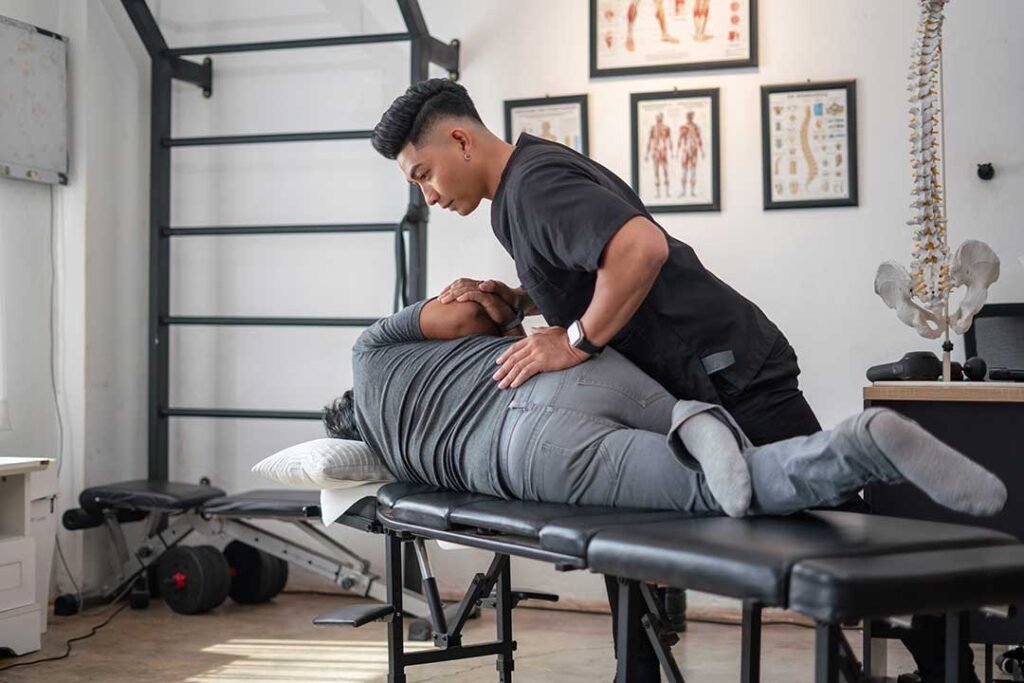
Chiropractic treatment generally focuses on musculoskeletal symptoms and movement. It may include manual therapy, gentle mobilization, stretching, strengthening, posture education, and advice about daily activities. These approaches can sometimes make a person feel more comfortable, but symptom relief is different from changing the underlying shape of the spine.
For residents in Lynbrook, daily habits may influence symptoms even when they do not cause scoliosis. Commuting, desk work, carrying children, household tasks, and extended time sitting in a car or at a computer can increase muscle fatigue around an existing curve.
What does the evidence show?
The strongest evidence does not support chiropractic adjustments as a treatment that corrects scoliosis or prevents its progression. This is especially relevant for children and adolescents who are still growing, because a curve can change during periods of rapid growth.
Some people report less pain or improved mobility after manual treatment. That benefit may result from reduced muscle tension, better joint movement, improved body awareness, or a carefully designed exercise program. It should not be interpreted as proof that the spinal curve has been corrected.
A useful distinction is:
- Symptom management: reducing discomfort, stiffness, or muscle strain.
- Curve management: monitoring the curve and using treatments intended to limit progression.
- Structural correction: changing the alignment of the spine.
Chiropractic care may have a role in the first category for selected patients. It should not replace medical monitoring or established treatment for the second and third categories.
When is scoliosis more likely to need medical monitoring?
Monitoring is particularly important for children and teenagers who are still growing, adults with increasing deformity, and anyone with a larger or symptomatic curve.
Evaluation may include a physical examination and, when appropriate, standing spinal X-rays. Measurements such as the Cobb angle help describe the degree of curvature. The angle is only one factor; age, skeletal maturity, curve location, symptoms, and evidence of progression also matter.
For growing adolescents, observation may be appropriate for a mild curve. Bracing may be considered for certain moderate curves when substantial growth remains. Surgery is reserved for selected severe or progressive cases and is not the usual first treatment.
Adults may develop pain from muscle fatigue, arthritis, disc changes, or narrowing around spinal nerves. In these situations, care may involve exercise, physical therapy, medication, injections, or surgery depending on the cause and severity. Chiropractic treatment may be considered as one symptom-management option when a qualified clinician determines that it is appropriate.
Can chiropractic care help back pain linked to scoliosis?
It may help some types of mechanical back pain, but results vary. Pain can come from tight muscles, irritated joints, uneven loading, reduced hip mobility, poor conditioning, or age-related spinal changes. Chiropractic treatment aimed at these factors may improve comfort temporarily or support movement.
A more complete plan often includes active care rather than repeated passive treatment alone. Examples may include:
- Strengthening the trunk, hips, and upper back.
- Improving hip and shoulder mobility.
- Practicing comfortable posture changes instead of forcing a rigid “perfect” posture.
- Gradually increasing walking or other tolerated activity.
- Learning safer lifting and carrying techniques.
- Adjusting workstations, sleep positions, or frequently used household areas.
Exercises should be individualized. A movement that helps one person may aggravate another, particularly when nerve irritation, osteoporosis, significant arthritis, or a complex curve is present.
Is spinal manipulation safe for someone with scoliosis?
Spinal manipulation is not automatically unsafe for every person with scoliosis, but it should not be treated as routine or risk-free. The appropriate technique depends on the person’s age, bone health, curve pattern, symptoms, medications, previous surgery, and other medical conditions.
Extra caution is appropriate for people with:
- Severe or rapidly worsening pain.
- Numbness, weakness, or changes in coordination.
- Osteoporosis or a history of spinal fracture.
- Recent trauma, including a fall or car crash.
- Cancer, infection, or unexplained weight loss.
- Blood-thinning medication or a significant bleeding disorder.
- Previous spinal surgery.
- A congenital spinal abnormality or complicated deformity.

Forceful attempts to “push the spine straight” are not supported as a reliable way to correct scoliosis. A careful assessment should come before any treatment, and treatment should be stopped if symptoms worsen.
Should a child with scoliosis see a chiropractor?
A child or teenager with a suspected or diagnosed curve should have appropriate medical evaluation, particularly if the child is growing quickly or the curve appears to be worsening.
Chiropractic care should not replace evaluation by a pediatric clinician, orthopedic specialist, or other qualified medical professional when progression is a concern. For some families, supportive care may be used for muscle discomfort or general conditioning, but the child’s curve should still be monitored according to a medical plan.
Parents should be cautious about claims that adjustments alone can eliminate the need for bracing, change a measured curve permanently, or prevent surgery in every case. Those promises go beyond the available evidence.
What warning signs require prompt medical attention?
Back discomfort related to scoliosis is often manageable, but certain symptoms need timely evaluation. Seek medical attention for new or worsening:
- Leg weakness, numbness, or loss of balance.
- Pain traveling down an arm or leg.
- Loss of bladder or bowel control.
- Numbness around the inner thighs or groin.
- Fever, unexplained weight loss, or severe night pain.
- Pain after a significant fall or collision.
- A visibly worsening curve over a short period.
- Breathing difficulty associated with a severe spinal deformity.
These symptoms may indicate nerve compression, injury, infection, or another condition that requires more than routine musculoskeletal care.
How can local residents manage symptoms day to day?
Consistent, moderate activity is usually more helpful than prolonged bed rest. Short walking breaks during desk work or long drives can reduce stiffness. During colder months, icy sidewalks and wet entryways can increase fall risk, so keeping commonly used paths clear and using stable footwear is sensible for anyone with back concerns.
At home, frequently used items can be stored between knee and shoulder height to reduce repeated bending and twisting. A supportive chair, properly positioned screen, and alternating sitting with standing may also reduce fatigue during remote work or household tasks.
The practical goal is not to force the spine into a perfectly straight position. It is to preserve strength, mobility, confidence, and function while monitoring the curve when medical follow-up is needed.
What is the most balanced way to view chiropractic care?
Chiropractic treatment may be useful for selected symptoms associated with scoliosis, particularly when it is gentle, individualized, and combined with active exercise or rehabilitation. Current evidence does not support it as a stand-alone method for correcting a structural curve or reliably preventing progression.
The safest approach is coordinated care: understand the type and severity of scoliosis, monitor meaningful changes, address pain and movement limitations, and use established treatments when a curve is progressing or significantly affecting health and function.
