
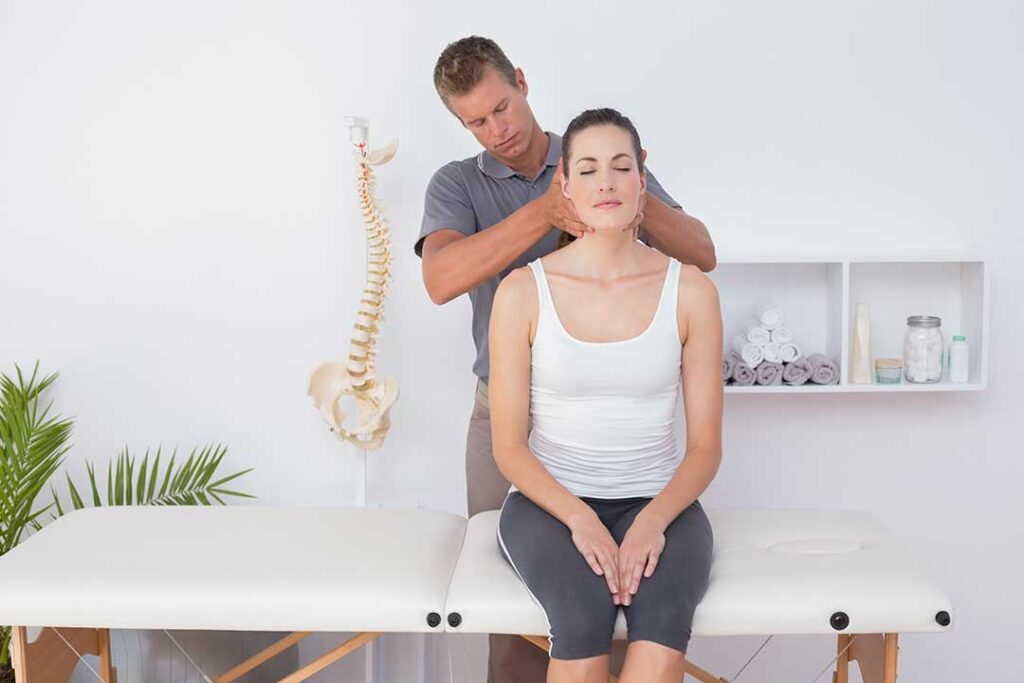
What do tension headaches feel like?
Tension headaches usually cause a steady, pressing or tightening sensation rather than the throbbing pain often associated with migraine. The discomfort may affect both sides of the head, the forehead, the temples, or the back of the head and neck.
Neck, shoulder, scalp, and jaw muscles can become tense after prolonged sitting, computer use, driving, stress, poor sleep, or clenching the teeth. Stretching may reduce that muscle tightness and help prevent symptoms from building, although it does not treat every type of headache.
For residents of Lynbrook, long periods of commuting, desk work, phone use, or indoor routines during cold or rainy weather can make it easy to stay in one position for too long. Brief movement breaks are often more useful than waiting until the neck feels stiff.
How should stretching be done during a headache?
Stretch slowly and gently. The goal is to feel mild pulling or tension, not pain, numbness, tingling, dizziness, or a sharp sensation.
Use these general guidelines:
- Sit or stand with your back supported and your shoulders relaxed.
- Breathe steadily instead of holding your breath.
- Move only as far as feels comfortable.
- Hold each position for about 15 to 30 seconds.
- Repeat each stretch once or twice on both sides.
- Stop if symptoms become stronger or unusual.
A warm shower, heating pad set on low, or warm towel across the neck and shoulders may help the muscles relax before stretching. Heat should feel comfortably warm, not hot enough to irritate the skin.
Which neck stretches may help?
Chin tuck
A chin tuck gently activates the muscles that support the neck and may counter the forward-head position common during screen use.
1. Sit upright with your feet on the floor.
2. Look straight ahead.
3. Draw your chin straight back, as if making a small double chin.
4. Do not look down or force your head backward.
5. Hold for 3 to 5 seconds, then relax.
6. Repeat 5 to 10 times.
This should feel like a mild effort at the front or back of the neck. It should not create pressure in the throat or cause pain.
Side neck stretch
This movement targets the muscles along the side of the neck.
1. Sit tall and let both shoulders drop.
2. Slowly bring your right ear toward your right shoulder.
3. Keep the shoulder from lifting toward the ear.
4. Hold gently, then return to the center.
5. Repeat on the left side.
For a slightly stronger stretch, the hand may rest lightly on top of the head, but do not pull the head downward. Keep the movement comfortable.
Neck rotation
Gentle rotation can help reduce stiffness from staying in one position.
1. Face forward with your shoulders relaxed.
2. Slowly turn your head to the right until you feel mild tension.
3. Return to the center.
4. Turn slowly to the left.
5. Repeat 5 times per side.
Do not force the chin over the shoulder. If turning the head causes dizziness, stop and avoid repeating the exercise.
Upper-back stretch
Tension in the upper back can contribute to tightness in the neck and shoulders.
1. Clasp your hands in front of the body.
2. Reach the hands forward while gently rounding the upper back.
3. Let the head remain in a neutral position rather than dropping it heavily.
4. Hold for 15 to 20 seconds.
5. Relax and repeat once.
This stretch can be useful after reading, typing, or using a handheld device for a long period.
What shoulder stretches can reduce neck tension?
Shoulder movement is often overlooked. Tight upper trapezius muscles, which run from the neck toward the shoulders, may stay contracted during stressful tasks or prolonged sitting.
Shoulder rolls
1. Lift both shoulders toward the ears.
2. Move them backward and down in a slow circle.
3. Repeat 5 to 10 times.
4. Reverse the direction.
The movement should be smooth rather than forceful. Shoulder rolls can be performed during a short break without leaving a desk or kitchen counter.
Doorway chest stretch
A shortened chest position may encourage the shoulders to round forward.
1. Stand in a doorway with one forearm resting against the frame.
2. Keep the elbow around shoulder height.
3. Step forward slightly until a gentle stretch is felt across the chest and front of the shoulder.
4. Hold for 15 to 30 seconds.
5. Repeat on the other side.
Avoid this stretch if it causes shoulder pain, tingling, or a feeling of instability.
Can jaw relaxation help a tension headache?
Yes. Jaw clenching can increase tension around the temples, face, neck, and shoulders. Many people clench without realizing it while concentrating, driving, exercising, or sleeping.
Try this simple reset:
- Rest the tongue gently on the roof of the mouth.
- Keep the teeth slightly apart.
- Let the lips come together without squeezing them.
- Relax the shoulders.
- Take five slow breaths.
Avoid aggressive jaw stretching or repeatedly opening the mouth wide. If there is persistent jaw pain, clicking with limited movement, tooth damage, or morning headaches, the pattern may require evaluation beyond neck stretching.
How often should these stretches be performed?
Short, frequent sessions are usually more practical than one long routine. A person who works at a computer or uses a phone for much of the day might try two or three minutes of movement every 30 to 60 minutes.
A simple routine could include:
1. Five chin tucks.
2. Two gentle side neck stretches per side.
3. Five slow neck rotations per side.
4. Ten shoulder rolls.
5. Five relaxed breaths with the jaw unclenched.
Stretching should complement, not replace, regular sleep, meals, hydration, stress management, and moderate physical activity. Skipping meals, drinking too little water, and suddenly changing caffeine intake can also contribute to headaches.
When should stretching be avoided?
Do not stretch through severe pain or try to manipulate the neck forcefully. Extra caution is appropriate after a recent fall, collision, whiplash injury, surgery, or known neck condition. People with significant balance problems, progressive weakness, or neurological symptoms should not rely on home stretching alone.
Seek urgent medical care for a sudden, severe headache; a headache with fever and stiff neck; confusion; fainting; seizures; double vision; new weakness or numbness; trouble speaking; or a headache following a significant injury.
It is also wise to arrange medical evaluation when headaches are new, steadily worsening, unusually frequent, associated with vomiting or vision changes, or no longer resemble a person’s usual pattern. Repeated headaches may have several possible causes, and a headache diary can help identify links with sleep, stress, screen time, jaw clenching, weather changes, or other routines.
What if stretching does not help?
Stretching may ease muscle-related tension, but it cannot confirm that a headache is a tension headache. If symptoms persist despite gentle movement and basic self-care, the cause may involve migraine, medication overuse, vision problems, sleep disruption, sinus disease, jaw disorders, or another condition.
A safe approach is to keep movements comfortable, track patterns, and seek appropriate medical guidance when the headaches are recurrent, disabling, or changing in character.
