

What do tension headaches feel like?
Tension headaches commonly feel like steady pressure, tightening, or a dull ache across the forehead, temples, or back of the head. Tightness in the neck, jaw, and shoulders may occur at the same time. Gentle stretching can help when muscle tension, prolonged sitting, stress, or screen use contributes to the discomfort.
A tension headache is usually different from a migraine. Nausea, vomiting, strong sensitivity to light, visual changes, or severe throbbing pain are less typical of tension-type headaches. Symptoms can overlap, however, so repeated or unusual headaches deserve medical evaluation.
Which stretches may relieve tension?
Stretch slowly and stay below the point of pain. A mild pulling sensation is expected, but stretching should not cause sharp pain, dizziness, numbness, tingling, or symptoms traveling into an arm.
Chin tuck
Sit or stand with the shoulders relaxed. Look straight ahead and gently draw the chin backward, as if making a small double chin. Keep the head level rather than looking down.
Hold for 3 to 5 seconds, relax, and repeat 5 to 8 times. This movement can help counter the forward-head position that often develops during computer work, phone use, reading, or driving.
Side neck stretch
Keep the right shoulder down and slowly tilt the left ear toward the left shoulder. Do not lift the shoulder to meet the ear. For a slightly deeper stretch, place the left hand lightly on the right side of the head, but do not pull.
Hold for 15 to 20 seconds, then repeat on the other side. Complete 2 repetitions per side.
Neck rotation
Turn the head slowly to the right until a comfortable stretch is felt, keeping the chin level. Return to center and turn to the left.
Repeat 5 times in each direction. Avoid forcing the movement or repeatedly circling the neck, which can irritate already-sensitive tissues.
Upper shoulder stretch
Sit on one hand or hold the edge of a chair with the right hand. Tilt the head gently to the left and slightly forward until the stretch is felt along the upper right shoulder and side of the neck.
Hold for 15 to 20 seconds. Switch sides and repeat twice. This area often becomes tense when the shoulders remain raised during stressful tasks.
Shoulder rolls
Lift the shoulders gently toward the ears, move them backward, and then let them drop down. Repeat 8 to 10 times, then reverse the direction.
Shoulder rolls are useful during short breaks because they combine movement with relaxation rather than holding the neck in one position.
Chest-opening stretch
Stand in a doorway with the forearms resting lightly against the frame, or place the hands behind the body if that is comfortable. Keep the ribs relaxed and gently draw the shoulder blades down and back.
Hold for 15 to 20 seconds while breathing normally. Opening the chest may make it easier to maintain a neutral head and shoulder position after long periods of sitting.
How should the routine be performed?
A short, gentle routine is generally more useful than an aggressive stretching session. Warmth from a shower or a low-temperature heating pad may help loosen tense neck and shoulder muscles before movement.
Try the following sequence:
- Take five slow breaths.
- Perform 5 chin tucks.
- Complete 5 neck rotations in each direction.
- Hold each side neck stretch for 15 to 20 seconds.
- Perform 8 to 10 shoulder rolls.
- Finish with the chest-opening stretch.
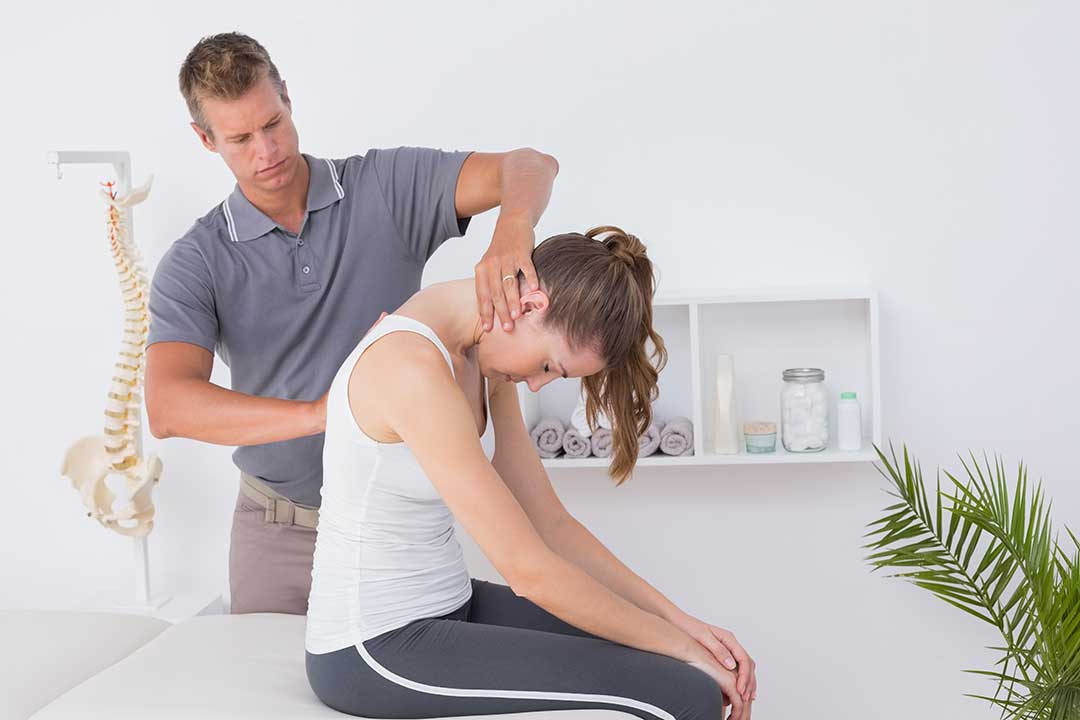
Breathe continuously and keep the jaw relaxed. Clenching the teeth during stretching can add tension to the temples and face. If symptoms increase during the routine, stop rather than trying to stretch through the headache.
Can stretching prevent headaches during the day?
Stretching may help reduce the buildup of muscle tension, but frequent movement breaks are just as important. Staying in one position for a long period can fatigue the neck and shoulder muscles, particularly during desk work or extended phone use. Short breaks every hour can help restore movement.
During work or household tasks:
- Keep the screen near eye level when possible.
- Let the shoulders rest instead of holding them raised.
- Support the lower back while sitting.
- Keep both feet supported when seated.
- Change positions regularly rather than aiming for one “perfect” posture.
- Look away from close-up work periodically and blink normally.
In Lynbrook, seasonal habits can also influence neck tension. Cold weather may encourage people to hunch the shoulders, while indoor heating can contribute to dehydration or poorer sleep. Warm clothing, regular water intake, and brief indoor movement breaks can be practical ways to reduce these contributing factors.
What other self-care measures may help?
Stretching works best as part of a broader routine. Regular meals, adequate water, consistent sleep, stress-management practices, and comfortable physical activity may reduce the frequency of tension-type headaches. A short walk can be useful when sitting, stress, or inactivity appears to be contributing.
Gentle massage of the temples, scalp, neck, or shoulders may also reduce muscle tightness. Heat can be helpful for sore muscles, while a cool cloth on the forehead may feel more comfortable during an active headache. Use whichever approach feels better and protect the skin from excessive heat or cold.
Headache tracking can reveal patterns. Record the date, duration, location, intensity, sleep quality, meals, hydration, screen time, stress, and activities that preceded the symptoms. This information can help distinguish occasional muscle-related headaches from a recurring pattern that needs further assessment.
When should stretching be avoided?
Do not stretch the neck immediately after a neck injury, fall, collision, or sudden forceful movement unless a qualified healthcare professional has advised that it is appropriate. Extra caution is also needed with severe neck pain, known instability, recent surgery, significant arthritis, or symptoms involving the arms or hands.
Seek urgent medical care for a sudden, severe headache; a headache after a serious injury; or a headache accompanied by fever, stiff neck, confusion, fainting, seizure, weakness, numbness, trouble speaking, double vision, or major changes in balance.
A headache that becomes frequent, progressively worse, unusually different, or difficult to manage should also be evaluated. Stretching may ease muscle tension, but it should not be used to explain away symptoms that do not fit a typical tension pattern.
