
Minor back strains often improve with simple home care over several days to a few weeks. The most useful approach is usually a balance of short-term symptom relief, gentle movement, and a gradual return to normal activity rather than prolonged bed rest.
A back strain can happen after lifting a laundry basket, shoveling, gardening, moving furniture, reaching awkwardly, or making a sudden twist. It may cause soreness, tightness, muscle spasms, or pain that worsens with bending and changing position.
How can a minor back strain be treated at home?
For a mild strain without warning signs, reduce activities that clearly worsen the pain while continuing comfortable, low-level movement. During the first day or two, avoid heavy lifting, repeated bending, and twisting. This is different from staying in bed for long periods, which can increase stiffness and make it harder to resume normal activity.
Helpful steps include:
- Take brief walking breaks around the home instead of remaining seated or lying down for hours.
- Change positions regularly, especially during television viewing, computer work, or commuting.
- Use a comfortable resting position, such as lying on the side with a pillow between the knees or on the back with the knees supported.
- Return to ordinary activities in stages as movement becomes easier.
- Stop or modify an activity if it causes sharp, spreading, or steadily worsening pain.
In Lynbrook, seasonal household tasks can trigger strains. Wet leaves, snow, damp outdoor equipment, and heavier winter clothing can make lifting or carrying more awkward. Breaking chores into smaller loads and keeping frequently used items at waist level may reduce repeated stress on the lower back.
Should ice or heat be used?
Either cold or heat may help, but they serve different purposes. Cold is often more comfortable during the first 24 to 72 hours after a sudden strain, particularly when the area feels irritated or swollen. Heat may feel better later when stiffness or muscle spasm is the main problem.
Use a cold pack or bag of frozen food wrapped in a thin towel. Never place ice directly against the skin. Apply it for about 15 to 20 minutes, then allow the skin to return to normal temperature before repeating.
For heat, use a warm—not hot—heating pad, shower, or wrapped hot-water bottle for a similar period. Avoid falling asleep on a heating pad, and check the skin regularly. People with reduced sensation, circulation problems, or difficulty judging temperature should use extra caution.
The best choice is the one that reduces discomfort enough to allow gentle movement. Ice and heat should not be used to push through an activity that is otherwise painful.
Is stretching safe after a back strain?
Gentle movement is usually preferable to forceful stretching during the early phase. Walking slowly, shifting positions, and practicing comfortable pelvic or knee movements may help prevent stiffness. Stretching should feel mild and controlled, not painful or aggressive.
Avoid trying to “pop” the back, forcing a deep forward fold, or holding a stretch that causes pain down the leg. A useful rule is that mild pulling may be acceptable, while sharp pain, numbness, tingling, or increased symptoms afterward means the movement should be stopped.
As symptoms settle, light strengthening can be reintroduced gradually. Examples may include easy chair stands, gentle abdominal bracing, or short walks on level ground. The goal is to rebuild normal movement rather than test how much weight the back can tolerate.
Can over-the-counter medicine help?
Nonprescription pain relievers may help some adults stay mobile, but they are not appropriate for everyone. Anti-inflammatory medicines can be risky for people with a history of stomach ulcers or bleeding, kidney disease, certain heart conditions, uncontrolled high blood pressure, medication interactions, or pregnancy.
Read the label carefully and avoid taking more than the recommended amount. Do not combine multiple products that contain the same active ingredient. A pharmacist can help review the safest option when there are other medicines or health conditions involved.
Medication should support reasonable movement, not mask severe pain so that heavy lifting or strenuous work can continue.
What should be avoided during recovery?
Several common approaches can prolong discomfort or increase the risk of another strain:

- Prolonged bed rest or staying in one position most of the day
- Heavy lifting before normal bending and walking feel comfortable
- Repeated twisting while carrying an object
- Lifting from the floor with straight legs and a rounded back
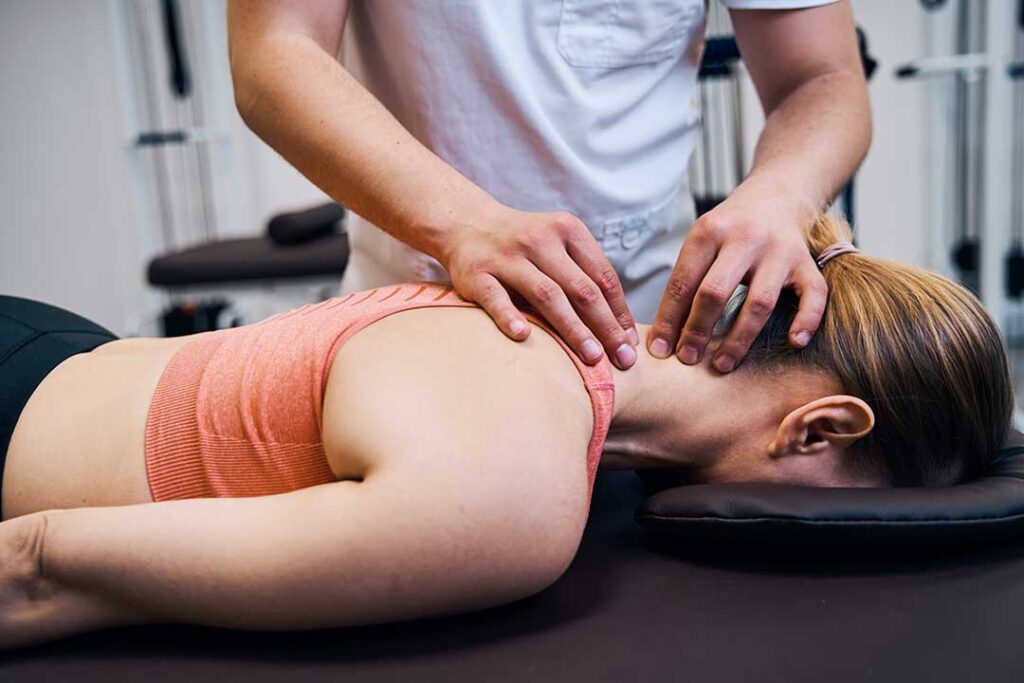
- Aggressive massage over a newly painful area
- Returning immediately to snow removal, yard work, or moving boxes
- Using heat or cold directly on bare skin
When lifting becomes necessary, keep the object close to the body, bend through the hips and knees, avoid twisting, and ask for help with bulky or uneven loads. Smaller loads are safer than trying to carry everything at once.
When is back pain more than a minor strain?
Most uncomplicated strains gradually improve. Medical evaluation is appropriate if pain is severe, continues to worsen, does not begin improving after several days of home care, or remains troublesome after a few weeks.
Prompt evaluation is also warranted when pain travels below the knee or is accompanied by persistent numbness, tingling, or weakness in a leg. Back pain with unexplained weight loss, a history of cancer, significant nighttime pain, fever, or feeling generally ill should not be treated as an ordinary strain.
Seek emergency care for new loss of bladder or bowel control, numbness around the groin or inner thighs, major leg weakness, or back pain after a serious fall, collision, or other significant injury. These symptoms can indicate nerve or spinal problems requiring immediate attention.
How can another strain be prevented?
Prevention depends less on perfect posture than on varying positions, building strength, and increasing demanding activities gradually. Before seasonal chores, take a few minutes to walk and loosen the hips and legs. Use tools with handles that allow an upright position, divide wet or heavy materials into smaller loads, and alternate tasks to avoid repeated bending.
At home, keep pathways clear, improve lighting on stairs, and store frequently used items where they can be reached without stretching or twisting. During long periods of sitting, stand up regularly and take short walks.
A minor strain should steadily become easier to manage. If recovery is not following that pattern, or if neurological symptoms develop, home remedies are no longer the appropriate level of care.
