

Sports injuries are not always caused by a single collision or dramatic mistake. Many develop gradually through repeated loading, limited mobility, reduced strength, poor movement control, inadequate recovery, or a sudden increase in activity. Chiropractic care may support injury prevention by identifying musculoskeletal limitations and helping athletes address them before they become more disruptive.
It is not a substitute for conditioning, medical evaluation, protective equipment, or sport-specific coaching. Its most useful role is usually one part of a broader prevention plan.
What role can chiropractic play in preventing sports injuries?
Chiropractic care may help identify and address problems involving joint mobility, muscle tension, movement coordination, and load tolerance. The goal is not to “realign” the body as a guarantee against injury. Rather, the focus is often on improving how the spine and extremities move together during athletic activity.
A sports-focused evaluation may consider:
- Range of motion in the spine, hips, shoulders, knees, and ankles
- Differences in strength or control between the two sides of the body
- Balance and stability during single-leg or single-arm movements
- Technique during squatting, jumping, running, lifting, or throwing
- Training volume, recovery time, footwear, playing surface, and previous injuries
These observations can help reveal modifiable factors. For example, an athlete who cannot control the knee during a landing may need strength and neuromuscular training. Someone with limited ankle mobility may need mobility work, calf strengthening, and changes to running or jumping mechanics.
Can spinal adjustments prevent injuries?
Spinal adjustments may improve short-term joint motion or reduce discomfort for some people, but evidence does not support the idea that adjustments alone prevent all sports injuries. Injury prevention depends on several interacting factors, including strength, coordination, conditioning, sleep, recovery, technique, and the demands of the sport.
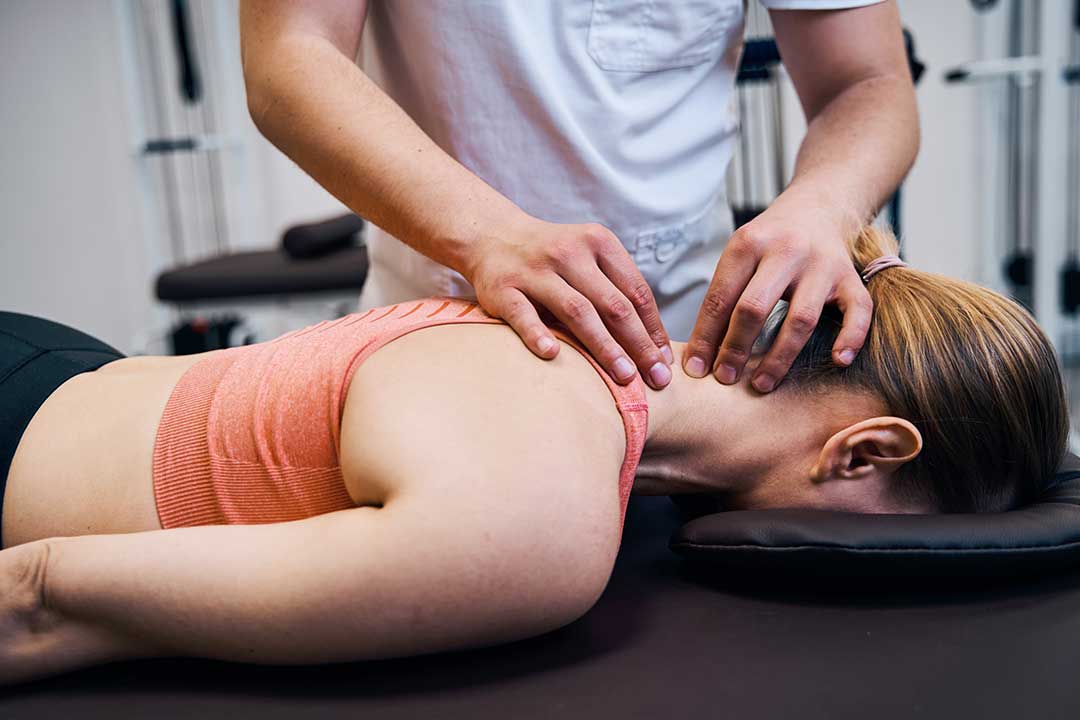
An adjustment may be used as one component of care when restricted movement or back discomfort affects an athlete’s ability to train. It should not be presented as a replacement for progressive exercise or as protection from collisions, falls, overuse, or unsafe training loads.
A balanced approach also recognizes that not every athlete needs spinal manipulation. Some may benefit more from exercise instruction, activity modification, mobility work, or referral for another type of evaluation.
Which athletes might benefit from a preventive evaluation?
Preventive movement screening may be useful for recreational athletes, student athletes, runners, dancers, weightlifters, and adults returning to activity after a long break. It can be especially relevant when an athlete:
- Has a history of recurring sprains, strains, or joint pain
- Notices one-sided tightness or weakness
- Is starting a new sport or training program
- Has increased practice, mileage, lifting, or competition volume
- Is returning after an injury
- Experiences pain that repeatedly appears during a particular movement
For local residents, seasonal changes can affect routines. Outdoor running, field sports, cycling, and recreational games may increase during warmer months, while indoor exercise and strength training may become more common during colder or wetter periods. A sudden shift from limited winter activity to intense spring training can create a mismatch between current conditioning and expected workload.
What does a practical prevention program include?
The strongest prevention strategies usually combine several basic elements rather than relying on one treatment.
A gradual training progression
Athletes should increase distance, intensity, weight, or practice time progressively. Sudden changes can overload tendons, muscles, joints, and bones before the body has adapted.
A useful approach is to change one major training variable at a time. For example, increasing running distance and speed in the same week may create more stress than increasing distance first and adding speed later.
Strength and neuromuscular control
Strength training helps the body absorb and produce force. Balance and coordination exercises help an athlete control that force during cutting, landing, decelerating, and changing direction.
Commonly useful movement patterns include:
- Squats and split squats
- Hip-hinge exercises
- Calf raises
- Hamstring strengthening
- Trunk and pelvic control exercises
- Single-leg balance
- Landing and deceleration drills
The exercises should match the athlete’s age, experience, sport, and current symptoms.
A sport-specific warm-up
A warm-up should gradually raise body temperature and prepare the movements used in practice or competition. Light aerobic activity can be followed by dynamic movements, controlled changes of direction, balance drills, and sport-specific practice.
Static stretching is not automatically harmful, but prolonged static stretching immediately before explosive activity may not be the most useful preparation for every sport. A dynamic warm-up is often more appropriate before sprinting, jumping, or rapid changes of direction.
Recovery and workload awareness
Sleep, rest days, hydration, nutrition, and off-season conditioning all influence injury risk. Persistent soreness, declining performance, unusual fatigue, or pain that changes movement may signal that training demands exceed current recovery capacity.
Pain should not always be treated as something to push through. Mild muscle soreness after unfamiliar exercise is different from sharp pain, swelling, instability, numbness, or pain that worsens with each session.
How might chiropractic care fit into rehabilitation?
After an injury, chiropractic care may assist with restoring movement, reducing stiffness, and progressing exercises when the condition is appropriate for conservative care. A rehabilitation plan may include mobility work, strengthening, balance training, education about activity modification, and a gradual return to sport.
The return should be based on function rather than simply the number of days since injury. An athlete may need to demonstrate adequate strength, balance, range of motion, and sport-specific control before returning to full participation.
For example, someone recovering from an ankle sprain may need more than reduced swelling. Safe progression can include walking normally, regaining ankle motion, rebuilding calf and lower-leg strength, performing single-leg balance tasks, and practicing jumping or cutting before full competition.
When is chiropractic care not the right first step?
Certain symptoms require prompt medical assessment rather than routine preventive care. These include suspected fractures, major swelling or deformity, inability to bear weight, severe or worsening pain, loss of strength, numbness, loss of coordination, chest symptoms, or signs of a serious head or neck injury.
A suspected concussion also requires careful evaluation and a structured return-to-learn and return-to-play process. Neck manipulation should not be used as a response to unexplained neurological symptoms.
Young athletes, people with significant medical conditions, and athletes taking medications that affect bone health or bleeding risk may need individualized guidance before beginning treatment or exercise.
What should residents ask before beginning preventive care?
A useful discussion should clarify:
- What specific risk factor is being addressed?
- Is the plan based on examination findings?
- Which exercises are expected to improve strength, balance, or control?
- How will progress be measured?
- What symptoms should prompt a medical referral?
- How does the plan fit with coaching, physical therapy, athletic training, or medical care already in place?
The most credible prevention plan is specific, measurable, and adaptable. Chiropractic treatment may be helpful for selected musculoskeletal problems, but injury prevention works best when adjustments, if used, are combined with appropriate training, recovery, technique, and timely evaluation of warning signs.
