
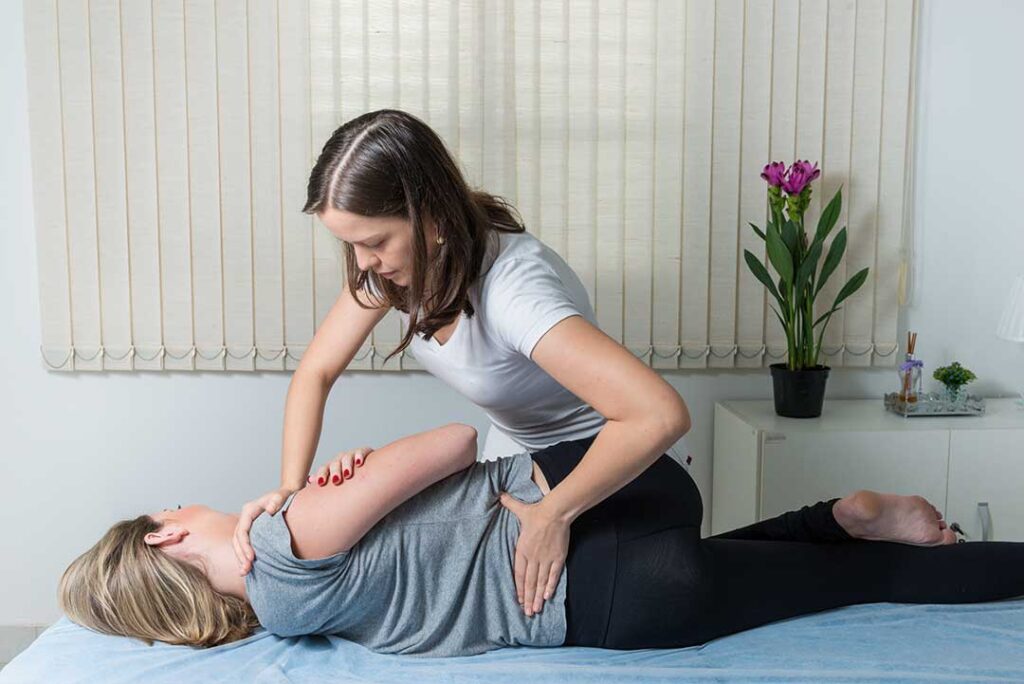
A healthy spine depends on more than the back muscles alone. The abdomen, pelvis, hips, diaphragm, and deep muscles along the spine work together as the body’s central support system. This group is commonly called the core.
For residents of Lynbrook, NY, core strength can support everyday activities such as sitting during a commute, carrying groceries, climbing stairs, shoveling after a winter storm, gardening, or keeping balance on uneven sidewalks. Core training is not about developing visible abdominal muscles. It is about improving control, endurance, and coordination around the spine.
What does the core do for the spine?
The core helps keep the trunk stable while the arms and legs move. It also helps distribute force through the body, reducing the amount of twisting, bending, or shifting that the lower back must handle by itself.
Core muscles include:
- The abdominal muscles at the front and sides of the trunk
- The deep muscles surrounding the spine
- The pelvic floor muscles
- The diaphragm, which contributes to pressure and breathing control
- The muscles of the hips and buttocks
These muscles do not need to hold the spine rigid all day. Instead, they should adjust continuously as a person walks, lifts, reaches, turns, or changes position. Good core function means the spine can remain controlled without excessive tension.
Can core strength prevent back pain?
Core strength may reduce the risk of some types of back discomfort, but it cannot prevent every spinal problem. Back pain can also be related to joint irritation, disc changes, injuries, arthritis, poor sleep, stress, prolonged inactivity, or other medical conditions.
A stronger core may help by improving movement efficiency and muscular endurance. For example, a person with better trunk control may be less likely to repeatedly collapse into a rounded posture while sitting or overextend the lower back while standing. Stronger hips and abdominal muscles may also help distribute effort during lifting and stair climbing.
It is also useful to understand that weakness is not always the sole cause of pain. Some people with back pain have normal strength but poor coordination, limited mobility, or muscles that fatigue quickly. A balanced approach includes strength, mobility, walking, recovery, and attention to movement habits.
What are the best core exercises for spinal support?
The most useful exercises are generally controlled movements that train the trunk to resist unwanted motion. A person does not need advanced equipment or intense workouts to begin.
Examples include:
- Abdominal bracing: Lie on the back with the knees bent. Gently tighten the abdominal muscles as if preparing for a light bump, while continuing to breathe normally. Hold for several breaths and relax.
- Bridge: From the same position, tighten the abdomen and buttocks, then raise the hips gradually. Avoid arching the lower back or pushing through pain.
- Bird dog: From hands and knees, extend one arm and the opposite leg while keeping the trunk steady. Move slowly and avoid shifting the hips.
- Side plank modification: Support the body on one forearm and the knees rather than the feet. Keep the hips aligned and stop before the shoulder or back becomes strained.
- Dead bug modification: Lie on the back with the knees bent. Slowly lower one heel toward the floor while keeping the ribs and pelvis controlled.
Quality matters more than the number of repetitions. Five slow, well-controlled repetitions may be more useful than many rushed movements. Breathing should remain steady, and the neck, shoulders, and lower back should not take over the exercise.
Does sitting weaken the core?
Long periods of sitting do not automatically damage the spine, but they can reduce movement variety and allow the trunk muscles to become less active. Many residents spend extended periods at desks, in vehicles, or on couches. The issue is usually not one “bad” posture; it is remaining in the same position for too long.
Helpful habits include:
- Changing position every 30 to 60 minutes
- Taking brief walking or standing breaks
- Keeping both feet supported when seated
- Adjusting the screen so the head does not remain tilted downward
- Using the hips and legs, rather than rounding the back, when reaching toward the floor
- Maintaining regular activity outside of work hours

During colder months, indoor routines may become more sedentary. Short walking intervals, gentle mobility exercises, and basic strengthening can help maintain movement when outdoor activity is less appealing.
Is a strong core the same as having six-pack abs?
No. Visible abdominal definition is influenced by genetics, body composition, nutrition, and training style. It does not necessarily indicate good spinal control.
A person may have strong, functional core muscles without prominent abdominal definition. Conversely, someone may perform many sit-ups but still have poor endurance in the deeper abdominal, hip, or back muscles. Spinal support depends on coordinated function across the entire trunk and pelvis, not appearance.
Exercises that involve resisting movement, such as bridges, carries, bird dogs, and modified planks, often more closely resemble the demands of daily activities than repeated trunk bending alone.
How should someone start safely?
Begin with a level that allows smooth breathing and steady form. Two or three short sessions per week may be enough to establish a routine. Walking can be combined with core exercises because general physical activity supports strength, circulation, balance, and endurance.
A practical starting routine might include:
- Five abdominal braces
- Five bridges
- Five bird dogs per side
- A brief modified side plank on each side
- A short walk at a comfortable pace
The number of repetitions can increase gradually if the exercises remain comfortable. Mild muscle fatigue is expected, but sharp pain, increasing numbness, weakness, or pain traveling down an arm or leg is a reason to stop and seek medical guidance.
People with a recent injury, osteoporosis, significant weakness, unexplained weight loss, fever, loss of bladder or bowel control, or severe night pain should not begin a new strengthening program without appropriate medical evaluation. Persistent back pain also deserves individualized assessment rather than an assumption that core exercises alone will solve it.
Why does core strength matter during lifting?
Lifting places demands on the entire body, not just the lower back. A stable trunk allows the legs and hips to contribute more effectively. Before lifting, it helps to move close to the object, keep the load near the body, bend through the hips and knees as appropriate, and avoid twisting while carrying.
Core bracing should be gentle and coordinated with breathing. Holding the breath forcefully or tightening every muscle at maximum effort can increase strain and make movement less efficient.
Whether handling laundry, boxes, snow equipment, or household supplies, controlled movement is usually safer than trying to lift quickly with a rounded or twisting spine.
How does chiropractic education fit into spinal health?
Chiropractic education often emphasizes the relationship between spinal movement, posture, muscle coordination, and daily activity. Core training can be one part of a broader plan that may also include mobility work, walking, ergonomic adjustments, sleep habits, and appropriate evaluation of ongoing symptoms.
The main principle is simple: the spine benefits from regular, varied movement and a trunk that can control motion without excessive fatigue. Core strength is not a guarantee against back pain, but it can make everyday movement more stable, efficient, and manageable.
