
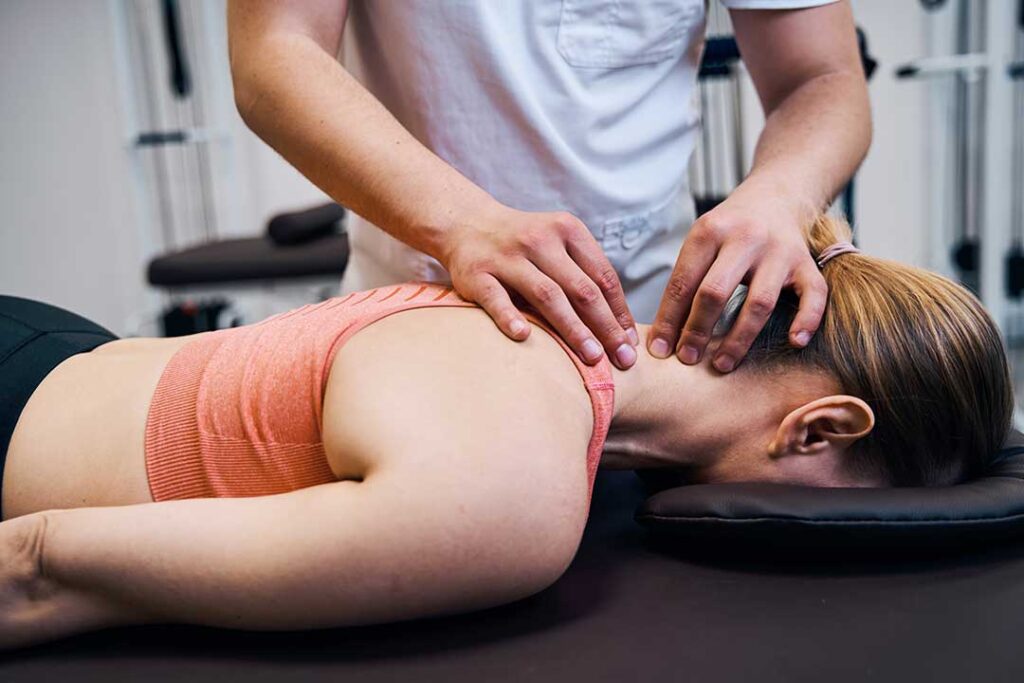
Muscle pain is often described as a “knot,” tight spot, or tender area that seems to send discomfort somewhere else. These sensations may involve myofascial trigger points, but not every painful spot is a trigger point, and muscle pain can have many causes.
For residents of Lynbrook, NY, common contributors may include long periods of sitting, commuting, home projects, repetitive work, recreational activity, stress-related muscle tension, and changes in activity during colder or wetter seasons. Understanding how muscle pain behaves can make it easier to respond appropriately without assuming that every ache needs the same type of care.
What is a trigger point?
A trigger point is a sensitive area within a muscle that may feel like a small knot or firm band. Pressing on it can reproduce local pain or create discomfort that travels to another nearby area, known as referred pain.
For example, a sensitive point in the upper shoulder muscles may cause pain near the neck, shoulder blade, or side of the head. A trigger point in the hip or buttock region may sometimes be felt as aching farther down the leg.
Trigger points are usually discussed in connection with myofascial pain, which involves muscles and the fascia—the connective tissue surrounding muscles. The term is widely used in clinical settings, although researchers continue to study how trigger points should be identified and how much they contribute to different pain conditions.
How does trigger-point pain feel?
Trigger-point discomfort is often different from the sharp, immediate pain of an acute injury. It may feel dull, tight, heavy, burning, aching, or unusually sensitive.
People commonly describe:
- A tender “knot” in a muscle
- Pain that increases when the area is pressed
- Stiffness or reduced comfortable movement
- Pain that spreads along a predictable region
- Muscle fatigue or a feeling that the area is constantly tense
- Symptoms that worsen after prolonged sitting, lifting, reaching, or repeated activity
Pain may also fluctuate. A person can feel relatively comfortable in the morning and notice more symptoms after a long workday, household task, workout, or period of emotional stress.
Why do trigger points develop?
There is no single cause. Trigger-point symptoms may appear when a muscle is repeatedly overloaded, held in one position, or asked to work harder than it is accustomed to doing.
Possible contributing factors include:
- Repetitive reaching, lifting, typing, or gripping
- Sitting with limited movement for long periods
- A sudden increase in exercise or recreational activity
- Poor sleep or an uncomfortable sleeping position
- Direct muscle strain or minor injury
- Stress-related tightening of the jaw, neck, shoulders, or back
- Limited strength, mobility, or recovery time
- Favoring one side of the body during work or daily activities
Seasonal habits can also matter. During colder months, people may spend more time indoors, move less, or tighten their shoulders against the cold. Snow clearing, carrying bags, rearranging furniture, and preparing a home for changing weather can also create an abrupt increase in physical demand.
Are muscle knots the same as an injury?
Not necessarily. A sore muscle can result from delayed-onset muscle soreness after unfamiliar activity, a mild strain, joint irritation, nerve sensitivity, or a more serious injury. The sensation of a “knot” does not identify the exact cause by itself.
A muscle strain often follows a recognizable event, such as lifting, twisting, slipping, or forceful exercise. Symptoms may include localized soreness, pain with contraction or stretching, swelling, bruising, or weakness.
Trigger-point-like pain may develop gradually and may not involve a single memorable incident. However, gradual onset does not automatically mean the problem is minor. Persistent or recurring pain deserves a broader assessment rather than repeated self-treatment alone.
Can trigger points cause headaches or pain in other areas?
They can contribute to referred pain patterns, particularly in the neck, upper back, shoulders, jaw, hips, and buttocks. Muscle tension in the neck and upper shoulders may be associated with tension-type headaches in some people.
That does not mean every headache is caused by a muscle. Headaches may also involve migraine, vision problems, dehydration, medication effects, blood pressure changes, illness, or neurological conditions. New, severe, rapidly worsening, or unusual headaches should not be assumed to be trigger-point pain.
Similarly, pain traveling down an arm or leg may involve a nerve, joint, disc, or blood vessel rather than a muscle alone. Numbness, tingling, burning, or noticeable weakness are especially useful clues that another source may be involved.
What can safely help at home?
For mild muscle discomfort without warning signs, gentle movement is usually more helpful than complete rest. Short walks, comfortable range-of-motion exercises, and changing positions regularly may reduce stiffness.
Other reasonable measures include:

- Applying a warm—not excessively hot—compress for a short period
- Using cold after a recent minor strain if it feels soothing
- Performing gentle stretching without forcing pain
- Adjusting a workstation so the screen, chair, and frequently used items require less reaching
- Taking movement breaks during long periods of sitting
- Returning to activity gradually rather than suddenly
- Paying attention to sleep position and pillow height
- Using light self-massage, stopping if symptoms become sharper or begin to spread
Pain should not be aggressively “dug out” with a hard ball, tool, or sustained pressure. Excessive pressure can irritate tissue, aggravate a small strain, or make the area more sensitive. Self-care should produce comfortable or mildly relieving sensations, not sharp pain, bruising, numbness, or prolonged worsening.
Does treatment always require imaging?
Usually not for uncomplicated muscle pain. Imaging is generally not needed simply because a tender spot is present. A careful history and physical examination are often more useful initially for determining whether symptoms fit a muscle problem or suggest involvement of a joint, nerve, bone, or systemic illness.
Trigger points also cannot always be confirmed with a single definitive test. Tenderness, a taut-feeling band, and reproduction of familiar pain can be useful clinical observations, but these findings are not perfectly consistent between examiners. That is one reason a broader evaluation matters.
When should muscle pain be evaluated promptly?
Medical evaluation is appropriate when pain is severe, persistent, repeatedly returning, or interfering with normal walking, sleeping, work, or daily activities. It is also important when symptoms began after a significant fall, collision, or other forceful event.
Prompt attention is warranted for:
- New or progressive weakness
- Numbness or loss of coordination
- Loss of bladder or bowel control
- Fever, unexplained weight loss, or feeling generally ill
- A red, hot, swollen area
- Significant bruising or deformity
- Chest pain, shortness of breath, fainting, or unusual sweating
- Sudden severe headache or neurological changes
The central point is that a trigger point is a description of a painful muscle finding, not a complete diagnosis. Looking at activity patterns, movement, sleep, stress, injury history, and warning signs provides a more reliable way to understand muscle pain and decide what level of care is appropriate.
