
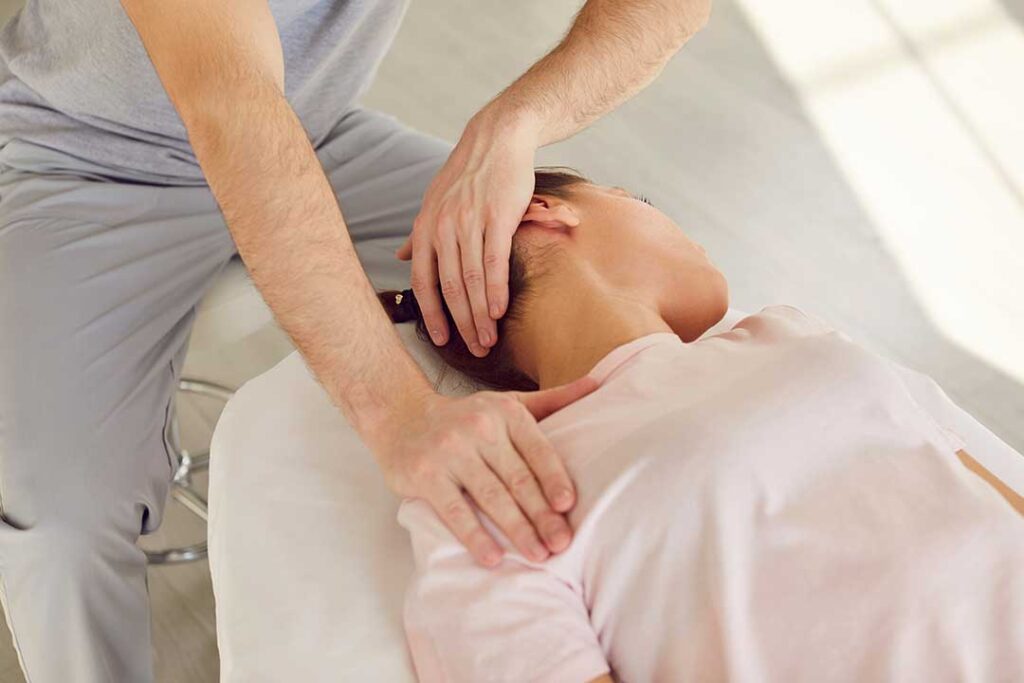
Waking up with stiffness or mild back, neck, or hip discomfort is common, especially after sleeping in one position, spending long hours sitting, or moving less during colder months. A few slow stretches can help the body transition from rest to daily activity without placing sudden strain on muscles and joints.
The goal is not to force flexibility. Morning movement should feel controlled, comfortable, and gradual.
Why does the body feel stiff after waking?
Morning stiffness often reflects reduced movement during sleep rather than a new injury. Muscles, tendons, and joints remain relatively still for several hours, while sleeping position, mattress support, and accumulated activity from the previous day may influence how the body feels upon waking.
Residents in Lynbrook, NY may also notice more stiffness during colder weather, when people tend to spend additional time indoors, sit longer, or reduce outdoor activity. Damp conditions and temperature changes do not directly cause most musculoskeletal problems, but they can make existing tension feel more noticeable.
Stiffness that eases after gentle movement is often different from pain that is severe, worsening, or associated with other symptoms.
What should be done before stretching?
Begin with simple movement rather than immediately holding a deep stretch. Sit on the side of the bed, place both feet on the floor, and take a few relaxed breaths. Gently move the ankles, open and close the hands, and roll the shoulders without forcing them.
A warm shower or a few minutes of walking around the home may also make movement more comfortable. Avoid bouncing, sudden twisting, or trying to “crack” the back or neck as part of a morning routine.
A useful rule is that stretching should create mild tension, not sharp pain, burning, electric sensations, or a feeling that a joint is being pulled out of position.
Which stretches can help with morning back stiffness?
The following sequence is suitable for many adults with mild, familiar stiffness. Perform each movement slowly and stop if symptoms increase.
Supine knee-to-chest movement
Lie on the back with the knees bent and feet resting on the bed or floor. Bring one knee toward the chest using the hands behind the thigh, hold for about 10 to 20 seconds, and return it gently. Repeat on the other side.
If comfortable, bring both knees toward the chest while keeping the shoulders relaxed. This can provide a gentle movement for the lower back and hips, but it should not cause back pain to spread into the legs.
Pelvic tilts
Remain on the back with knees bent. Gently tighten the abdominal muscles and flatten the lower back toward the surface beneath you. Hold briefly, then release and allow the natural curve of the back to return.
Repeat 8 to 12 times. The movement should be small. Pelvic tilts are intended to restore awareness and motion, not to create a hard abdominal workout.
Cat-cow movement
Move onto the hands and knees, keeping the hands below the shoulders and knees below the hips. Slowly round the back while allowing the head to relax, then gently move toward a comfortable arch without dropping heavily into the lower back.
Repeat 6 to 10 times with steady breathing. People with wrist, knee, or balance limitations can perform a similar movement while standing with the hands on a sturdy surface.
What stretches are useful for the neck and shoulders?
Neck movements should be especially gentle because the area contains sensitive joints, muscles, and nerves. Sit or stand upright and keep the shoulders relaxed.
Neck rotation
Turn the head slowly toward one side as if looking over the shoulder. Stop at the first mild stretch, return to center, and repeat on the other side. Perform 3 to 5 repetitions per side.
Side neck stretch
Let one ear move slightly toward the same-side shoulder while keeping the opposite shoulder down. Do not pull the head with the hand. Hold for 10 to 15 seconds, then switch sides.
Shoulder blade movement
Raise the shoulders toward the ears, move them gently backward, and then let them settle down. Repeat 5 to 8 times. Follow with slow shoulder blade squeezes, bringing the shoulder blades slightly toward each other without arching the back.
Avoid neck circles, forceful pulling, or stretching through dizziness, numbness, headache, or arm symptoms.
How can the hips and legs be loosened safely?
Tight hips and legs can make the first steps of the morning feel awkward. Gentle standing movements may help prepare the body for walking, stairs, commuting, or household tasks.
Standing hip flexor stretch
Place one foot a comfortable distance behind the other. Keep the front knee slightly bent and gently shift the pelvis forward without arching the lower back. Hold for 15 to 20 seconds, then change sides.
Use a wall or sturdy furniture for balance. The stretch should be felt near the front of the hip of the rear leg, not as pressure in the knee or lower back.
Calf stretch
Face a wall and place both hands against it. Step one foot back, keep that heel down, and bend the front knee slightly. Hold for 15 to 20 seconds before switching sides.
This is particularly useful before walking outdoors, using stairs, or beginning a morning exercise session.
Hamstring glide
Stand with one heel slightly forward and the toes pointed upward. Keeping the back relatively straight, bend the standing knee and shift the hips backward until a mild stretch is felt behind the extended leg. Return to the starting position rather than holding a deep stretch.
This movement is often more comfortable than reaching toward the toes, which can place unnecessary strain on the back.
Should stretching hurt?
No. Mild pulling or tension can be normal, but sharp, stabbing, burning, or electric pain is a reason to stop. Symptoms that travel down an arm or leg, cause numbness or weakness, or become progressively worse should not be pushed through with stretching.
A common misconception is that a stronger stretch produces a better result. For morning mobility, consistency and control are generally more useful than intensity. Five minutes of comfortable movement may be more appropriate than a long routine performed aggressively.
How long should a morning routine take?
A basic routine can take five to ten minutes. Try the following order:
- One minute of relaxed walking or gentle joint movement
- Pelvic tilts or cat-cow movements
- A comfortable hip and hamstring stretch
- Calf stretches before walking or exercising
- Shoulder and neck mobility
- A final minute of easy walking
Stretching does not replace regular strength training, adequate sleep, supportive work habits, or changes to a position that repeatedly causes discomfort. People who work at home, drive regularly, or sit for extended periods may benefit from brief movement breaks throughout the day rather than relying only on morning stretching.
When is morning pain a reason to seek medical guidance?
Persistent or severe pain deserves attention, particularly when it does not improve with ordinary movement or interferes with sleep, walking, work, or daily activities. Prompt medical evaluation is appropriate for back or neck pain accompanied by significant weakness, loss of bladder or bowel control, numbness in the groin area, fever, unexplained weight loss, or pain after a serious fall or collision.
A new exercise routine should also be modified for pregnancy, recent surgery, osteoporosis, inflammatory joint disease, or a known spinal condition. In those situations, movement may still be helpful, but the safest exercises and range of motion can differ.
The most useful morning routine is one that feels calm, repeatable, and appropriate for the individual body. Gentle movement can help reduce the shock of going from several hours of rest to the demands of a full day in the community.
