
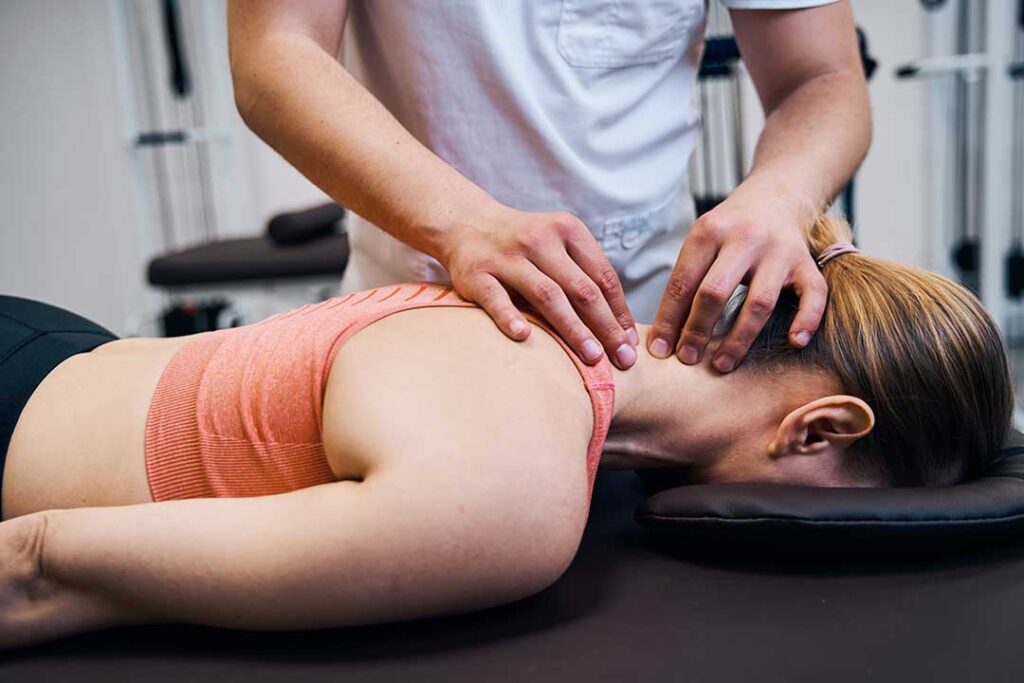
What does core strength have to do with spinal health?
Core strength helps the body support the spine during everyday movement. The core includes more than the abdominal muscles; it also involves muscles in the back, pelvis, hips, diaphragm, and sides of the trunk. Together, these structures help control posture, balance, and movement.
A stronger, well-coordinated core can reduce unnecessary strain during activities such as lifting laundry baskets, climbing stairs, standing at a kitchen counter, or getting in and out of a car. Core conditioning does not guarantee that back pain will never occur, but it can improve movement control and physical resilience.
Which muscles make up the core?
The core functions as a connected support system rather than a single muscle group. Important contributors include:
- The deep abdominal muscles, which help stabilize the trunk
- The muscles along the spine, which assist with posture and extension
- The pelvic floor, which contributes to pressure control and trunk support
- The diaphragm, which supports breathing and abdominal pressure
- The muscles of the hips and pelvis, which influence alignment and walking mechanics
- The side abdominal muscles, which help with rotation and side-to-side control
This is why traditional abdominal exercises alone may not provide complete core support. A balanced program should include controlled movement in several directions, along with hip and back strength.
Can core exercises prevent back pain?
Core exercises may lower the risk of some types of back strain by improving strength, coordination, and endurance. However, back pain has many possible causes, including joint irritation, muscle overload, disc problems, arthritis, nerve involvement, poor sleep, stress, and sudden changes in activity.
Core training is most useful when combined with general physical activity and sensible movement habits. Exercises should not be treated as a guaranteed cure or as a substitute for evaluating persistent, worsening, or unexplained symptoms.
A person who is beginning exercise after a long period of inactivity may benefit from starting with brief sessions and gradually increasing the challenge. Doing too much too soon can create the very muscle soreness or strain that the exercise program is meant to reduce.
What are safe beginner exercises?
For many adults, low-impact exercises provide a reasonable starting point. The right choice depends on current fitness, symptoms, balance, and medical history.
Abdominal bracing
Lie on the back with the knees bent and feet supported. Gently tighten the abdominal muscles as if preparing for a light bump, while continuing to breathe normally. Hold for several breaths, then relax. The goal is controlled tension rather than forceful tightening.
Bridge
From the same position, gently engage the abdomen and lift the hips a small distance from the floor. Keep the movement smooth and avoid arching the lower back. Lower slowly. This exercise involves the hips and back of the body as well as the trunk.
Bird dog
Begin on the hands and knees. Keeping the spine steady, slowly extend one arm or one leg. As control improves, extend the opposite arm and leg together. The goal is stability, not height or speed.
Side plank modification
Rest on one forearm and bent knees, then lift the hips slightly while keeping the trunk aligned. This strengthens the side of the core with less demand than a full side plank.
Walking
Walking is not usually described as a core exercise, but it challenges posture, balance, hip control, and trunk coordination. Regular walking can be especially practical for residents managing seasonal changes, variable weather, or long periods of sitting indoors.
Sharp pain, increasing numbness, weakness, or pain that travels down an arm or leg is a reason to stop the exercise and seek appropriate medical guidance.
How often should core muscles be trained?
Many adults can begin with two or three short sessions per week, allowing recovery between more demanding workouts. A session may include several exercises performed for a small number of repetitions or short holds.

Quality matters more than quantity. The spine should remain controlled, breathing should continue, and the movement should not rely on momentum. As endurance improves, a person can gradually add repetitions, time, or resistance.
Core muscles also work during ordinary activities. Carrying groceries evenly, rising from a chair without pushing excessively with the arms, and maintaining a comfortable upright position while walking all require trunk control. These movements are not replacements for structured exercise, but they contribute to daily function.
Does a strong core improve posture?
Core strength can support better posture, but posture is not simply a matter of holding the body rigidly upright. Healthy posture allows small, comfortable changes rather than maintaining one fixed position all day.
For people who work at desks, study, drive frequently, or spend long periods using a phone, changing positions regularly may be more helpful than trying to sit perfectly. A supportive chair, a screen positioned near eye level, and brief movement breaks can reduce the amount of time the back stays in one stressful position.
In homes with stairs, compact rooms, and frequent household lifting, movement variety is also useful. Reaching, turning, bending, and carrying should be done with controlled motion instead of sudden twisting under load.
What mistakes can make core exercises less helpful?
Several common habits can reduce the value of core training:
- Holding the breath during difficult repetitions
- Using speed or momentum instead of controlled movement
- Arching or rounding the back excessively
- Training only the front abdominal muscles
- Increasing resistance before basic form is consistent
- Exercising through sharp, radiating, or worsening pain
- Treating soreness as proof that an exercise is effective
Muscle fatigue can be normal, particularly after a new activity. Pain that changes movement, persists beyond expected soreness, or is accompanied by numbness or weakness deserves more attention.
When should back symptoms be evaluated?
Mild soreness after unfamiliar exercise often improves with rest and gentle movement. Symptoms should be evaluated more promptly when pain follows a significant fall or collision, becomes progressively worse, interferes with sleep, or is associated with fever, unexplained weight loss, severe weakness, loss of bladder or bowel control, or numbness in the groin area.
People with osteoporosis, recent surgery, pregnancy-related concerns, significant arthritis, or known nerve conditions may need individualized exercise guidance before beginning a new routine.
Core strength is best understood as part of overall spinal health. Consistent movement, adequate recovery, practical lifting habits, and exercises that match a person’s abilities all contribute to a back that can handle daily demands more comfortably.
